In a nutshell
- 🌿 Choose resilient herbs: start with basil, mint, chives, parsley, and thyme; opt for compact cultivars and split overcrowded supermarket pots before repotting.
- ☀️ Nail conditions: use bright south/west windows or LED grow lights (12–14 hours), keep temps around 18–24°C, and balance humidity with pebble trays plus gentle airflow.
- 🪴 Get the mix right: plant in a peat-free mix with perlite/grit (3:1), ensure strong drainage, choose terracotta for breathability, and feed with half-strength liquid fertiliser on a light schedule.
- 💧 Water and trim smartly: follow the finger test, prefer bottom watering, pinch basil above leaf pairs, avoid cutting woody herbs into old wood, and harvest no more than a third at a time with successive sowings.
- 🍽️ Build a year-round habit: small, consistent routines deliver a year-round harvest and brighter flavour in everyday cooking, from quick eggs to winter pasta.
Fresh herbs transform weekday cooking. They lift soups, sauces and salads with perfume and bite. Growing them indoors is easier than many imagine, and it’s not just a winter stop‑gap. With a little planning, you can harvest basil in January, mint in July, and parsley all year. Think of your windowsill as a mini glasshouse: consistent light, smart watering, and regular trimming keep plants compact and productive. The secret is designing the conditions to fit the plants, not the other way around. Below, you’ll find practical, UK‑friendly guidance to set up a resilient, low‑maintenance indoor herb garden that keeps on giving.
Choosing the Right Herbs
Start with reliable performers. For beginners, choose basil, mint, chives, parsley and thyme. They tolerate pot culture, forgive minor mistakes, and respond well to frequent picking. Distinguish between soft, leafy annuals (basil, coriander) and woody perennials (rosemary, thyme). Annuals sprint; they want warmth, regular feeding, and quick succession sowings. Perennials are marathoners—slower growth, sturdier stems, longer lifespan. Match plant temperament to your routine: if you cook Italian food often, basil and oregano deserve prime space; for teas and desserts, go big on mint and lemon balm.
Pick compact cultivars bred for windowsills: ‘Greek’ basil stays tidy; trailing rosemary varieties suit shelves; curly parsley maximises leaf density. Avoid supermarket pots as final homes; they’re overcrowded. Split clumps into two or three, repot, and let them regather strength for a fortnight before hard harvesting. Aim for diversity of flavour and habit—one upright, one trailing, one clumping—to fill vertical space and reduce pest build‑up. Growing a mix keeps meals interesting and plants healthier.
Light, Heat, and Humidity Indoors
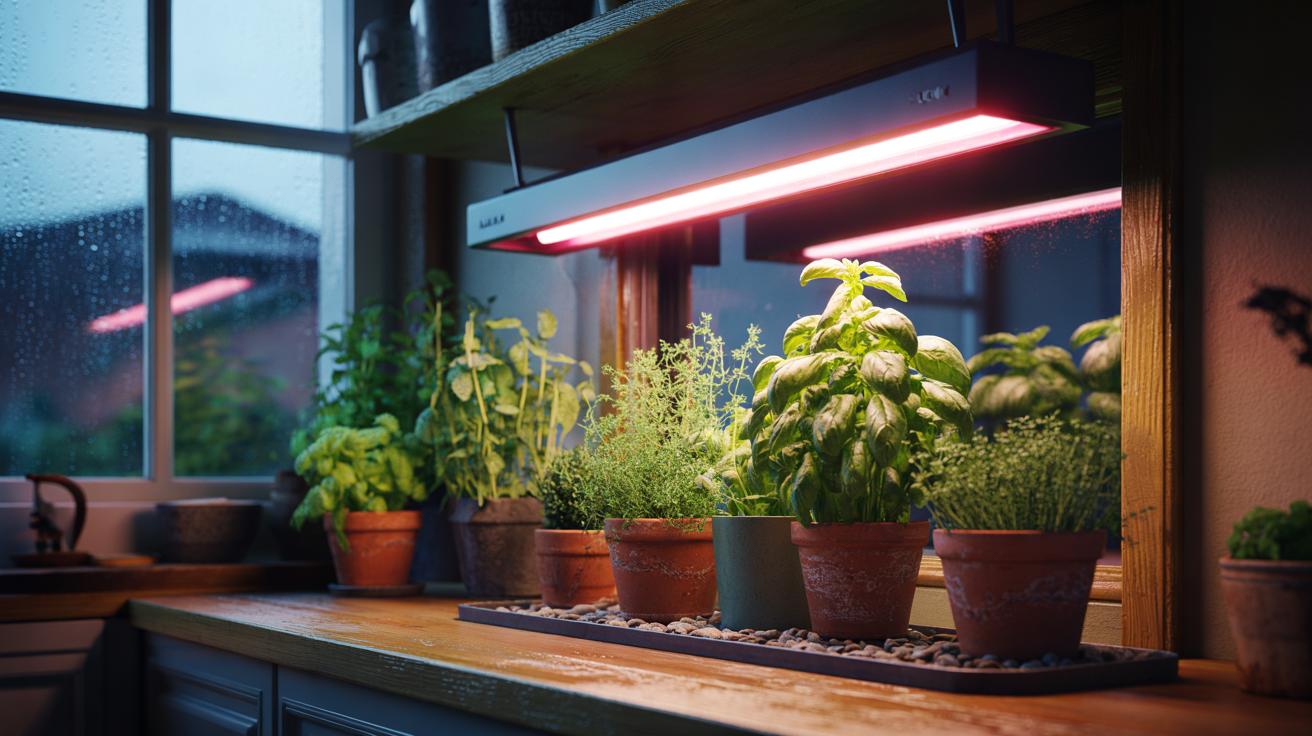
Sun drives flavour. A bright south- or west-facing window is ideal, delivering strong light for 5–6 hours. East works for mint and parsley; basil prefers more. In short days, fit LED grow lights (full-spectrum, 20–40 W over a 60–80 cm shelf) 20–30 cm above foliage for 12–14 hours. Rotate pots weekly to prevent leaning and keep stems sturdy. Consistent light equals consistent taste. Pale, leggy growth signals you need either a brighter sill or more hours under LEDs.
Keep temperatures steady: 18–24°C by day, a slight night dip is fine. Shield herbs from radiators and draughty windows; hot, dry blasts stress leaves. Boost humidity with a pebble tray or by grouping plants, yet maintain airflow with a small fan on low. This discourages mildew without chilling tender basil. If condensation forms on panes, nudge plants a few centimetres away. Comfortable rooms for people are usually comfortable for herbs.
Soil, Containers, and Feeding
Use a peat-free, well-draining mix. Blend all-purpose compost with perlite or horticultural grit (roughly 3:1) to keep roots aerated. Containers need generous drainage holes; line the base with mesh to stop mix escaping. Terracotta breathes and prevents soggy roots; plastic retains moisture for longer spells away. Self-watering pots with a wick are excellent for busy weeks, but avoid a permanently flooded reservoir. Good drainage is the cheapest insurance policy you can buy.
Feed lightly and regularly. Apply a half-strength liquid fertiliser every 2–3 weeks in spring and summer; monthly in winter under lights. Organic seaweed feeds are gentle and improve resilience. Repot fast growers like basil every 6–8 weeks to refresh nutrients. Don’t over-pot woody herbs; a pot that’s just snug promotes dense, aromatic growth rather than lanky stems. Below is a quick reference to pair pot size with care needs.
| Herb | Preferred Light | Pot Size | Watering Guide |
|---|---|---|---|
| Basil | Bright window + LEDs | 15–18 cm | Keep slightly moist; never waterlogged |
| Mint | Medium to bright | 18–20 cm | Moist, tolerates brief dryness |
| Parsley | Medium to bright | 15–18 cm | Even moisture; avoid extremes |
| Thyme | Bright, direct sun | 12–15 cm | Dry down between waterings |
| Rosemary | Bright, direct sun | 15–20 cm | Thorough soak, then dry |
Watering, Pruning, and Year-Round Harvesting
Overwatering is enemy number one. Use the finger test: if the top 2 cm are dry, water; if damp, wait. Water thoroughly until excess drains, then empty saucers. For tidy schedules, try bottom watering—stand pots in a tray for 15–20 minutes so roots drink by capillary action. It’s cleaner and reduces fungus gnat issues. In hard-water areas, occasionally flush with rainwater to prevent mineral crust. Little and right beats often and random.
Prune to shape and stimulate fresh growth. Pinch basil just above a pair of leaves; it doubles stems and delays flowering. Snip chives 2 cm above soil; they rebound fast. Trim thyme and rosemary lightly—never into old wood. Harvest in the morning for peak oils, taking no more than a third from any plant at once. Sow successive batches of coriander and basil every 4–6 weeks for uninterrupted supply. Regular picking is not theft—it’s maintenance.
Indoors, herbs reward routine with fragrance, flavour and a quick snip of green on dark evenings. Dial in light, keep the potting mix airy, feed modestly, and trim with intent. The payoff is fresh leaves when shops fall short and prices climb. You’ll taste the difference in pasta, eggs, even drinks. Start small, track what thrives in your home, then scale with confidence. Your kitchen can be a year-round herb garden with surprisingly little fuss. Which herb will you plant first, and what dish will it elevate this week?
Did you like it?4.3/5 (26)