In a nutshell
- 🌱 Cooled pasta water provides starch and trace minerals that feed soil microbes, offering a gentle supplement to growth—not a replacement for a balanced fertiliser.
- 🧪 Collect from unsalted, oil-free cooking, cool to room temperature, and dilute 1:1 if cloudy; apply to soil every 2–4 weeks, alternating with plain water.
- 🧊 For storage, refrigerate and use within 24 hours; discard if it smells sour, and consider occasional flushing to limit mineral build-up.
- 🍃 Best for foliage plants like pothos, spider plants, philodendrons, peace lilies, and ferns; use cautiously with orchids and avoid for cacti and succulents.
- ⚠️ Avoid salted or oily water, never apply hot, and don’t overwater; when unsure, dilute—this is a low-cost, waste-reducing boost, not a cure-all.
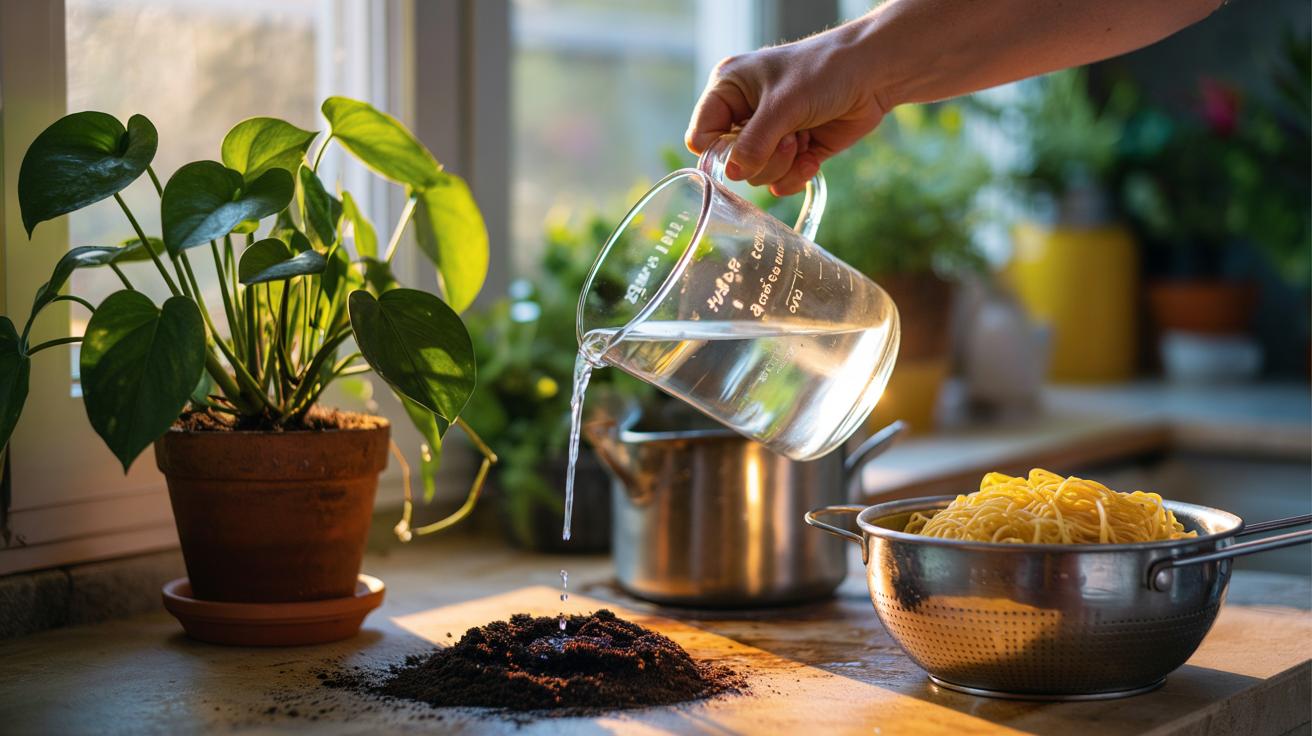
Turning leftovers into life-givers is a classic gardener’s trick, and cooled pasta water is a quietly effective ally. The cloudy liquid that swirls down your sink after dinner contains starch and a smattering of trace minerals from the grain, offering a gentle tonic for houseplants between standard feeds. Think of it as a light brew that boosts soil life and supports steady growth rather than a full-strength fertiliser. Always let the water cool completely, and keep it free from salt, oil, or sauce. Used thoughtfully, this frugal habit reduces waste, saves money, and brings a touch of kitchen alchemy to your indoor jungle.
Why Pasta Water Helps Plants
Cooled pasta water carries dissolved starches that act as a mild carbohydrate source, feeding the beneficial microbes in potting compost. Those microbes, in turn, help unlock nutrients and improve soil structure. Trace amounts of potassium, phosphorus, and magnesium may pass into the water from the pasta, providing a subtle top-up that supports leaf health and root activity. It is not a miracle elixir, but it can be a helpful complement to your regular feeding routine, especially for foliage plants that appreciate consistent, moderate care.
Crucially, pasta water is a gentle supplement rather than a replacement for balanced feeds with a complete NPK profile. Use it to bridge the gaps between scheduled fertiliser applications or during the cooler months when plants require less intensity. Never use salted pasta water: sodium damages roots, disturbs moisture balance, and can accumulate in pots. Oil or sauce residues can suffocate soil and invite fungus gnats. Keep it plain, cool, and clean for the best results.
How to Collect, Store, and Apply
Cook pasta in unsalted, oil-free water. Drain into a heatproof bowl or pan so the liquid can be saved. Allow it to cool to room temperature before approaching your plants to avoid scalding roots. If the water looks very cloudy or thick, strain it and dilute 1:1 with tap water to keep things gentle. Apply to the soil surface, not foliage, until moisture just begins to seep from the drainage holes. For most houseplants, every 2–4 weeks is ample; alternate with plain water to avoid residue building up in the potting mix.
Storage is possible, but brief. Decant into a clean bottle, refrigerate, and use within 24 hours to prevent fermentation and odours. Label it clearly to avoid accidental use in cooking. If your home has hard water, consider an occasional flush with rainwater or filtered water to minimise mineral build-up. When in doubt, dilute. A gentle regime maintains microbial balance, supports steady growth, and keeps your indoor plants resilient without overwhelming their roots.
Plants That Benefit and Those to Avoid
Most leafy houseplants respond well to the mild boost of cooled pasta water. Pothos, spider plants, philodendrons, peace lilies, and ferns typically enjoy the extra microbial activity in their compost and the soft nudge of carbohydrates. Flowering plants in active growth can also benefit, though they still require a balanced fertiliser for blooms. On the cautious side are drought-tolerant species. Cacti and many succulents prefer lean, fast-draining conditions and can suffer if residues linger in the mix or if the practice encourages overwatering.
Orchids and sensitive species like African violets demand careful handling. If you experiment, keep applications rare, light, and well-diluted, and monitor for leaf spotting, mould, or sour smells. Always prioritise drainage and let pots dry appropriately between waterings. The aim is a subtle lift, not a sticky soil profile. When used prudently, pasta water slots neatly into a broader routine of balanced feeding, bright but indirect light, and proper watering.
| Plant Type | Suitability | Suggested Frequency | Notes |
|---|---|---|---|
| Foliage (pothos, spider plant, philodendron) | Good | Every 2–4 weeks | Alternate with plain water |
| Flowering (peace lily, begonia) | Moderate | Monthly | Still use balanced fertiliser for blooms |
| Cacti and succulents | Poor | Rare or avoid | Risk of residue and rot |
| Orchids | Cautious | Every 6–8 weeks, diluted | Ensure excellent drainage |
Common Mistakes and Safe Practice
The biggest misstep is seasoning. Salted pasta water is off-limits; sodium accumulation can stunt growth and burn roots. Oils and sauces coat soil particles, reduce airflow, and attract pests. Another frequent error is temperature: hot water damages roots, while tepid or room temperature is harmless. Avoid drenching already wet pots—overwatering invites root rot and fungus gnats. If a sour smell develops, skip applications, aerate the soil with a chopstick, and resume only when conditions are healthy.
Keep the practice clean and measured. Use small, regular doses rather than heavy soaks. Refresh with plain water to prevent residue build-up, especially in compacted or peat-rich composts. Discard any stored pasta water after 24 hours to thwart fermentation. For plants on the mend or newly repotted specimens, stick to plain water until roots re-establish. Remember, pasta water is a light supplement, not a cure-all, and consistency across light, watering, and feeding is what truly delivers lush indoor growth.
Used wisely, cooled pasta water is a tidy example of circular living: a kitchen by-product turned into a low-cost plant tonic. It supports soil life, offers gentle micronutrients, and encourages a steadier rhythm of care, all while keeping waste out of the drain. The golden rules are simple: no salt, no oil, cool completely, and apply sparingly. Blend this habit with balanced fertiliser, adequate light, and good drainage, and your houseplants will repay you in green abundance. Which plant in your collection will you experiment with first, and how will you tailor the routine to suit its temperament?
Did you like it?4.6/5 (27)