In a nutshell
- 🍓 Choose the right containers and mix varieties: 30 cm pots for 2 plants, hanging baskets to save space; combine day‑neutral/everbearers (e.g., ‘Albion’, ‘Evie 2’, ‘Mara des Bois’) with June-bearers for season‑long picking.
- 🪴 Build a proper potting system: peat‑free compost with 20–30% perlite plus slow‑release feed; plant with the crown level (never buried), ensure good drainage, and mulch cleanly to reduce botrytis.
- 💧 Nail sun, watering, and feeding: aim for 6–8 hours of light; keep moisture steady and water to slight runoff; feed weekly with a high‑potash (tomato) fertiliser and avoid excess nitrogen.
- ✂️ Control runners and renew plants: remove runners until late August, then root a few to refresh stock; stage plantings in spring and July; replace after year three for a steady harvest.
- 🛡️ Defend against pests and winter damage: use biologicals for vine weevil, copper tape and netting for slugs and birds, fleece early blossoms, and keep compost barely moist in a sheltered spot over winter.
Few crops reward balcony gardeners quite like strawberries. Pots warm quickly, perfuming patios with blossom and delivering bowls of fruit within reach of the kitchen. The trick to a steady summer harvest is simple: choose productive varieties, plant correctly, then keep water and feed steady. Day-neutral strawberries are your insurance policy. They flower and fruit repeatedly from late spring to autumn, even when days lengthen and weather yo-yos. Containers also dodge many soil-borne problems and allow you to move plants to sun, shelter, or safety from slugs. With a smart set‑up you can pick, rinse, and eat in minutes. That’s urban luxury.
Choosing the Right Containers and Varieties
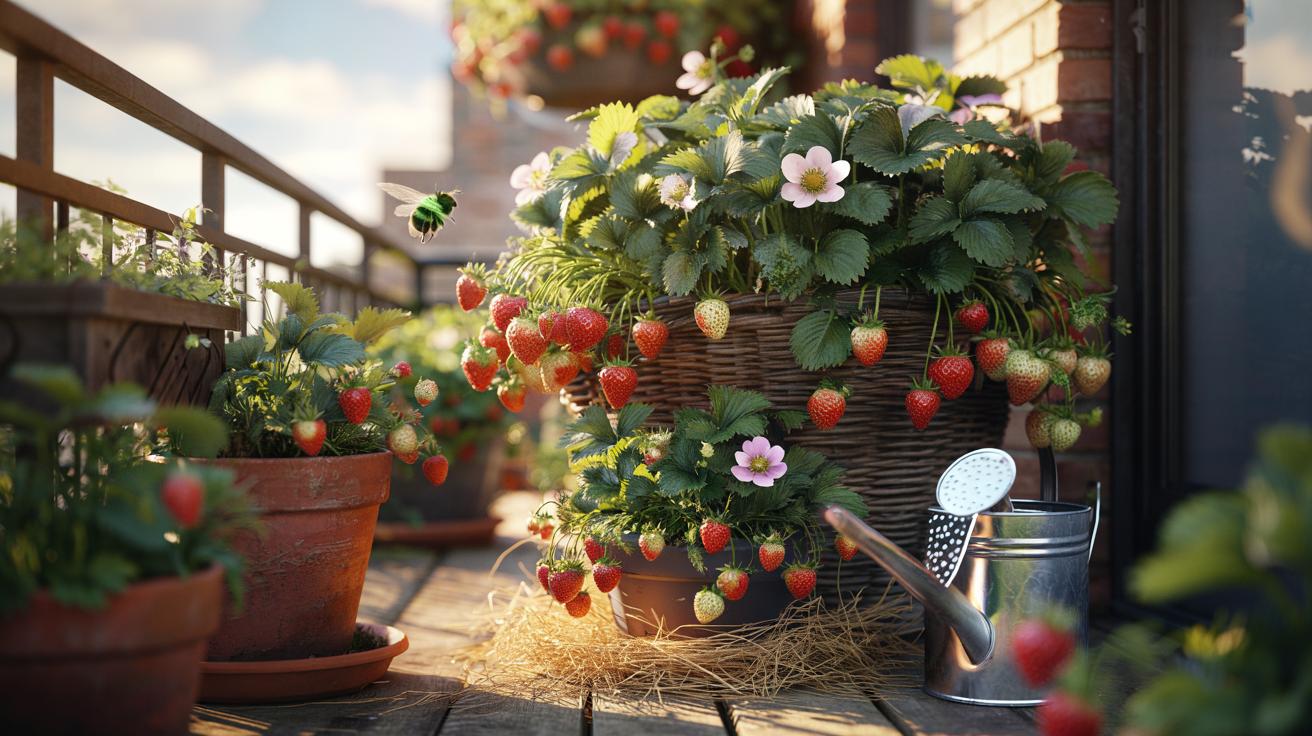
Strawberries are shallow‑rooted, so pots don’t need to be deep, but they must be wide and well drained. A 30 cm pot (about 10–12 litres) comfortably holds two plants; a 60 cm trough fits four. Hanging baskets and tiered “strawberry towers” save floor space and lift fruit from slugs. Good drainage is non‑negotiable. Add pot feet or bricks under containers to keep bases clear of cold paving. For a long picking window in the UK, mix types: day-neutral/everbearers such as ‘Albion’, ‘Evie 2’, or ‘Mara des Bois’ give repeat flushes, while dependable June-bearers like ‘Cambridge Favourite’ deliver one generous crop to start the season strongly.
To lock in continuity, buy a few cold‑stored runners in spring for early fruit and add a second batch in July for late-summer replacements. This staggers peak production. Match varieties to your taste and microclimate: ‘Mara des Bois’ offers wild-strawberry aroma on warm patios; ‘Florence’ holds firmness in wetter summers. Avoid overcrowding—airflow keeps mould away and berries clean. For families, assume two to three plants per person if you want a proper weekly bowlful during peak months.
| Container | Capacity | Plants | Notes | Typical Yield |
|---|---|---|---|---|
| 30 cm pot | 10–12 litres | 2 | Portable; ideal for balconies | 0.7–1.0 kg/season |
| 60 cm trough | 20–25 litres | 4 | Easy to net; stable moisture | 1.5–2.5 kg/season |
| Hanging basket | 12–14 litres | 3 | Fewer slugs; dries faster | 0.8–1.2 kg/season |
Potting Mix, Planting Depth, and Drainage
Start with a light, moisture‑retentive but free‑draining mix. Use peat‑free multipurpose compost blended with 20–30% perlite or horticultural grit, plus a handful of slow‑release fertiliser. Target a pH around 5.5–6.5. Never bury the crown—that central knuckle where leaves emerge must sit flush with the surface or it will rot. Spread roots out like a fan as you plant, tamp gently, and water to settle. Leave 3–5 cm of headspace to allow for top‑up mulch.
Drainage makes or breaks pot strawberries. Ensure generous holes, line the base with coarse bark or crock, and raise containers on feet. In wet spells, tilt slightly so excess runs off. Add a clean, dry mulch—barley straw, coir chips, or wool pellets—beneath developing trusses to stop mud splash and botrytis. Clean fruit stays edible longer and mould struggles to take hold. In frosty pockets, slip fleece over the pots at night in April and May to protect early blossom without fuss.
Watering, Sun, and Feeding for a Steady Harvest
Sun drives sugar. Aim for six to eight hours daily, ideally morning light to dry foliage quickly. South or south‑west aspects perform best; in heat spikes, shift baskets to gentle afternoon shade. Watering is daily work once fruit sets. Consistent moisture equals consistent berries. Push a finger into the top 3 cm of compost; if it’s dry, water thoroughly until a little runs from the base, then stop. Target the compost, not leaves, to keep disease down. Self‑watering troughs or a simple drip spike stabilise supply during holidays.
Feed little and often. From first flowers, apply a high‑potash (tomato) feed weekly to power blossom and fruit, alternating with a seaweed tonic every second week for trace minerals. Avoid high nitrogen; it bulks leaves at the expense of berries. Remove a few old, shaded leaves to open the canopy and improve colouring. Deadhead spent trusses promptly so plants focus energy on new flowers and swelling fruit, not on setting unwanted seed.
Training Runners, Pest Defense, and Winter Care
Runners sap energy. For steady summer picking, snip off runners as soon as you see them until late August. Then root a couple into 9 cm pots to refresh your stock. Day‑neutrals are most fruitful in year one and two; plan to replace plants after year three. For bulletproof continuity, stage plantings: April pot‑ups for June starts, then July additions for late‑season fill. This rolling programme smooths gaps and keeps flavour high when older plants tire.
Pots dodge many soil pests, but not all. Guard against vine weevil with biological nematodes in May and September. Discourage slugs using copper tape around pot rims and tidy, dry mulch. Net against birds with a fine mesh, leaving space for bumblebees to enter beneath on calm days. If aphids appear, wash off with a soft soap spray and pinch distorted tips. After final autumn flush, trim tired leaves, top‑dress with fresh compost, and slide pots to a sheltered wall. Keep compost barely moist through winter—never sodden, never bone‑dry.
Grow strawberries in pots and summer suddenly tastes brighter. The formula is simple but powerful: right container, right variety mix, steady moisture, regular potash feed, and ruthless runner control. The rest is pleasure—watching white blossoms turn to glossy fruit, rinsed and eaten warm, minutes after picking. If you’re starting from scratch this year, which mix of day‑neutral and June‑bearing varieties will you choose, and how will you stage your pot‑ups to keep bowls filled from June to September?
Did you like it?4.4/5 (29)