In a nutshell
- 🌅 Morning sun syncs with a plant’s circadian rhythm, opening stomata in cool air for high photosynthesis efficiency with minimal water loss.
- ☀️ Before 10 a.m., light delivers ample PAR with lower heat and UV, reducing leaf stress and scorch while avoiding midday photoinhibition.
- 🪟 Setups that win: east-facing windows, sheer-filtered south light, smart plant placement by distance, clean panes, and weekly rotation to balance growth.
- 💧 Time care to dawn: water and feed at first light for faster uptake and drier foliage, and apply pest controls (soap/neem) safely without burn risk.
- 🇬🇧 In UK homes, early rays make every lumen count; use morning beams to do the heavy lifting and rely on bright indirect light through midday.
Walk into any sunlit kitchen at 8 a.m. and you can almost hear the houseplants exhale. Morning rays spill in at a kinder angle, cool and bright, switching on cellular machinery without cranking up stress. For growers in the UK, where daylight shifts dramatically by season, timing is everything. Sunlight before 10 a.m. delivers energy with minimal heat load, a pairing that fuels photosynthesis yet spares foliage from scorch. It also speaks to the plants’ internal clocks. When you give them dawn, not noon, you align light with a rhythm they evolved to trust. That’s why early sun isn’t just pleasant; it’s powerful.
How Morning Sunlight Primes Plant Physiology
Plants keep time. Their circadian rhythm anticipates daybreak, priming stomata to open and photosystems to activate as the horizon brightens. Early in the day, the blue-rich spectrum tells guard cells to widen, letting CO₂ rush in for sugar-making while temperatures remain forgiving. This alignment between cool air, open stomata, and rising light yields high photosynthetic efficiency with low water loss. In practice, that means perky leaves, steadier growth, and less droop by lunchtime. You’re not forcing productivity; you’re riding a biological swell.
Morning light also nudges the phytochrome system. The balance between red and far‑red light shifts at sunrise, guiding leaf expansion, stem compactness, and even flowering cues. It’s gentle coaching rather than a shout. By contrast, a sudden blast of intense midday sun closes stomata to conserve water, throttling the very process bright light should support. The result? Fewer sugars banked, more stress hormones produced. Give plants their energy when they are ready to use it, and they reward you with denser growth and richer colour.
Safer Light: Intensity, Heat, and UV Before 10 a.m.
Intensity matters, but context matters more. Morning sun delivers ample photosynthetically active radiation (PAR) without the punishing infrared that spikes leaf temperature. Leaves stay cooler, chloroplasts avoid photoinhibition, and cuticles do not desiccate. Before 10 a.m., sunlight is strong enough for photosynthesis but gentle enough to avoid stress. That safety margin explains why delicate ferns, prayer plants, and young cuttings flourish in east-facing windows yet sulk by noon in a south bay.
| Time Window | PAR (Relative) | Heat/Leaf Temp Risk | UV Intensity | Best For |
|---|---|---|---|---|
| Sunrise–10 a.m. | Medium–High | Low | Low–Medium | Most houseplants, seedlings, variegates |
| 10 a.m.–2 p.m. | Very High | High | High | Sun-lovers, cacti (monitor closely) |
| 2 p.m.–6 p.m. | Medium | Medium | Medium | Tough foliage plants, acclimated specimens |
Notice the pattern: the earlier window provides a sweet spot of light per degree of heat gained. That ratio is what keeps transpiration sustainable and cell membranes intact. In a heated flat or during a summer heatwave, this difference widens. Use morning beams to do the heavy lifting, then rely on bright indirect light for maintenance through the middle of the day. Your leaves will look cleaner, thicker, and far less frazzled.
Setting Your Flat for Morning Light Success
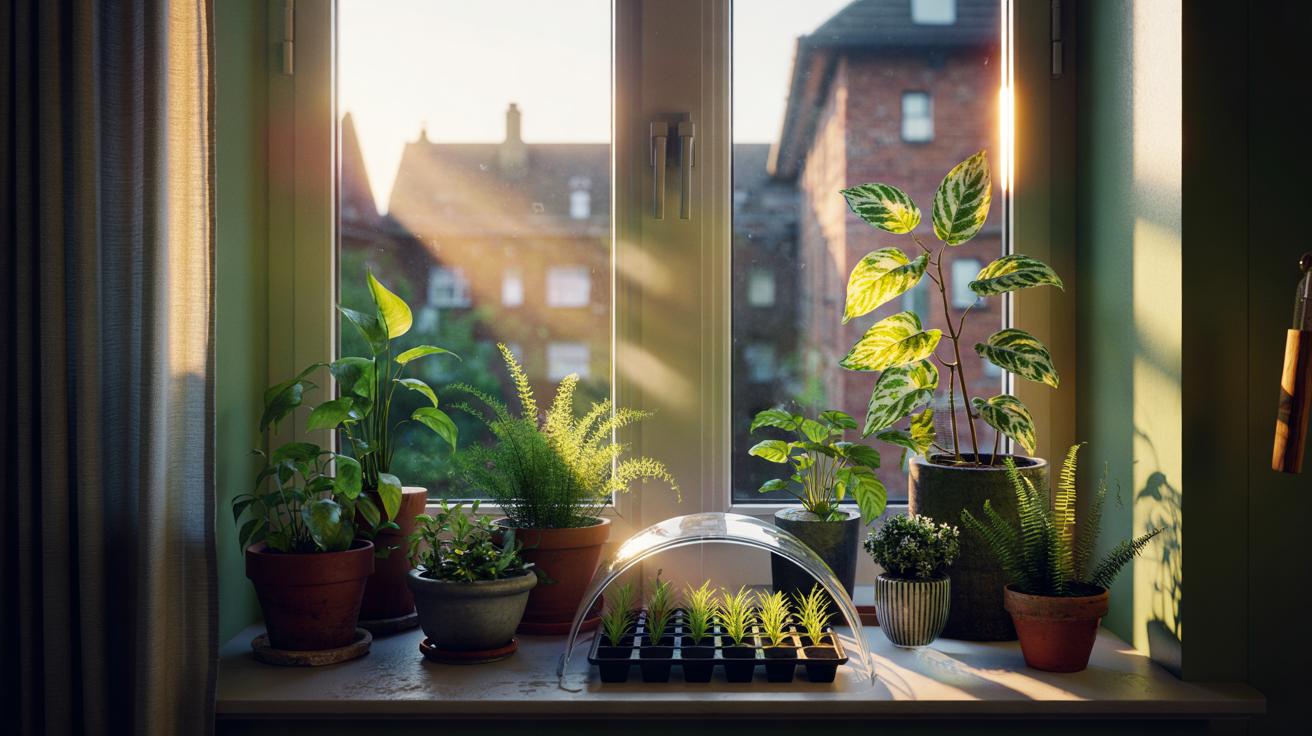
Space design counts. In the UK, an east-facing window is a gift: it captures cool, slanting rays that wake plants without baking them. Place variegated pothos, calatheas, and herbs within one metre of that glass for an hour or two of early sun; keep succulents even closer. South windows can still work if you filter with a sheer curtain, positioning plants so they catch only the first slice of the day. Clean panes transmit more usable light than you think, so wipe off urban grime monthly.
Distance is your dimmer. Every 30–50 cm you move back slashes intensity. Use a simple light meter app to gauge morning brightness, then shuffle shelves accordingly. Rotate pots weekly so growth stays balanced toward dawn, not noon. In winter, nudge plants forward to harvest every photon; in summer, pull back slightly to prevent sudden spikes as the sun climbs. Think of morning light as a daily appointment—consistent, predictable, and optimised by tiny tweaks in placement.
Watering, Feeding, and Pest Control Timed to Dawn
Morning timing multiplies benefits. Watering at first light charges the substrate just as stomata open, promoting efficient nutrient uptake while leaves dry quickly, reducing fungal risk. Wet foliage meeting noon sun is a recipe for stress; droplets act like lenses and overheated tissue invites pathogens. Feed lightly in the morning during active growth, when sugars fuel root-to-shoot transport. You’ll see steadier turgor and fewer midday slumps.
Pest management also works better early. A dawn spray of horticultural soap or neem lingers long enough to contact pests, yet avoids the burn that can follow treatments under harsh midday light. Foliar tonics, if you use them, belong to the same window. Propagation trays? Give them sunrise brightness under a humidity dome, not afternoon glare that cooks tender cells. Match interventions to the plant’s daily rhythm and the gains stack: fewer pests, firmer roots, faster recovery from repotting, and leaves that keep their sheen.
Healthy houseplants are the sum of small, well-timed choices. Early light organises the day: it powers photosynthesis, keeps temperatures civil, and tunes growth hormones towards compact, resilient form. It also aligns your care—watering, feeding, and pest control—with the moments plants can use them best. Before 10 a.m., every lumen goes further, which is welcome in Britain’s short winter days and surprisingly sunny summer mornings alike. If you could change just one habit this week, make it a morning rendezvous with your plants. Where in your home could you stage that first hour of gentle sun, and which species would you trust to lead the experiment?
Did you like it?4.7/5 (29)