In a nutshell
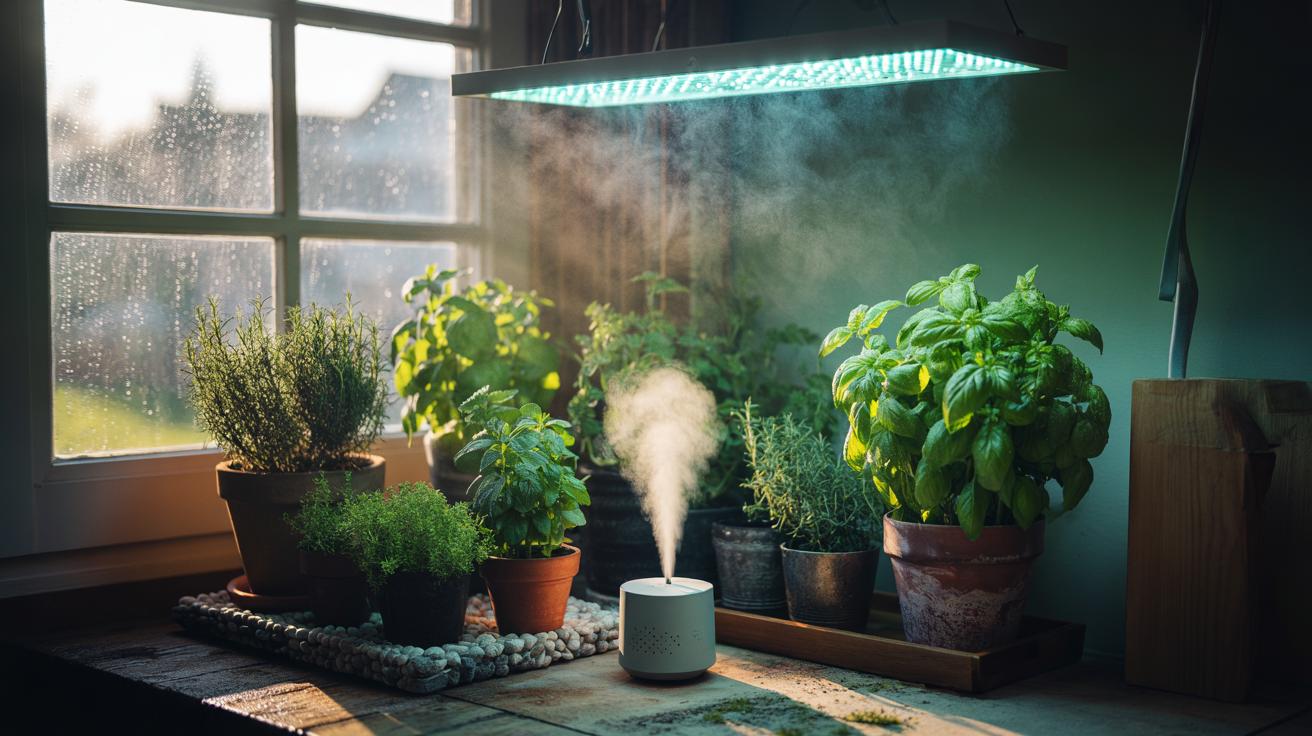
- ☀️ Prioritise proper light: use south/south-west windows, rotate pots, and add LED grow lights for 12–16 hours in winter to prevent leggy growth and boost aroma.
- 💧 Control humidity: aim for 45–60% RH for basil and mint (35–45% for thyme/rosemary), use pebble trays or a humidifier, and maintain gentle airflow to deter mould; verify with a hygrometer.
- 🌿 Match watering to light: let the top 2–3 cm of mix dry in low light, water thoroughly then drain, choose an airy potting mix, feed lightly only during active growth, and prune regularly for compact plants.
- 🧭 Optimise placement and tools: leverage microclimates, keep herbs away from radiators/draughts, use timers, a clip-on fan, and a phone lux app (under ~5,000 lux at noon signals the need for LEDs).
- 📊 Know your herbs: Basil loves bright light and 50–60% RH, rosemary/thyme prefer full sun and drier air, while parsley/coriander thrive in bright indirect light—avoid overwatering and weak light to prevent rot, bolting, and legginess.
Herbs bring brightness to winter stews and summer salads alike, yet keeping them vibrant indoors can be surprisingly tricky. The secret lies in balancing two pillars of plant care: light and humidity. In the UK, short days and central heating collide to stress leaves, flatten flavour, and stunt growth. Getting these two factors right is the difference between lank, leggy stems and compact, aromatic harvests. With a little planning—choosing sensible windows, using simple tools, and setting realistic routines—you can keep basil, mint, parsley, and rosemary pushing fresh growth twelve months a year without turning your home into a greenhouse.
What Proper Light Really Means Indoors
Outdoors, herbs bask in abundant sky; indoors, they compete with glass, curtains, and short winter days. Light intensity drops sharply a metre from any window, and UK winter sun sits low, cutting usable hours. South and south-west exposures give the strongest light; east windows suit gentler herbs; north-facing sills often disappoint. Insufficient light is the number one reason indoor herbs languish. Look for pale leaves, long internodes, and leaning stems—classic signs of a plant stretching for photons. Rotate pots weekly to keep growth even and snip sparingly until plants rebuild energy reserves.
Supplement with LED grow lights when daylight dips below 10 hours. Aim for a broad-spectrum bar or bulb 20–30 cm above the canopy, delivering 12–16 hours daily on a timer. Keep leaves moving gently with room airflow to prevent hotspots. If foliage feels warm to the back of your hand, raise the light. More light only helps if temperature and watering are adjusted accordingly. Expect tighter nodes, deeper colour, and richer aroma within a fortnight of consistent lighting.
Humidity: The Quiet Keeper of Aroma and Texture
Central heating saps indoor relative humidity, often dropping it below 35%—far drier than a breezy garden. Mediterranean herbs like thyme and rosemary tolerate dry air, but basil, mint, and coriander prefer 45–60% RH to keep leaf edges supple and oil glands productive. Low humidity steals moisture faster than roots can replace it, crisping tips and dulling flavour. Watch for cupping leaves or wilting that recovers at night; both hint at dry air. Conversely, persistently clammy rooms invite fungal issues, blurring veins and spotting tissue.
Raise humidity with grouped pots, wide pebble trays topped up to just below pot bases, or a small ultrasonic humidifier on a timer. Keep air moving to avoid stagnant pockets; a quiet fan on low is enough. Go easy on misting—brief spikes don’t shift the daily average and can encourage mould on soft leaves. Aim for a steady 45–60% RH near the foliage, not the middle of the room. A basic digital hygrometer beside your herbs removes guesswork and alerts you to radiator season dips.
Balancing Light and Water for Healthy Roots
Light and humidity dictate how quickly water leaves a plant. Under strong light and moderate humidity, herbs transpire freely, pulling oxygen-rich water through roots and fuelling growth. In dim conditions, that pump slows; keeping compost wet then suffocates roots. Match watering to the week’s light, not the calendar. In winter shade, let the top 2–3 cm of mix dry before watering. In bright summer windows or under LEDs, expect more frequent drinks. Always water thoroughly until excess drains, then empty saucers to prevent salt build-up.
Use a fast, airy potting mix—multi‑purpose compost cut with perlite or fine bark—to protect roots. Terracotta helps in damp homes; plastic holds moisture in dry flats. Self-watering pots are handy but reduce the reservoir in low light. Feed lightly with a balanced liquid fertiliser every 2–4 weeks only when plants are actively growing. Overfeeding in poor light produces weak, sappy growth vulnerable to pests. Prune small, regular harvests to keep canopies compact, which improves airflow and reduces disease risk.
Placement Strategies and Easy Tools for Year-Round Success
Start with microclimates you already have. A bright south-facing sill works in winter; in July, shift tender herbs slightly back from glass to avoid scorch. East windows deliver gentle morning sun for coriander and parsley; west aspects suit robust basil. Keep pots away from blasting radiators and draughty doors. Aim for bright, indirect light with steady temperatures between 18–24°C. Reflective white walls, pale blinds, and a clean windowpane boost usable light without extra energy.
A simple toolkit makes care routine. Put lights on a timer, check a desk hygrometer daily, and keep a notebook of watering intervals by season. A clip-on fan set to low preserves airflow, which curbs mildew while helping leaves transpire. When in doubt, measure: a phone lux app gives rough light readings; if you see under 5,000 lux at noon in winter, supplemental LEDs will pay off in flavour and yield. Small, consistent adjustments beat occasional heroic rescues.
| Herb | Preferred Light | Target RH | Common Pitfall |
|---|---|---|---|
| Basil | Bright window or LED, 12–16 h | 50–60% | Cold drafts and dry air cause leaf scorch |
| Mint | Bright indirect | 50–60% | Waterlogging in low light leads to root rot |
| Rosemary | Full sun, strongest sill | 35–45% | Overwatering in winter dormancy |
| Parsley | Bright indirect to mild sun | 45–55% | Leggy growth from weak light |
| Coriander | Bright, cool light | 45–55% | Bolting when hot or underlit |
| Thyme | Full sun or strong LED | 35–45% | Poor drainage causes dieback |
Indoors, herbs thrive when you treat light like food and humidity like seasoning—both essential, both adjustable. Focus on consistent photoperiod, gentle air movement, and a humidity band that matches each plant’s heritage, and you’ll harvest tender stems even in February. When your room changes, your routine should change with it. Start with one window and a timer, add a pebble tray and hygrometer, and tweak from there. Which herb will you trial first under a measured light-and-humidity plan, and what simple change do you think will make the biggest difference in your kitchen garden?
Did you like it?4.4/5 (23)