In a nutshell
- 🌱 Understand plant structure: locate nodes, watch internode length, and manage apical dominance to trigger bushier side shoots.
- ✂️ Prune in active growth: make light, strategic cuts in spring–summer; pinching for trailers, heading cuts for shrubs, and thinning to open interiors—never remove over a third at once.
- 🧼 Use the right tools and hygiene: sharp snips/secateurs, disinfect between plants, angle cuts above a node, and handle irritating sap with gloves.
- 🪴 Apply plant-specific tactics: root vining cuttings back into pots, behead leggy succulents to re-root, and divide non-branchers like peace lilies for fullness.
- 📅 Follow seasonal routines: tidy in autumn, plan structural edits in late winter, then feed and provide bright light post-prune to prevent leggy regrowth.
Thick, leafy houseplants rarely happen by accident. Indoors, light is steadier, air is stiller, and stems can race towards the nearest window, leaving spindly gaps. Pruning is your quiet superpower: it redirects energy, multiplies growing points, and shapes a compact silhouette. By timing your trims, using clean, sharp tools, and choosing the right cut for the right plant, you can coax even reluctant growers into dense, confident forms. Pruning needn’t be drastic to be effective; a dozen thoughtfully placed snips across the season can outperform one severe chop. Here’s how to approach it like a pro and keep your indoor jungle looking lush.
Reading Plant Growth and Timing Your Cuts
Good pruning starts with plant literacy. Locate the nodes—those tiny junctions where leaves and buds emerge—and note the internodes between them. Long internodes mean the plant is chasing light; shorter ones signal compact growth. Understand apical dominance: the leading tip produces hormones that suppress side shoots. Remove or pinch that tip and you unlock dormant buds along the stem, which results in a fuller profile. Prune during active growth for the fastest recovery, typically spring through late summer on a bright windowsill. In winter, limit cuts to tidy-ups unless a plant is seriously leggy. Rotate pots weekly to even out light, and give newly pruned plants steady brightness so new shoots don’t stretch.
Trailing species (pothos, tradescantia) benefit from frequent pinching of soft tips to thicken the cascade. Upright shrubs (ficus, schefflera) prefer strategic heading cuts above outward-facing nodes to build a balanced canopy. Flowering houseplants should be pruned after bloom cycles, not before. Never remove more than a third of the foliage in one session; that keeps photosynthesis going while the plant redirects energy. Water and feed modestly a week after pruning to fuel dense regrowth without causing lanky spurts. Keep notes on response times; every species—and every windowsill—has its rhythm.
Tools, Hygiene, and Safety
Sharp kit makes clean cuts that heal quickly. Keep precision snips for soft stems, secateurs for woody growth, and a small paring knife for exact node work. Crush injuries invite disease, so if blades tug, sharpen before you continue. Sterility matters indoors: wipe tools with 70% isopropyl alcohol, or dip in a 1:9 bleach solution for 30 seconds, then rinse and dry. Always sterilise blades between plants to prevent spreading pests or pathogens such as bacterial leaf spot. Lay a sheet or tray beneath your work to catch debris and inspect fallen leaves for pest tell-tales.
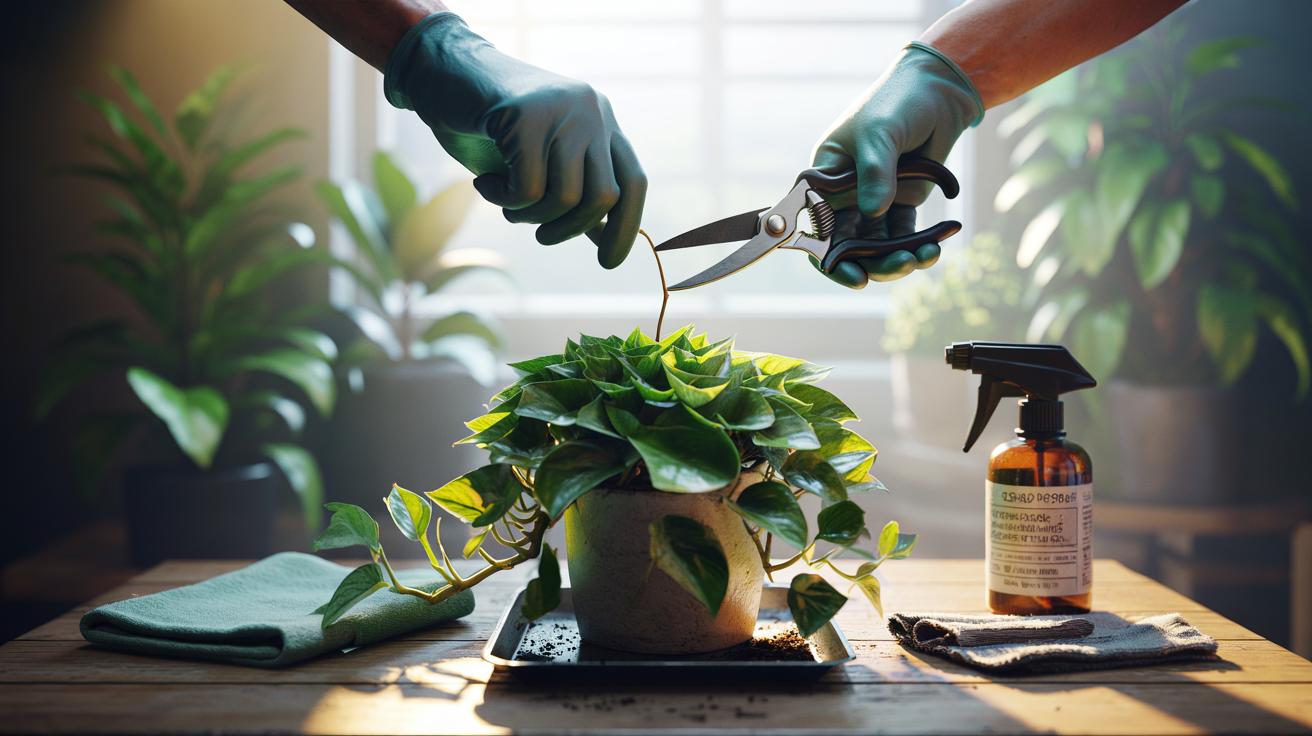
Some houseplants bleed sap that can irritate skin; wear gloves for euphorbia, ficus, and dieffenbachia, and avoid touching your eyes. Aim cuts at a slight angle just above a node or branch junction, leaving a few millimetres of stem to protect the bud. Do not seal cuts with household products; healthy plants compartmentalise naturally. After pruning, wipe leaves to increase light capture and check for mealybugs or mites hiding along stems you’ve just exposed. Label tools and keep them dry—rusted hinges cause ragged cuts and wasted effort.
Techniques: Pinching, Heading, and Thinning
Pinching is your everyday tactic for bushiness. Use fingers or snips to remove the soft growth tip just above a node; two or more side shoots will usually break, thickening the plant. It’s ideal for coleus, basil, tradescantia, and pothos. Heading cuts shorten a stem to a chosen node, directing energy into buds just below the cut. Use this to set height on ficus or rubber plants and to shape schefflera into a multi-branched shrub. Thinning cuts remove an entire stem back to the main branch or soil line, opening the interior for light and airflow without changing the plant’s outline. Cut just above a node and angle away from the bud to shed moisture.
Work from the top down: first eliminate dead, diseased, or crossing stems, then decide where fullness is needed. Encourage outward growth by cutting to outward-facing buds. On vining plants, snip just above a node and root the cutting to replant in the same pot, instantly boosting density. For leggy specimens, stagger rejuvenation: shorten one-third of stems now, another third in four weeks, and the rest after new growth appears. Small, repeated interventions build symmetry and resilience while keeping stress low.
Special Cases and Seasonal Routines
Not all houseplants want the same haircut. Succulents resent frequent trimming; instead, behead stretched rosettes in late spring and re-root the top. Peace lilies do not branch from cuts—remove spent flower stalks at the base and divide crowded clumps to thicken. Herbs prefer constant picking to stay compact, while vining aroids love regular pinches and occasional hard resets. Time your work with growth flushes and after blooms, not before. In autumn, shift to light shaping and cleaning. In late winter, plan structural edits so the first bright days drive fresh buds. Feed lightly after pruning and increase light exposure to prevent leggy rebounds.
| Plant | Best Time | Main Method | Notes |
|---|---|---|---|
| Pothos/Devil’s Ivy | Spring–summer | Pinch; head to node | Root tips and replant for instant fullness |
| Ficus elastica | Late spring | Heading cuts | Cut above outward node; sticky sap—wear gloves |
| Coleus | All season | Frequent pinching | Remove flowers to prevent legginess |
| Basil | Spring–summer | Pinch above second node | Harvest often; don’t let it flower |
| Succulents | Late spring | Beheading; thinning | Allow cuts to callus before replanting |
Keep records of dates, cut types, and responses; patterns emerge fast in the same room. Group plants by needs—bright lovers together, shade-tolerant elsewhere—so pruning doesn’t fight poor light. After each session, step back and assess silhouette from multiple angles, turning the pot until balance returns. Consistency beats intensity: a monthly 10-minute tidy stops dramatic rescues later. Over time, you’ll learn exactly which nodes to keep and which to cull, crafting compact, confident greenery that thrives indoors. Which plant in your home will you tackle first, and what shape are you aiming to sculpt this season?
Did you like it?4.4/5 (28)