In a nutshell
- 🍅 Eggshells supply slow-release calcium carbonate, strengthening tomato cell walls and fruit set, but they’re not an instant cure.
- 🧪 Safe prep: rinse, air-dry or bake at ~120°C, remove membranes, grind finely (coarse sand to powder), and store airtight with a note.
- 🌱 Application: 1–2 tbsp in planting holes, 1 tbsp monthly side-dress, mild eggshell “tea,” and smaller, frequent doses for containers; pair with consistent watering and mulch.
- 🪱 Myths and fixes: shells don’t deter slugs or quickly change pH; blossom end rot is usually from erratic watering; address magnesium issues separately.
- ♻️ Best results come from integration: eggshells plus mature compost, balanced tomato feed at flowering, steady moisture, and strong light.
Tomatoes are greedy, glamorous, and occasionally fragile. When summer promises trusses of crimson fruit, a simple kitchen leftover can tip the balance from good to glorious. Save your eggshells. Clean them, dry them, and turn them into a gentle, free calcium source that supports sturdy cell walls, healthier foliage, and consistent fruiting. It’s not a silver bullet. Yet it’s smart, circular gardening that spares the bin and boosts the bed. Used correctly, eggshells strengthen plants over time rather than delivering an instant fix. Here’s how to prepare them safely, apply them effectively, and separate hard facts from half-baked folklore.
Why Eggshells Benefit Tomatoes
Eggshells are mostly calcium carbonate—typically 90–95%—with traces of magnesium and phosphorus. Calcium underpins the structure of cell walls and membranes, helping tomato plants regulate water, resist splitting, and maintain even growth. The crucial caveat: shells release nutrients slowly. They must weather, dissolve in mildly acidic conditions, and meet hungry roots. Don’t expect powdered shell to rescue a plant overnight. Still, in beds and containers that receive steady moisture and organic matter, eggshells become a drip-feed of mineral support that fits the tomato’s long season.
Gardeners often reach for shells to prevent blossom end rot. Here’s the truth. Blossom end rot is most often triggered by erratic watering, not a lack of calcium in the soil. Eggshells help build a buffer, but consistent irrigation and mulching do the heavy lifting. The texture matters, too. Finer particles offer more surface area, weather faster, and become available sooner. Coarse shards look rustic; powders work harder.
Preparing Eggshells Safely at Home
Collect shells from breakfast upwards. Rinse to remove egg white, then air-dry in a sunny spot. For a belt-and-braces approach, bake them at 120°C (gas mark 1/2) for 10–15 minutes to crisp the membrane and reduce microbial risk. Dry, brittle shells crush cleanly and store well. Slip them into a paper bag and roll with a pin, or blitz in a spice grinder. Aim for particles no larger than coarse sand; a talc-like powder is best for fast integration into soil biology.
Store your homemade additive in a sealed jar, clearly labelled, away from humidity. A teaspoon looks small; remember you’re dosing slowly over months. Combine with a handful of mature compost to inoculate microbes that help dissolution. If you’re preparing a batch for seedlings, sieve the powder for consistency. Removing the inner membrane reduces odour and discourages pests. Clean kit, clean hands, clean bench: professional habits from a domestic kitchen.
Smart Ways to Apply Eggshells
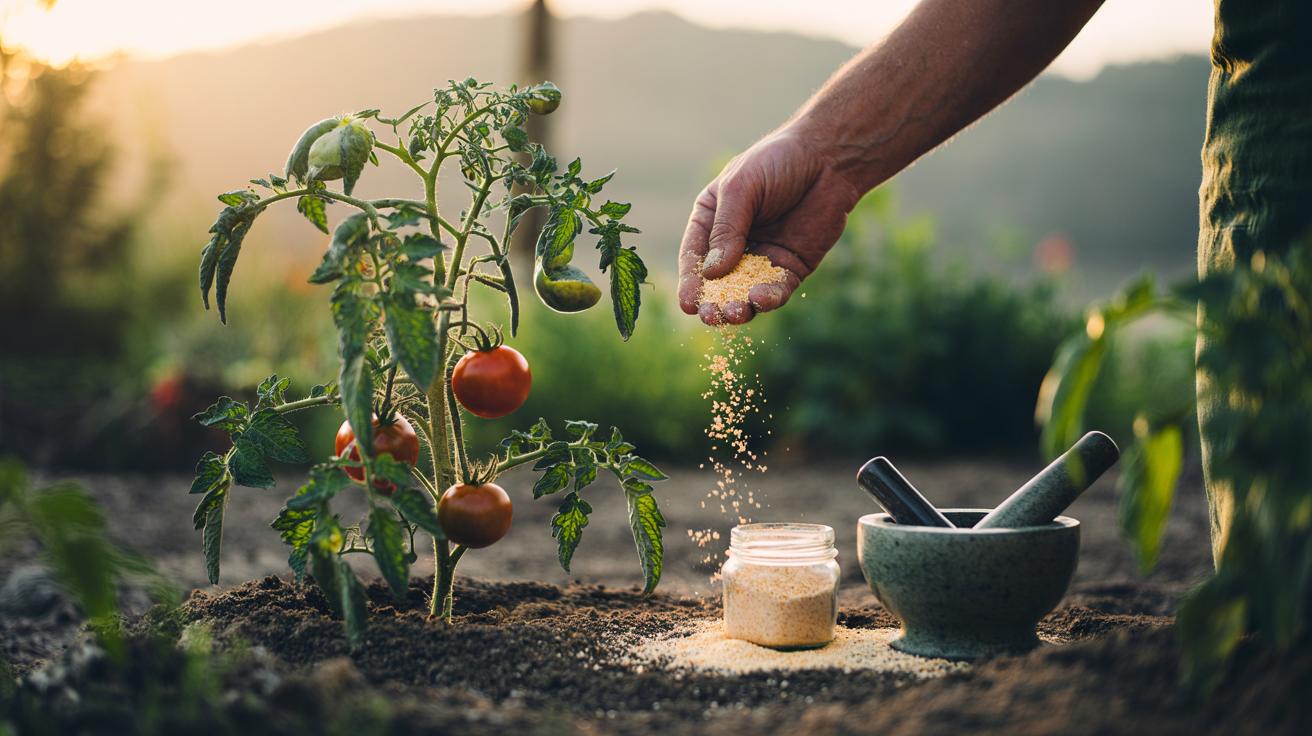
At transplanting, mix 1–2 tablespoons of powdered shell into the backfill around each tomato, keeping it just off the stem. Side-dress established plants with a tablespoon monthly, scratching lightly into the topsoil and watering in. Brew an eggshell “tea”: steep 10–12 shells in 1 litre of recently boiled water for 24–48 hours, then use the strained liquid to moisten the root zone. It’s mild, but habits compound. Pair every application with consistent watering and a mulch to even out moisture swings.
Containers? Use less, more often. Add a teaspoon to the potting mix per 5 litres and refresh with a pinch during feeding cycles. Fold shells into the compost heap for a steady pipeline next season; pulverised shells disappear faster in a hot pile. Remember, good nutrition is a chorus: shells plus compost, steady water, and a balanced tomato fertiliser when flowering begins.
| Method | Quantity | Timing | Main Benefit | Caveat |
|---|---|---|---|---|
| Powder in planting hole | 1–2 tbsp/plant | Transplant day | Slow-release calcium | Not an instant fix |
| Monthly side-dress | 1 tbsp/plant | Growing season | Top-up minerals | Work into soil lightly |
| Eggshell tea | 10–12 shells/litre | Every 2–3 weeks | Gentle, easy application | Low concentration |
| Compost addition | Crushed handful | Year-round | Improves future compost | Best when finely ground |
Troubleshooting and Common Myths
Let’s tackle the slug story. Coarse shells don’t reliably deter slugs or snails; their bodies bridge jagged edges with ease. Use beer traps, night picks, or wildlife-safe pellets instead. Next, pH panic. Eggshells do not meaningfully raise soil pH in typical garden use; the carbonate dissolves very slowly, especially in neutral or alkaline UK soils. Over-application clogs nothing, but clumps of sharp shards add no value. Grind fine, spread thin, be patient. And never bank on shells to replace watering discipline. Moisture consistency remains the headline act for preventing fruit disorders.
Spotting problems? Browning at the blossom end signals water stress during early fruiting. Prioritise deep, regular watering and mulch. Yellowing between veins may indicate magnesium shortage; that’s a job for Epsom salts, not shells. If plants are lush but fruit is sparse, reduce nitrogen and increase light. Finally, beware contamination: membranes left on shells can smell and attract pests. Dry thoroughly, bake lightly, store airtight, and you’ll keep the garden—and neighbours—happy.
Reusing eggshells to fortify tomatoes is small-scale alchemy: yesterday’s breakfast becomes tomorrow’s bumper crop. It’s thrifty. It’s low risk. And with a grinder and a watering can, it’s blissfully simple to weave into your weekly routine. Think of shells as a mineral savings account that pays out over months. Match them with mulch, measured water, and a balanced feed as flowers set, and you’ll stack the odds for heavy clusters and clean, glossy skins. What method will you try first—powder in the planting hole, a monthly top-up, or a jug of shell tea by the back door?
Did you like it?4.3/5 (28)