In a nutshell
- 🌱 Overfertilising raises soil salinity, causing salt stress, root burn, and wilting that watering won’t fix.
- 🧩 Excess nutrients trigger imbalances—high phosphorus locks up iron/manganese; high nitrogen creates weak, pest-prone growth; pH can drift.
- 🔎 Recognise signals: burnt margins, white crusts, and interveinal chlorosis; flush containers and test before adding more fertiliser.
- 🌍 Runoff of nitrates and phosphates drives eutrophication; surplus N can become nitrous oxide, amplifying environmental costs.
- 🧪 Smarter feeding: regular soil tests, targeted nutrients, slow-release sources, split doses, and mulch to support microbial life.
Every spring, sacks of feed promise instant vigour. It’s tempting to pour it on, chasing glossy leaves and bumper blooms. Yet overfertilising often plants the seeds of decline. Salts build up. Roots scorch. Leaves yellow in puzzling patterns as nutrients collide rather than cooperate. Your soil’s living community—fungi, bacteria, earthworms—takes a hit, and so does your wallet. Less can be more when nourishment matches need. A steady, measured diet grows sturdier plants than a feast they can’t metabolise. If you’ve been feeding every time growth stalls, pause. Read your soil, not just the label. The healthiest gardens rely on balance, not bravado.
The Hidden Chemistry: Salt Stress and Nutrient Imbalance
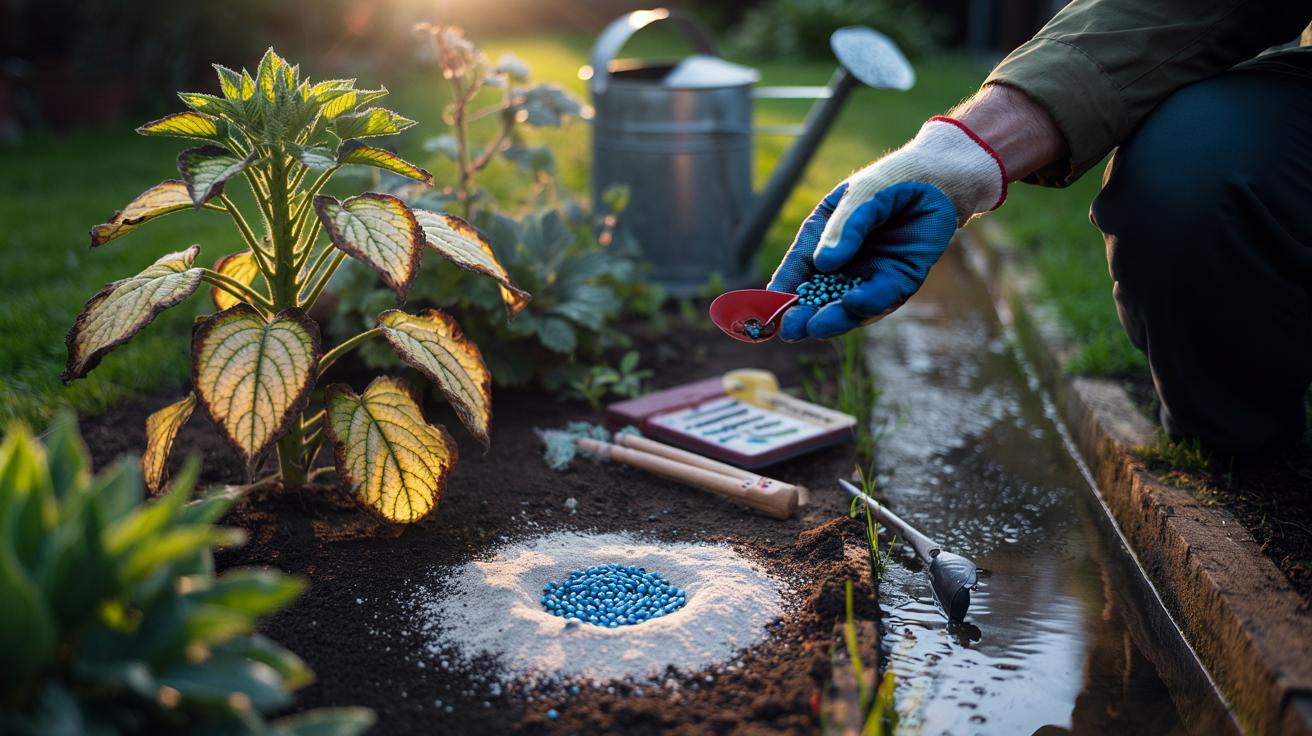
Fertiliser granules and liquids carry salts. In modest doses, fine. In heavy ones, they spike the soil’s electrical conductivity (EC), creating salt stress. Water moves from lower to higher solute concentration; excess fertiliser draws moisture out of roots. Tissues dehydrate, and root tips—your plant’s drinking straws—burn first. Above ground, you’ll see leaf-edge scorch and a sudden wilt that watering doesn’t fix. Push harder with feed, and you stack the odds against recovery.
There’s also the quiet warfare of nutrient imbalance. High nitrogen accelerates soft growth while short-changing magnesium and potassium uptake. Too much phosphorus (P) ties up iron (Fe) and manganese (Mn), producing chlorosis that mimics deficiency. pH can drift, nudging minerals out of reach. Soil is a community, not a chemistry set. Overfeeding disrupts microbial life that cycles nutrients slowly and safely, leaving plants dependent on frequent fixes and more vulnerable to drought and disease.
What Overfeeding Looks Like: Symptoms You Can Trust
Misdiagnosis is common. Pale leaves trigger reflex feeding, which deepens the problem if toxicity, not hunger, is to blame. Train your eye for patterns. Burnt tips and margins often signal salts, not thirst. Lush, floppy stems whisper “excess nitrogen.” A white crust on pots or beds points to accumulation. Before reaching for the bottle, consider these tell-tale signs and simple checks that separate hunger from harm.
| Symptom | Likely Cause When Overfed | Quick Check |
|---|---|---|
| Leaf tip/margin scorch | Salt build-up; root burn | EC/soil test; inspect root tips |
| Lush, weak, pest-prone growth | Excess nitrogen | Stems flop; aphids surge |
| Interveinal yellowing | High P tying up Fe/Mn | Recent high-P feed? Check pH |
| White crust on soil or pots | Salt accumulation | Scratch surface; taste test not advised |
| Wilting despite moist soil | Osmotic stress | Probe moisture; review feed history |
Remember, not every yellow leaf needs more food. Sometimes it needs less, plus a rinse. Flush containers with plain water, ease off the feed, and allow roots to recover. In beds, a gentle soak can help leach excess salts—then stop and reassess with a soil test.
Environmental and Financial Costs You Don’t See
What doesn’t stay in your beds can end up in rivers. Rain washes spare nitrates and phosphates into drains, fueling eutrophication—algal blooms that smother wildlife. In waterlogged soils, surplus nitrogen can escape as nitrous oxide, a potent greenhouse gas. It’s easy to shrug and say your patch is small. Runoff starts on your plot. Multiplied across streets and suburbs, it becomes a plume the size of a county. The harm is slow, but sure.
There’s a household ledger too. Overfeeding wastes product, accelerates mowing and pruning, and invites pests that demand control. Soft, sappy growth breaks in wind and collapses under mildew. Containers crust and need repotting sooner. Even irrigation costs climb because salty substrates force extra watering. Every unneeded application is money and time you never get back. Spend both on compost, mulch, and right-plant-right-place design, and your return improves dramatically.
Smarter Feeding: Testing, Timing, and Targets
Start with a soil test every couple of years. It reveals pH and reserves, saving you from reflex phosphorus on already rich soils. Choose fertilisers by need, not habit: balanced N–P–K for general maintenance, targeted magnesium or iron only when a verified shortfall exists. Prefer slow-release or organic sources that meter nutrients in step with root demand. Feed the soil, and the soil feeds the plant.
Apply lightly, more often, and always within label rates. Split doses beat one big hit. Stop high-nitrogen feeding late summer to avoid frost-tender flushes. Water granules in; sweep strays off hard surfaces to prevent runoff. Containers? Use dilute liquid feed at half strength and alternate with plain water to prevent salt creep. Mulch to buffer moisture and temperature, reducing the impulse to overfeed. And ask one question before every application: what problem am I solving that water, mulch, or patience can’t?
In gardening, restraint is rarely glamorous, but it pays. Plants grown on measured rations develop deeper roots, stronger cell walls, and a calmer rhythm that resists pests and weather shocks. Your soil life stays lively. Your bill drops. Rivers stay clearer. The greenest gardens often feed less, but feed smarter. Next time a plant sulks, reach first for a trowel, a moisture probe, or a test kit—not a stronger solution. What small shift will you make this season to move from “more” to “enough” and let your garden find its balance?
Did you like it?4.6/5 (22)