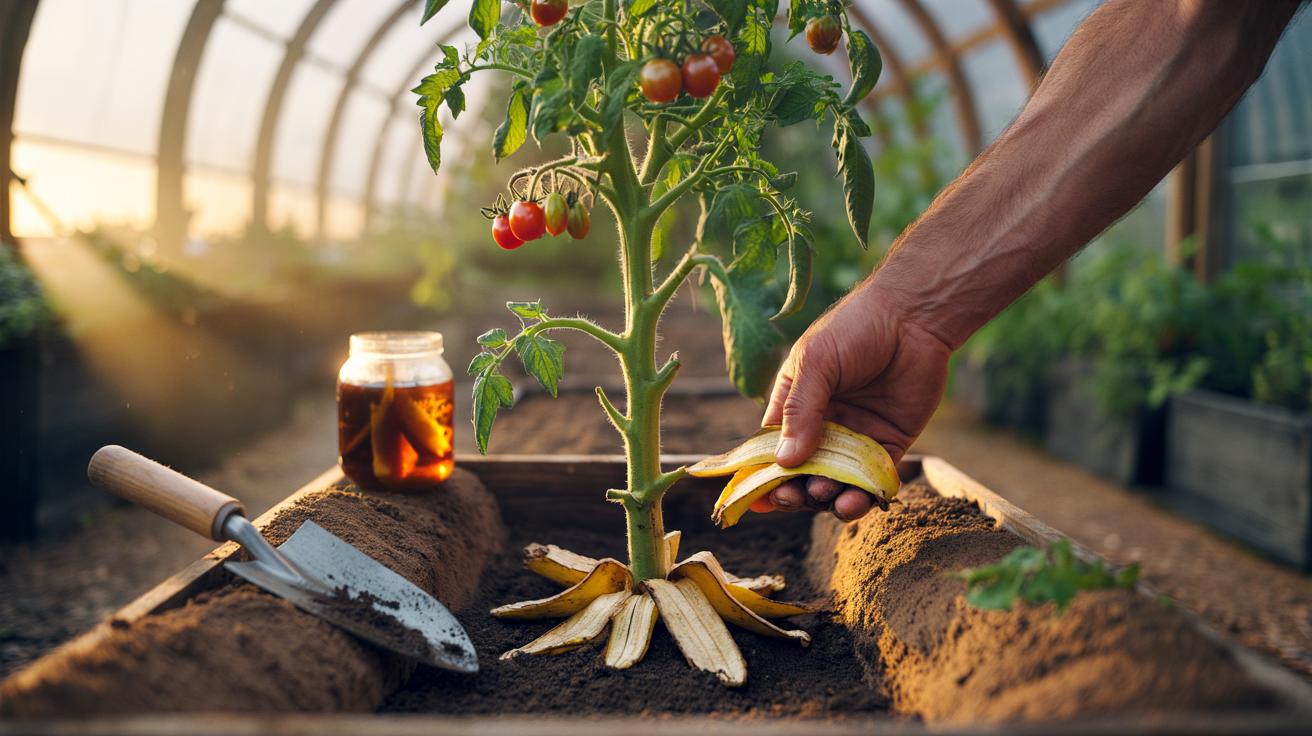
In a nutshell
- 🌿 Potassium’s role: Improves stomatal control, photosynthesis, and sugar transport, leading to stronger flowering and better flavour; it stabilises the NPK balance but won’t fix nitrogen/phosphorus deficits.
- 🍌 Safe use of peels: Never scatter raw peels; bury or dilute to avoid pests and odour, using hot composting, trench composting, short “tea” soaks, or dried peel powder.
- 🧪 Practical methods: Peel tea (24–48h soak, dilute 1:4), trench composting (15–20 cm deep, 20–30 cm from stem), and dried powder (about 1 tbsp per plant monthly) for clean, measurable dosing.
- ⏱️ Timing that works: Feed at first flowers, early fruit set, and mid-crop; water before dosing and prefer small, regular applications—especially in fast-growing greenhouse plants.
- 🛡️ Balanced nutrition: Peels add K but are low in N and P; pair with a balanced tomato feed and adequate calcium, plus mulch and active soil biology for steady growth.
Banana peels have a cult following among gardeners, and for good reason. They are a home-grown source of potassium, the nutrient that helps tomato plants channel energy into sturdy stems, abundant flowers, and richly flavoured fruit. Used thoughtfully, peels can complement a balanced feeding regime, especially in UK gardens where erratic summer weather tests plant resilience. Banana peels are not a complete fertiliser, but they are a smart supplement when handled correctly. Below, we explain why potassium is vital for tomatoes, the safest ways to use peels, practical step-by-step methods, and how to time applications to avoid pests while maximising growth and yield.
Why Potassium Matters for Tomatoes
Potassium (K) is the quiet workhorse of plant nutrition. In tomatoes, it regulates stomata so leaves use water efficiently, supports enzyme activity that drives photosynthesis, and improves the transport of sugars into developing fruit. High potassium strengthens flowering and boosts fruit quality, from colour and firmness to flavour. When K is short, tomatoes show weak growth, poor flower retention, and dull-tasting fruit. Leaves may exhibit marginal scorching or yellowing on older foliage as the plant reallocates resources to the top growth.
Think of potassium as the stabiliser in the classic NPK trio: nitrogen builds lush leaves, phosphorus promotes roots and early growth, and potassium knits these processes together for consistent cropping. In a UK summer, where dry spells can snap into showers, K helps tomatoes weather stress by improving cell turgor and disease tolerance. Balanced feeding remains essential—potassium cannot fix a nitrogen or phosphorus deficit—but a modest K lift at flowering and fruit set reliably improves outcomes. Right nutrient, right moment, right dose.
Safe Ways to Use Banana Peels in the Garden
Raw peels tossed on the surface invite foxes, rats, and fruit flies while releasing nutrients slowly and unevenly. The safer route is to process peels so their potassium is available to roots without creating a pest buffet. Good options include hot composting, trench composting (buried biology), short soaks to make a mild “tea”, and drying then grinding into a powder that integrates cleanly with soil. Always bury or dilute—never scatter peels on the soil surface around tomatoes. This simple practice cuts odour, speeds breakdown, and protects roots from mouldy clumps.
Remember, peels are rich in K but relatively poor in nitrogen and phosphorus. Pair them with a balanced tomato fertiliser, such as a UK tomato feed (often higher in K), and ensure calcium is adequate to deter blossom end rot. If your compost is young or your soil light and sandy, add organic matter to improve moisture retention—potassium’s benefits are amplified when soil biology is active. Do not rely on banana peels alone for sustained nutrition.
Step-by-Step Methods: Tea, Trench, and Powder
Banana peel tea: Rinse 3–5 peels, chop, and soak in 2 litres of clean water for 24–48 hours. Strain, then dilute 1:4 (one part tea to four parts water). Apply 250–500 ml per plant to moist soil at first flowers and during early truss development. Use as a soil drench, not a foliar spray, to avoid sticky residues and fungal issues. Discard peels into the compost heap after straining.
Trench composting: Chop peels and bury them 15–20 cm deep in a narrow trench 20–30 cm away from the stem. Do this 2–3 weeks before planting, or during the season at the edge of the root zone. Cover well to block odour. As microbes break down the peels, potassium and trace elements trickle towards the roots. Burying prevents pests and delivers a slow, steady release.
Dried peel powder: Dry peels in a low oven (90–100°C) or a dehydrator until crisp, then grind. Scratch 1 tablespoon (about 8–10 g) into the surface soil per plant monthly, water in, and mulch. This method is clean, odour-light, and easy to dose. Small, regular applications reduce waste and keep nutrients in the root zone.
Quick Comparison and Timing
Tomatoes crave steady nutrition, not feast-and-famine. Align banana peel inputs with stages that demand extra potassium: the onset of flowering, early fruit set, and mid-crop when clusters are swelling. In greenhouses, where growth is faster and watering frequent, modest, regular doses are better than one heavy hit. Outdoors, time trench composting before planting or top up with tea after warm spells when plants resume vigorous growth. Always water before feeding so nutrients travel evenly through the root zone.
Use the table below to pick a method that fits your routine and pest pressure. Tea and powder suit busy growers who need predictable, tidy applications; trench composting suits planners who prepare beds ahead of time. Combine methods with a balanced tomato feed to cover the full nutrient spectrum.
| Method | Prep Time | Release Speed | Pest Risk | When to Apply |
|---|---|---|---|---|
| Peel Tea (diluted) | 24–48 hours | Fast | Low | First flowers; early trusses; mid-season top-up |
| Trench Composting | 10–20 minutes | Slow–medium | Very low (when buried) | 2–3 weeks pre-planting; edge of root zone in season |
| Dried Peel Powder | 1–2 hours drying | Medium | Very low | Monthly from flowering; after heavy watering |
Used with intent, banana peels become a tidy, low-cost way to boost potassium for stronger trusses, brighter flavour, and more resilient plants. Keep expectations realistic: they are a supplement, not a silver bullet. Pair with a balanced tomato feed, steady watering, and regular mulching, and your crop will thank you with reliable yields. Small, regular doses at the right time beat sporadic, heavy applications. What method will you try first this season, and how might you adapt it to your greenhouse or outdoor setup to match your tomatoes’ growth stage?
Did you like it?4.7/5 (22)