In a nutshell
- 🌱 Uses light exclusion to suppress weeds; darkness halts photoblastic germination and etiolates seedlings, starving perennials while boosting soil life like earthworms.
- 🧱 Materials matter: plain, uncoated cardboard or 8–12 sheets of black-and-white newsprint; avoid glossy/waxed papers and remove all plastic tape for safe decomposition.
- 🧰 Step-by-step: wet soil, overlap cardboard 10–15 cm, soak, add 5–8 cm peat-free compost, then 5–8 cm mulch; transplant through X-slits or sow into the compost layer.
- 🔧 Troubleshooting: minimise nitrogen lock-up by keeping cardboard on top, manage slugs with tidy edges/copper tape, reinforce perimeters against bindweed and couch grass, and re-wet if sheets curl.
- 📈 Lasting gains: better moisture retention, fewer weeds, and gradual formation of crumbly humus; refresh mulch and check edges seasonally for near-effortless maintenance.
Forget the back-breaking cycle of hoeing and hand-pulling. In raised beds, a deceptively simple strategy—layering cardboard and newspaper—can suppress weed growth for a season or more while quietly improving soil. By excluding light and softening the soil surface beneath, this method smothers seeds and weakens perennial roots without herbicides. It’s inexpensive, scalable, and ideal for new beds or mid-season resets. Light-blocking layers create a calm, fertile stage where crops thrive and weeds fail. Whether you garden on compacted allotments or tidy urban plots, mastering this low-tech barrier gives you cleaner plantings, better moisture retention, and an elegant reuse for everyday materials.
How Light Exclusion Stops Weeds
Weeds are opportunists powered by light. Many are photoblastic: their seeds rely on a brief flash of brightness to switch the plant pigment phytochrome from its inactive to active form, triggering germination. The cardboard-and-newspaper method interrupts that moment. No light means no signal—and often no sprouting. Even if dormant seeds do awaken, they find an oxygenated but dim world. Seedlings become etiolated—thin, pale, and unable to photosynthesise—expending stored energy until they fail. The result is a clean slate above the barrier where your chosen crops, not weeds, capture the sun.
For established perennials, especially rhizomatous grasses and creeping invaders, the effect is starvation. The layers block shoots, slowing carbohydrate recharge while encouraging moist, biologically active conditions beneath. Microbes and earthworms accelerate decomposition around trapped roots, softening the matrix and easing later removal. Consistent darkness and moisture push weeds into retreat while soil life moves in—a rare win-win in garden management.
Choosing and Preparing Materials
Start with plain, uncoated corrugated cardboard. Remove all plastic tape, labels, and staples. Avoid glossy boxes, freezer packaging, and anything waxed or heavily dyed. For newspaper, choose black-and-white newsprint printed with soy or vegetable inks; skip magazines and colour supplements. Tear materials into manageable panels so they sit flat against curves and corners. Before laying, wet them thoroughly so they conform to the soil surface. Wet layers seal tightly, excluding light far better than dry sheets. This also discourages wind lift and accelerates safe, gradual decomposition.
Aim for one solid layer of cardboard or 8–12 sheets of newspaper, overlapping edges generously. In raised beds bordered by lawns, prioritise edge defence: tuck layers up against the frame to block creeping grasses. If couch grass, bindweed, or horsetail commonly invade, double the cardboard at perimeters. Materials break down within months, leaving a friable, humus-rich interface. It’s a circular practice too: you divert packaging from waste while building soil structure, water-holding capacity, and microbial diversity.
Step-by-Step Layering in a Raised Bed
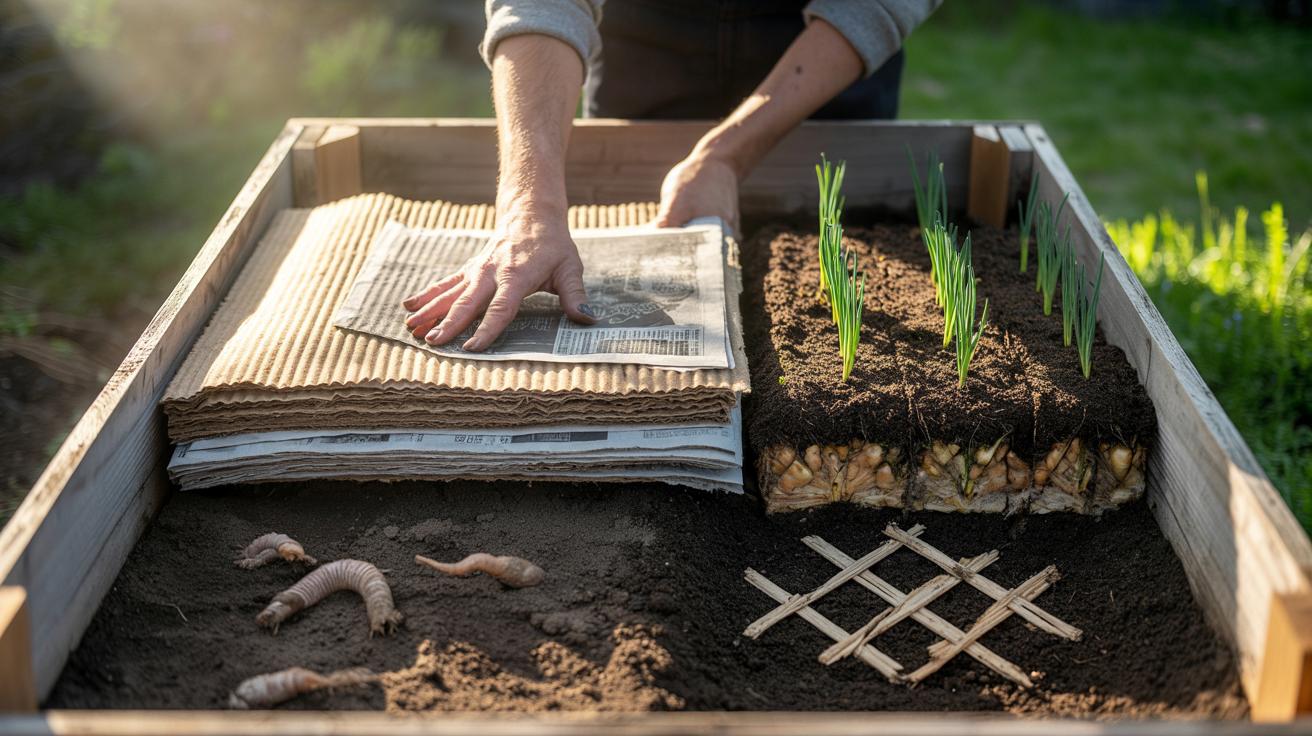
1) Scalp or cut down existing growth; leave roots in situ to decay into soil carbon. 2) Thoroughly water the bed—moist soil improves adhesion. 3) Lay cardboard over the entire surface, overlapping by 10–15 cm; plug gaps carefully. 4) Soak again until pliant. 5) Add 5–8 cm of peat-free compost or well-rotted manure. 6) Top with 5–8 cm of organic mulch—shredded bark, leafmould, or straw. Two rich layers above the barrier feed crops while the darkness below starves weeds. For transplants, cut neat X-slits; for direct sowing, sow into the compost above the barrier where roots will later penetrate the softening cardboard.
Attend to edges and fixtures. Press layers snugly against bed walls; add a thin vertical strip if grass encroaches under the frame. Water deeply to settle the sandwich and reduce air pockets. Plant shallow-rooted crops immediately; for deep-rooted species, allow four to six weeks for softening. Keep the surface evenly moist during dry spells to prevent curling. A tight seal and consistent moisture deliver the highest weed suppression.
| Layer | Typical Thickness | Main Role | Breakdown Time |
|---|---|---|---|
| Cardboard or Newspaper | 1 cardboard layer or 8–12 newsprint sheets | Light exclusion, barrier to shoots | 3–9 months |
| Compost/Manure | 5–8 cm | Nutrient supply, seed bed | Ongoing |
| Mulch | 5–8 cm | Moisture retention, surface light block | 6–12 months |
Troubleshooting and Long-Term Care
Concerned about nitrogen lock-up? Cardboard has a high carbon-to-nitrogen ratio, but immobilisation is minimal if it remains on top rather than mixed into soil. Balance with nutrient-rich compost above and avoid digging the barrier into the root zone until it softens. Slugs may shelter under damp layers; reduce risk with tidy edges, minimal thatch, and copper tape on bed rims. For persistent perennials like bindweed, double the overlap, maintain thick mulch, and hand-lift any shoots that slip through. Relentless shading weakens even stubborn weeds over time.
Watch moisture dynamics. If sheets dry and curl, re-wet or pin with biodegradable pegs. In windy sites, anchor corners with stones until decomposition begins. Refresh mulch mid-season if light patches appear. After 6–12 months, the barrier becomes crumbly humus, inviting gentle incorporation with a fork—no heavy digging required. Edge-check annually where lawns meet the bed. Small, regular checks keep the system tight and virtually weed-free, season after season.
This light-blocking method is effective because it harmonises physics and biology: it denies weeds the photons they crave, then recruits moisture, microbes, and time to finish the job while feeding your soil. The result is less toil, stronger plants, and a tidy finish that respects both budget and biodiversity. You can deploy it to start new beds, reset weedy plots, or protect perennial plantings between crops. Ready to trial it on your patch—what bed will you choose first, and which weed do you most want to banish with a well-laid, light-proof layer?
Did you like it?4.4/5 (30)