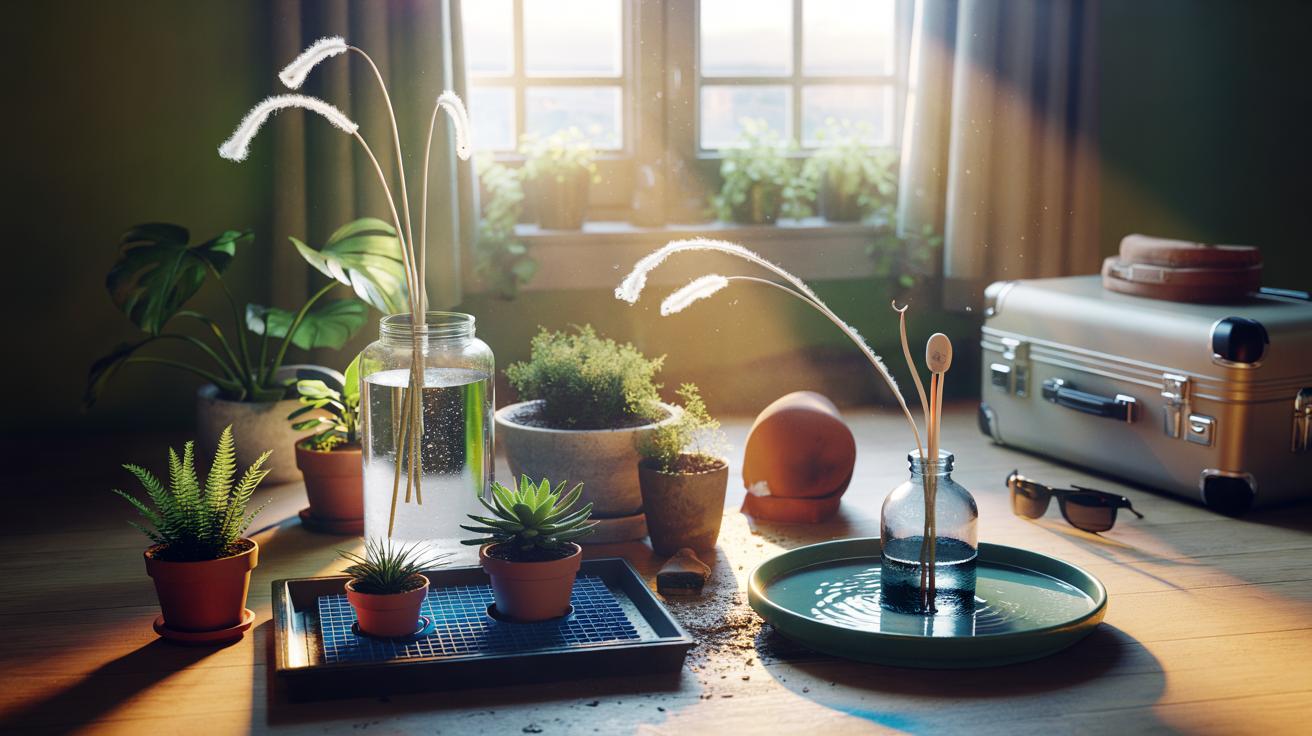
In a nutshell
- 🌿 Tame demand: adjust light, group plants for humidity, add mulch, and choose water-retentive pots to slow transpiration.
- 💧 Quick setups: use a wick system, capillary mat, deep saucer soak, or bottle drip to deliver steady moisture via capillary action.
- 🛠️ Long trips: deploy an olla or ceramic water spikes, create a bath wicking bed, and add light shade for multi-week reliability.
- 🕒 Plan by duration: methods offer 3 days to 3 weeks of coverage; match setup time and typical duration to plant size and number.
- 🧪 Best practice: water thoroughly, pre-wet hydrophobic mixes, clear drainage, then test every system for 24 hours—because consistency beats volume.
Heading off on holiday is liberating, but it can spell trouble for houseplants left to fend for themselves during a warm spell. Soil dries. Leaves crisp. Guilt ensues. The good news is that horticultural experts have refined simple, low-cost strategies that keep moisture moving to roots while you’re away. Some harness capillary action, others reduce transpiration or build a small self-watering reservoir. The smartest plan combines two or three methods so you’ve got redundancy if one underperforms. Water thoroughly before you leave, then slow the rate of loss and ensure a steady top-up. Here’s how to prepare your pots, pick the right kit and avoid the common pitfalls that desiccate even the toughest greenery.
Understanding Plant Thirst: Light, Potting Mix, and Container Size
Plants don’t all drink alike. Succulents sip; ferns guzzle. Yet three variables drive most holiday failures: light intensity, potting mix, and container volume. Bright windows fuel photosynthesis and evaporation, so even a typically “easy” plant can parch in days. Shift pots a metre back or use sheer curtains to trim harsh rays without plunging them into darkness. Reducing light modestly cuts water use dramatically. Group plants together to create a humid pocket; leaves slow air movement for their neighbours, lowering transpiration and extending the interval between drinks.
Soil matters just as much. Many mixes contain peat-free components that are superb for drainage but can become hydrophobic when dry. Pre-wet the mix fully until water runs from the drainage holes, then wait ten minutes and repeat. Add a layer of mulch—shredded bark, pebbles, even clean moss—to curb surface evaporation. For thirsty species, avoid unglazed terracotta, which wicks moisture from the root zone; choose glazed ceramic or plastic to retain water a touch longer. A larger pot equals a larger reservoir, so consider up-potting fast growers a few weeks before summer travel.
If you’re short on time, one quick tweak pays off: double-potting. Slip a nursery pot inside a slightly bigger cachepot lined with damp newspaper or a thin capillary mat. The inner pot pulls gentle moisture through its drainage holes as the outer lining dries. It’s a simple buffer that buys you crucial extra days and evens out the peaks and troughs of watering.
Proven Self-Watering Methods You Can Set Up in Minutes
The classic trick is the wick system. Place a bucket or jug of water slightly above plant level, feed a length of cotton cord from the reservoir into the pot, and bury the end several centimetres deep. Capillary action draws moisture as the soil dries, preventing both drought and over-saturation. Use one wick for small pots, two for anything over 20 cm diameter. For plants sharing a tray, lay a capillary mat on a watertight tray, keep one edge dipped in a bowl of water, and set pots (with holes) directly on the mat. Always test overnight before departure—the mat should feel damp, not soggy.
Short trips? Try a deep saucer soak. After a thorough top-water, leave 1–2 cm of water in a wide saucer beneath the pot so roots can sip slowly. For a DIY drip, pierce a plastic bottle cap with a pin, fill the bottle, invert it and wedge into the soil; it releases a slow trickle. These quick fixes shine when you’ll be away for under a week and don’t want to re-stage the whole windowsill. Shade the area slightly and add mulch to stretch their effectiveness.
| Method | Setup Time | Typical Duration | Best For |
|---|---|---|---|
| Wick System | 10–15 minutes | 1–3 weeks | Mixed houseplants, medium pots |
| Capillary Mat | 10 minutes | 1–2 weeks | Multiple small pots |
| Deep Saucer Soak | 5 minutes | 3–7 days | Compact, non-woody plants |
| Bottle Drip | 5–10 minutes | 3–10 days | Individual pots, herbs |
Whichever you choose, keep reservoirs covered to reduce algae and mosquitoes, and use room-temperature water to avoid root shock. Consistency beats volume: a steady, slow supply protects roots better than a single heroic soak that leaves air pockets and runoff.
When You’ll Be Away Longer: Low-Tech Systems That Last
For multi-week absences, step up to solutions that store more water or deliver it more efficiently. The old-world champion is the olla—a porous clay vessel buried near roots and filled with water. As the surrounding soil dries, it draws moisture through the pot’s walls. No moving parts, no electricity, just physics. Modern equivalents include ceramic or polymer water spikes that screw onto bottles and release at a controlled rate. Place two in larger containers for even distribution. Position reservoirs at or just above soil level to avoid uncontrolled siphoning.
Caring for a crowd? Convert your bath into a temporary greenhouse. Lay a towel as a wicking bed, saturate it, set pots on top, and leave a few centimetres of water in the tub without submerging pot bases. Pull the shower curtain for gentle shade, or add a mesh to diffuse light. This method stabilises humidity and reduces daily swings that stress leaves. For patios, cluster containers, mulch heavily, and erect a simple shade cloth to slice midday scorch without plunging them into gloom.
Finally, upgrade where it counts. Self-watering planters with hidden reservoirs and float gauges can run for weeks, especially with water-retentive, peat-free mixes amended with coir. Avoid gels for cacti and succulents; they prefer the soil to dry out between drinks. Before leaving, prune lightly, remove spent blooms, and check drainage holes are clear. The golden rule: water well, then give every system a 24-hour trial. If the top 2–3 cm stay evenly moist—not sodden—you’ve hit the sweet spot.
Holiday peace of mind comes from stacking the odds: reduce demand, add a reservoir, test the flow. Whether you choose a simple wick, a capillary mat, or the almost foolproof olla, the aim is the same—steady moisture delivered at the pace plants actually use it. Add a little shade, group pots, mulch, and you’ll return to glossy leaves rather than a rescue mission. Think like water: slow, consistent, predictable. Which method will you try first, and how might you combine two approaches to tailor hydration to your most finicky plant?
Did you like it?4.3/5 (22)