In a nutshell
- ✨ Aluminium-foil mulch uses bright, reflective glare to confuse visual cues for aphids, whitefly, and thrips, cutting landings and lowering virus transmission as part of IPM.
- 🧰 Choose materials to suit your setup: kitchen foil for trials, silver-on-black mulch for beds, Mylar for sheltered spaces, and woven reflective fabric for multi-season use—keep surfaces clean for maximum effect.
- 🛠️ Install by cutting panels to fit, pegging edges taut, adding perforations for watering and airflow, and avoiding contact with stems; consider drip lines under the mulch and a hybrid reflective-plus-organic approach at bed edges.
- 📊 Expect fewer sap-sucker visits and cleaner growth, with reported drops in cucumber mosaic virus; it’s a deterrent, not a cure—scout leaves and back up with sticky cards or soft soap when needed.
- 🌍 Eco-wise, prioritise reusable films and recycle clean foil, manage glare and heat carefully, and pair with slug controls like copper barriers or nematodes to round out protection without insecticides.
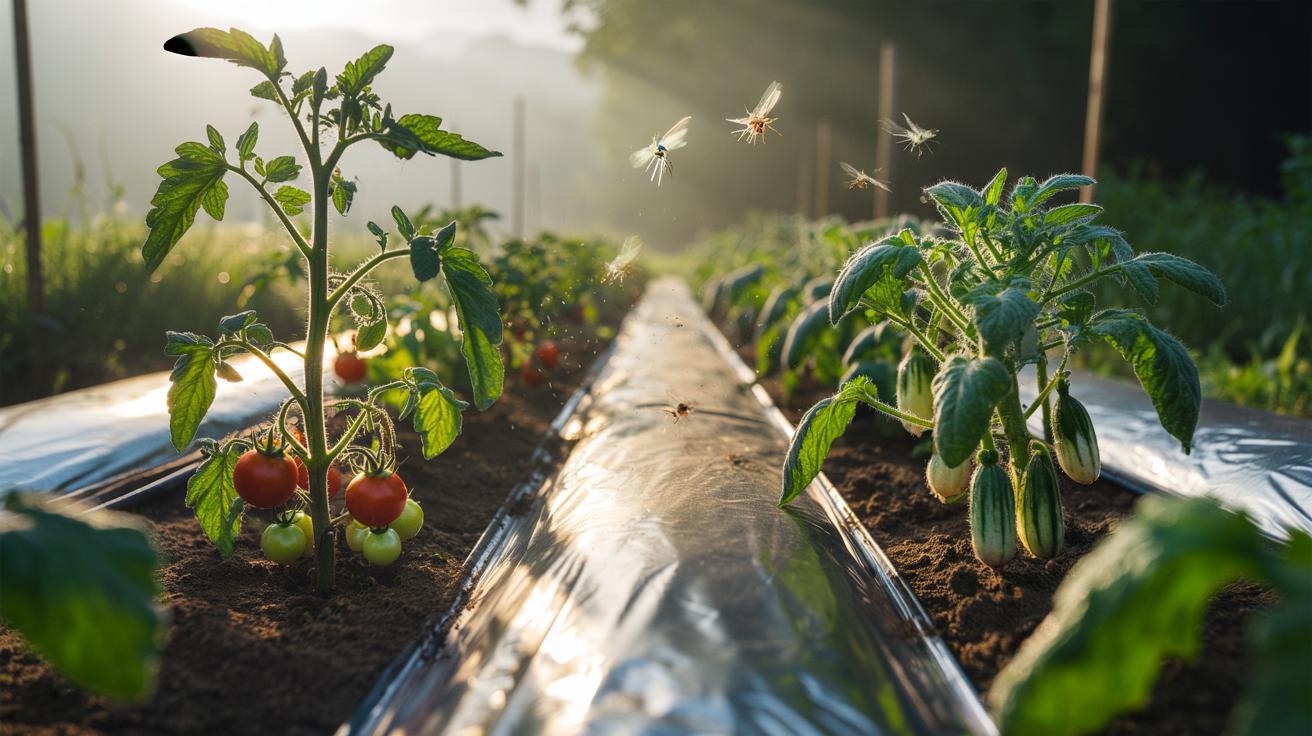
Shimmering beds might look eccentric, but gardeners across the UK are discovering that a simple sheet of aluminium-foil mulch can quietly outwit pests. By bouncing light back towards the canopy, these bright surfaces scramble the visual systems that guide aphids, whitefly, and thrips. The result is fewer landings, less sap-sucking, and lower virus pressure on vulnerable crops such as courgettes, cucumbers, and tomatoes. Reflective groundcovers disrupt insect orientation without sprays, making them a neat option for growers chasing cleaner harvests. This technique is inexpensive, quick to deploy, and adaptable to pots, raised beds, and allotment rows—ideal during peak summer flights when infestations explode. Here’s how the glare game works, and how to use it well.
Why Reflective Mulches Confuse Insects
Many crop pests navigate by contrast and polarised cues. A reflective mulch flips those cues on their head, emitting a chaotic mix of angles and wavelengths. To a tiny flier scanning for leaf shapes and plant-edge contrasts, the glittering signal appears inconsistent and risky. Laboratory and field trials show fewer landings from aphids, whitefly, and leafhoppers, which translates to lower transmission of non-persistent plant viruses. When fewer carriers touch down, the infection cycle is interrupted early, buying precious time for seedlings and soft growth.
The effect is strongest in bright conditions, where the foil throws high-intensity reflections into the under-canopy. That sparkle contests the attractive cues plants naturally give off, particularly young, tender leaves. In UK gardens, results are most obvious in late spring and summer, but even bright breaks in an overcast week can help. Crucially, the mulch does not poison or trap; it simply deters and confuses, fitting neatly within integrated pest management (IPM) plans.
Not every insect cares. Slugs and snails ignore light patterns, and beetles marching in from the border may still arrive. Yet where virus-vectoring sap suckers are the main worry, reflective groundcovers reduce risk quickly, especially around early plantings when losses sting.
Choosing and Preparing Aluminium-Foil Mulch
Standard kitchen foil works as a low-cost proof of concept. For better durability, many growers step up to silver-on-black plastic mulch or thin Mylar sheeting. Black backing helps suppress weeds and warms soil modestly, while the silver face delivers the glare. Aim for a finish that is clean and unwrinkled; heavy creasing lowers uniform reflectance. Keep the upper surface free of soil splashes to maintain the deterrent effect. Before laying, clear weeds, lightly rake the bed, and water in if the soil is dry—good bed prep ensures a flatter, longer-lasting surface.
Perforations are essential around each plant to let air and water into the root zone. If using kitchen foil, bond it to biodegradable paper or card strips with a few dots of non-toxic glue; this reduces tearing and keeps edges tame. For pots and troughs, cut neat circles to fit the surface, slit to the centre, and tuck around stems. Where glare might bother neighbours, angle edges down slightly or use a lighter-reflective film to soften intensity.
| Material | Typical Cost (UK) | Durability | Reflectivity | Best For |
|---|---|---|---|---|
| Kitchen aluminium foil | Low | Short term | High when clean | Trials, small pots, short crops |
| Silver-on-black plastic mulch | Moderate | Season-long | High | Beds, allotment rows |
| Mylar emergency blanket | Low to moderate | Fragile if windy | Very high | Greenhouses, sheltered frames |
| Woven reflective fabric | Higher | Multi-season | Medium-high | Perennial borders, reusable setups |
Installation: Step-by-Step for Beds, Pots, and Allotments
Measure your bed and cut panels to cover soil between stems, leaving a small gap around each plant to prevent chafing. Secure edges with metal or wooden pegs at 30–50 cm intervals; taut surfaces reflect more consistently and resist wind lift. Do not wrap foil right against the stem base; a 2–3 cm margin allows air flow and reduces rot risk. Where irrigation is manual, pre-punch watering holes or lift a corner to water deeply, then re-anchor.
For pots, lay a fitted disc of foil shiny side up, slit to the centre, and overlap slightly to hug the stem. Add two or three 1 cm holes to prevent water pooling. In raised beds, combine reflective panels with drip lines beneath the mulch to keep water efficient and foliage dry. If heat builds during a rare hot spell, loosen a section or shade the bed in the midday window to protect shallow-rooted crops like lettuce.
Consider a hybrid approach: a strip of reflective mulch along the row centre and a collar of organic mulch at the edges for moisture control. This keeps the glare where it counts—under the canopy—while stabilising soil structure. Replace or clean panels after heavy rain or soil splash to maintain performance, and store reusable films rolled rather than folded to minimise creases.
Results, Limitations, and Eco Considerations
Expect fewer landings from winged sap suckers within days, and visibly cleaner growth on plants that are usually hit first. Gardeners often report reduced cucumber mosaic virus incidence when reflective mulches are set out before flights peak. That said, pressure varies by location and weather. Reflective mulches deter, they do not eliminate. Keep an eye on undersides of leaves and deploy yellow sticky cards or soft soap if colonies establish despite the glare.
Light scatter can be intense. Aim reflections into the crop, not across paths or windows. In strong sun, foil may warm the near-surface layer; watering discipline and small ventilation gaps prevent stress. Birds are generally unbothered after brief curiosity, though loose foil can flap—secure it well. For slugs and soil-dwelling pests, pairing with beer traps, copper barriers, or nematodes rounds out control.
On waste, choose reusable films where possible. Woven reflective fabrics last several seasons; silver-on-black plastics can be cleaned and stored. If using kitchen foil, avoid food-contaminated offcuts and recycle clean material. The key gain is chemical avoidance: each week the glare works is a week without insecticide, protecting pollinators and beneficials while keeping salads and fruit blemish-free.
Bright groundcovers may look unconventional, but they deliver a practical advantage: targeted deterrence at the point where pests decide to land. By confusing orientation, reducing virus spread, and shrinking spray needs, aluminium-foil mulch earns its place alongside nets, companion plants, and vigilant scouting. With a few pegs, clean surfaces, and thoughtful placement, the method scales from balcony pots to full allotment rows. As the season shifts and flights surge, could a little intentional sparkle be the simplest upgrade to your garden’s defence—and how might you adapt it to your own beds and microclimate?
Did you like it?4.4/5 (20)