In a nutshell
- 🌱 A simple aluminium-foil ring creates a physical barrier and reflective deterrent that protects seedlings from cutworms, slugs/snails, and early aphids.
- 🛠️ How-to: Use double-layer foil strips 5–8 cm wide (up to 10–12 cm for transplants); form a loose cylinder with a 5–8 mm gap, bury 1–2 cm into soil, and leave 3–5 cm above ground.
- 🗓️ Best timing: Fit collars at transplanting and early growth; especially effective in spring–early summer when pests target the soil line; pair with traps or hand-picking as needed.
- ⚠️ Safety: Smooth edges and never constrict stems; widen after rain and shorten collars in heat; remove once plants are sturdy to avoid girdling or scorch.
- ♻️ Sustainability & alternatives: Reuse and recycle foil; consider copper bands, cardboard/felt collars, or bottle sleeves; integrate into broader IPM for resilient beds.
Gardeners across the UK know the heartbreak: a row of tender seedlings reduced to stumps by morning. A simple, low-cost fix has been hiding in the kitchen drawer. Wrap a strip of kitchen foil around each stem to form a snug collar and you create a physical barrier that pests struggle to cross or chew through. The aluminium-foil ring reflects light, keeps its shape in the rain, and can be reused. This small, ten-minute intervention can be the difference between a thriving bed and a wiped-out crop. From cutworms lurking at soil level to early aphid landings, the method leverages both texture and reflectivity to protect vulnerable plants while you sleep.
Why a Foil Collar Works
The genius of a foil collar is its simplicity. Cutworms feed by circling and severing stems at the soil line; a firm, slightly crimped ring forms a rigid wall they cannot easily grip or climb. Slugs and snails encounter a dry, unstable edge that complicates their progress, especially when the ring projects a short way above and below the soil surface. The highly reflective surface throws fragmented light at ground level, disrupting visual cues used by early-season aphids and other small fliers searching for hosts. By combining a barrier with a mild reflective deterrent, you buy seedlings crucial time to establish thicker, less palatable stems.
There is also a microclimate effect. A correctly sized ring shelters the stem base from wind-driven debris without touching the plant, reducing abrasion and rot risk. The key is balance: firm enough to stand up to rain, loose enough to allow airflow. When installed with a small clearance, foil resists waterlogging and does not wick moisture onto tender tissue. While it won’t stop every pest, the cumulative reduction in access and signals can materially lower losses.
How to Make and Fit an Aluminium-Foil Ring
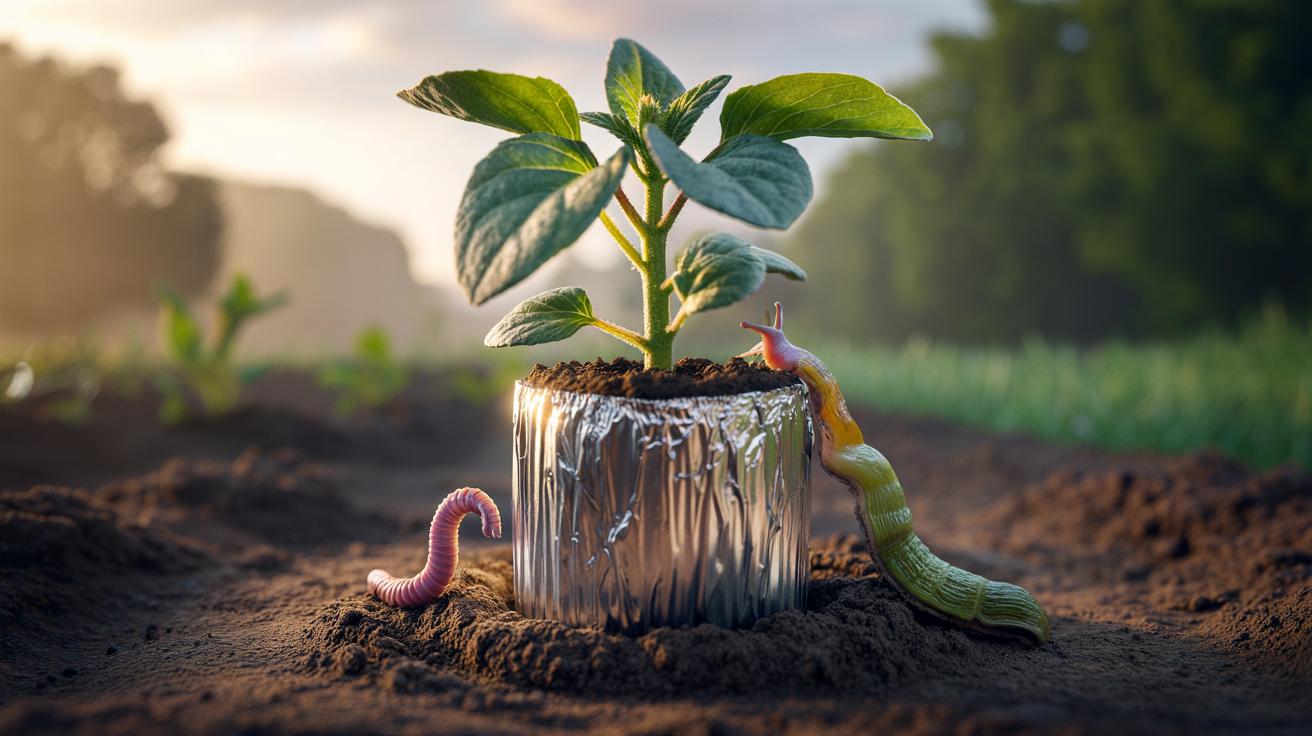
Tear a strip of kitchen foil roughly 5–8 cm wide for seedlings and up to 10–12 cm for larger transplants. Use a double layer for stiffness, shiny side out. Wrap it around the stem to form a loose cylinder with a 5–8 mm gap so the plant never chafes. Crimp the overlap gently to hold shape, then press the lower edge 1–2 cm into the soil to block access at ground level. Leave 3–5 cm above the soil as a vertical wall. Never constrict the stem; the ring must not touch living tissue.
Check after heavy rain or watering and re-set if soil settles. Widen the ring as stems thicken and remove once plants have toughened. On hot, bright days, avoid building tall collars around heat-sensitive species; keep the wall modest to prevent localised warmth. If wind is fierce, add a thin bamboo skewer outside the ring for stability. A smooth upper edge prevents tearing leaves, and a buried lower lip stops pests sneaking underneath.
Pests Most Affected and When to Use It
Use foil collars at the point of maximum vulnerability: during transplanting and early growth. They are particularly helpful against cutworms in spring and early summer, when larvae are active at the soil line. They can hinder slugs and snails crossing into the crown zone on damp nights, though heavy infestations may still need traps or hand-picking. Around brassicas, the barrier can deter cabbage root fly from laying eggs tight to the stem base. The reflective aspect is most useful in bright conditions, slightly reducing early aphid landings on young tomatoes, cucurbits, and peppers. It is not a cure-all, but it slots neatly into an integrated strategy.
| Pest | Typical Damage | Foil Ring Benefit | Best Timing |
|---|---|---|---|
| Cutworms | Stems severed at soil line | Blocks encircling and chewing | Spring–early summer |
| Slugs/Snails | Night feeding on crowns | Difficult crossing, drier edge | Damp spells, mild nights |
| Cabbage Root Fly | Eggs at stem base of brassicas | Obstructs access to soil-collar junction | Planting and early establishment |
| Aphids | Early colonisation | Reflective deterrent slows landing | Sunny periods |
Safety, Sustainability, and Alternatives
Aluminium foil is durable, light, and easy to shape, which makes it practical at scale on an allotment. Reuse rings through the season; if kept clean, foil can be recycled at many UK facilities. Always smooth edges to avoid slicing leaves and widen collars as stems expand to prevent girdling. In heatwaves, shorten collars and ensure airflow to avoid stem scorch. Remove once plants are sturdy or when mulch covers the soil and other controls are in place.
For slugs, a dedicated copper band is often superior but pricier. Cardboard or felt collars work for brassicas against root fly, though they degrade faster. Recycled plastic bottle sleeves provide wind protection but lack reflectivity. Choose the least wasteful option that suits your pest pressure and crop. Never leave fragments in beds or hedgerows; tidy removal is part of responsible gardening. The foil ring excels as a quick, adaptable tool that complements traps, hand-picking, soil health, and wildlife-friendly predation.
The aluminium-foil ring turns a household staple into robust plant armour. By combining a physical barrier with a subtle reflective deterrent, it shields seedlings through their riskiest weeks without chemicals or fuss. It installs in minutes, adapts to many crops, and integrates neatly with broader IPM tactics such as mulching, wildlife habitat, and careful watering. Its low cost and speed make it a standout for time-pressed growers. As you plan your next sowing, which beds or crops would benefit most from a simple foil collar—and how might you pair it with other low-impact defences for a resilient, pest-savvy garden?
Did you like it?4.5/5 (28)