In a nutshell
- 🌡️ Bark-chip mulch creates a low-conductivity thermal buffer by trapping still air, reducing diurnal swings and stabilising root-zone temperature.
- ❄️☀️ Winter-to-summer protection: limits frost penetration and freeze–thaw heave, while shading soil in heat; even a 2–5°C buffer can prevent root stress and dieback.
- 🧰 Application essentials: medium 20–50 mm chips; depth 5–7.5 cm for perennials and 7.5–10 cm for shrubs/trees; keep a 5–10 cm stem gap; apply in late spring/autumn; avoid mixing chips in to limit nitrogen immobilisation.
- 💧🪱 Moisture and biology: reduces evaporation, supports mycorrhizae and microbial life, suppresses weeds, and improves structure—enhancing resilience and insulating performance.
- ♻️ Maintenance and sustainability: top up every 12–18 months, choose FSC-certified bark, and use across beds, containers, and slopes for water savings, healthier soils, and a modest carbon benefit.
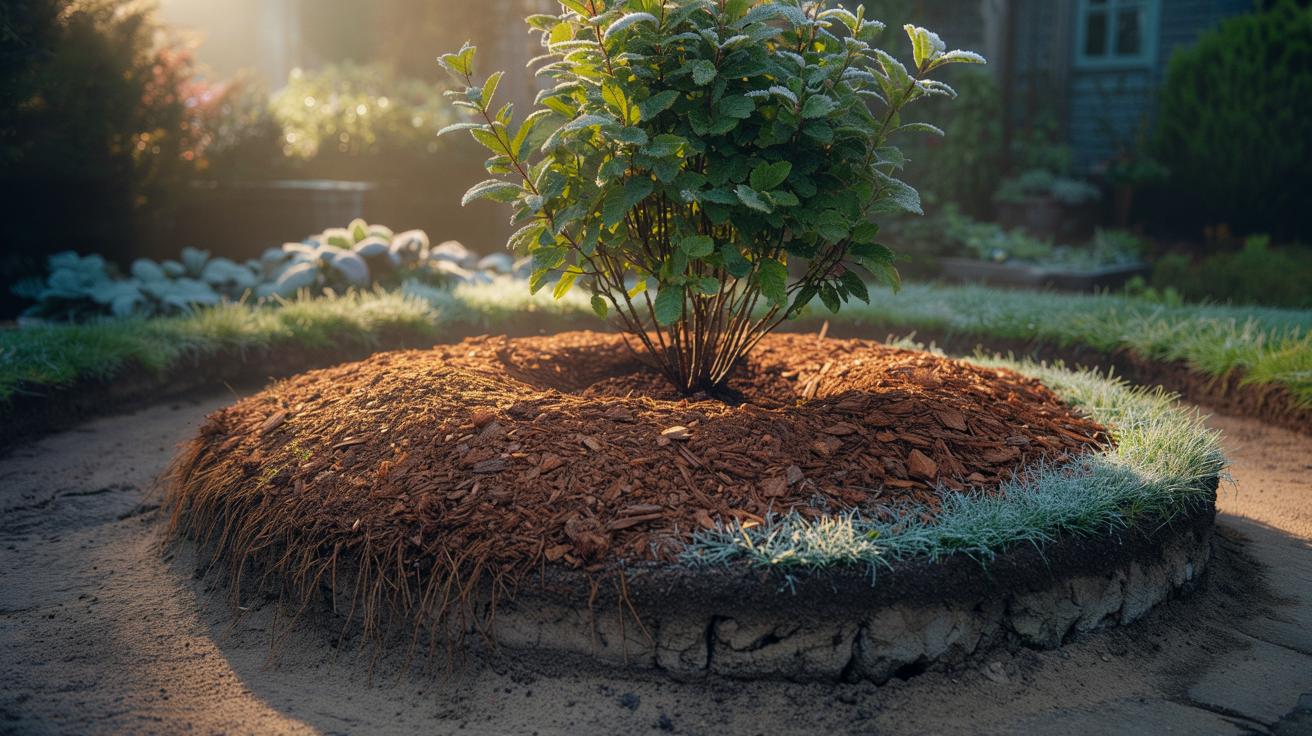
Gardeners across the UK know that cold snaps and heatwaves can arrive without ceremony. One of the simplest defences is a layer of bark-chip mulch, which acts as a quiet but effective blanket over the soil. By intercepting sunlight, slowing wind at the surface, and trapping air within its structure, bark creates a thermal buffer that keeps root zones closer to a steady, plant-friendly temperature. This stability protects young transplants, established shrubs, and bulbs alike, while also helping soil life to function. Beyond temperature, bark chips reduce evaporation, suppress weeds, and soften heavy rain. Here’s how this humble material insulates, how to use it correctly, and why its benefits extend well beyond winter.
How Bark-Chip Mulch Insulates Soil
Bark chips are riddled with voids that hold still air, a poor conductor of heat. This gives the mulch low thermal conductivity, slowing heat transfer between the atmosphere and the soil. The textured surface also scatters and absorbs solar radiation, preventing rapid warming at midday. At night, the mulch reduces long-wave heat loss from the ground, blunting the chill. Together, these mechanisms dampen the diurnal swing, so the soil beneath experiences smaller peaks and troughs. Stable temperatures reduce physiological stress, allowing roots to maintain growth and water uptake when the weather lurches between extremes.
Insulation is only part of the story. A bark layer reduces convective exchange by calming air at the soil interface, while its porous matrix moderates how quickly rain infiltrates and evaporates. Moist mulch conducts heat differently from dry mulch; crucially, the chips shield the surface from direct sun and wind, cutting evaporative cooling that can chill soils abruptly in spring. The result is a moderated microclimate where soil temperature changes more slowly, giving plants time to adapt and avoiding shock to fine, delicate feeder roots.
Winter Cold, Summer Heat: A Stable Root Zone
In winter, the main hazards are frost penetration and freeze–thaw cycles that heave roots and disturb soil structure. A 5–8 cm bark layer reduces the rate at which frost travels downward, often keeping the top few centimetres of soil unfrozen during brief cold snaps. This matters for evergreens and winter-active roots that continue to respire above 0°C. Even a modest 2–5°C buffer at root level can mean the difference between dieback and healthy overwintering. Where frosts persist, mulch slows the freeze, then slows the thaw, preventing rapid expansion and contraction that snaps fine roots and disrupts budding perennials.
In summer, insulation works in reverse: bark chips limit midday spikes, shade the soil, and preserve moisture. Cooler, damp soil supports microbial activity and keeps stomata from closing prematurely, so plants ride out hot spells with less stress. Mulch also tempers night-time cooling after hot days, reducing thermal whiplash. For containers and raised beds that heat fast, bark on top of a moist substrate can trim peak temperatures and delay the onset of drought stress. The consistent root-zone environment encourages steadier nutrient uptake, improving flower set, fruit quality, and overall resilience during the UK’s increasingly variable summers.
Applying Bark-Chip Mulch Correctly
Success depends on the right material, depth, and timing. Use medium-grade chips (roughly 20–50 mm) from untreated, sustainably sourced bark. Lay mulch on weed-free, moist soil in late spring or early autumn, aiming for 5–7.5 cm around perennials and 7.5–10 cm beneath shrubs and young trees. Keep a clear collar around stems to prevent rot and pests: do not pile mulch against trunks or crowns. If your soil is hungry, add a thin compost layer first, then the bark; this preserves nutrients while maintaining insulation and moisture conservation.
| Objective | Recommendation | Notes |
|---|---|---|
| Depth | 5–7.5 cm perennials; 7.5–10 cm shrubs/trees | Top up annually as chips settle |
| Chip size | 20–50 mm | Balances air pockets with stability |
| Stem clearance | 5–10 cm gap | Prevents rot and vole damage |
| Timing | Late spring or autumn | Soil should be moist but not waterlogged |
| Replenishment | Every 12–18 months | Restore lost depth for consistent insulation |
Avoid digging chips into the soil; surface application limits any temporary nitrogen immobilisation to the very top layer. Fresh bark can be used if not mixed in; for demanding crops, underlay with compost or a slow-release organic fertiliser. In exposed sites, pin the mulch with prunings or water thoroughly after spreading so it settles. Consistent depth is the critical variable that governs thermal performance, so measure, don’t guess, especially around tender plants or new plantings.
Beyond Temperature: Moisture, Biology, and Carbon
Insulation and moisture go hand in hand. By limiting evaporation, bark chips keep pore spaces filled longer, allowing roots and mycorrhizae to explore more soil volume. Healthier microbial communities, in turn, aggregate particles, improving structure and thermal properties—a virtuous cycle. Weed suppression reduces competition for water, preventing shallow-rooted invaders from stealing moisture and nutrients during heatwaves. Vigorous soil life amplifies the insulating effect by stabilising structure and enhancing water holding. For wildlife-friendly gardens, a mulch layer provides habitat for ground beetles and spiders that predate pests, complementing the mulch’s physical benefits.
There is also a carbon story. Bark is a by-product; used as mulch, it locks carbon in the garden for a few seasons before slowly returning it to the soil as stable organic matter. Choose FSC-certified sources and avoid dyed or contaminated products. On slopes, mulch slows runoff and prevents crusting, shielding soil from hot, desiccating winds and heavy rain. In containers, a thin bark layer moderates small volumes that swing quickly with temperature. While no mulch is a cure-all, bark chips offer a low-cost, low-effort way to build resilience into planting schemes, especially as British weather grows less predictable.
Bark-chip mulch is simple, sustainable kit for climate-savvy gardening: it smooths thermal peaks, cuts watering, nurtures soil ecology, and protects roots when seasons misbehave. By choosing the right grade, applying the correct depth, and keeping collars clear, you turn a heap of chips into a living insulating blanket. Add a compost underlayer for hungry beds, and plan annual top-ups to maintain performance. With these steps, you’ll spend less time firefighting and more time watching plants thrive. How might you adjust chip size, depth, or timing across different beds to fine-tune the microclimate in your own garden?
Did you like it?4.6/5 (21)