In a nutshell
- 🌙 The bowl-of-beer trap works because fermenting yeast aromas release volatile compounds and CO₂ that lure slugs and snails overnight; it’s the scent, not the alcohol, that attracts them.
- 🛠️ Effective setup: sink a shallow bowl flush with soil, add 2–3 cm of bait (beer or a yeast + sugar solution), and cover with a rain roof to cut non-target risk; refresh bait every 1–3 nights.
- 📍 Placement and timing matter: position traps near damage hotspots, use roughly one per 1–2 m², deploy after rain on still evenings, dispose of contents responsibly, and clean bowls to maintain lure strength.
- 🍺 Bait choices: cheap lager and stout attract well; stout/ale often perform best, non-alcoholic beer also works, and the DIY yeast-sugar mix offers a low-cost option with strong scent for one night.
- 🌱 Ethics and ecology: integrate traps into integrated pest management, limit use to short bursts, roof traps to protect allies, avoid the honeypot effect by placing them within beds, and measure success by reduced damage, not body counts.
Gardeners across the UK know the dread of waking to ragged hostas and nibbled lettuces. One low-tech remedy has survived decades of trials: the bowl-of-beer trap. It works because fermenting yeast gives off aromatic compounds that act like a dinner bell for slugs and snails, pulling them in overnight. The principle is disarmingly simple: create a scent plume that outcompetes your prized greens. Yet technique matters. From beer choice to bowl depth and siting, small tweaks determine whether you thin a population or simply feed it. Here’s the science, the set‑up, and the ethics behind a tactic that’s equal parts folklore and solid biology.
How Beer Lures Slugs and Snails Overnight
Slugs and snails track food by following gradients of scent. Fermentation releases volatile compounds—including ethanol, higher alcohols, and esters—plus a whisper of CO₂ that together form a powerful cue. Research and field experience align: the aroma, not the alcohol, does the heavy lifting. That is why fresh, yeasty beers or a home-mixed yeast solution can outperform flat leftovers. At dusk, when humidity rises and wind drops, these plumes hug the soil surface, drawing molluscs from surprisingly far across a bed, especially in warm, damp weather after rain.
Once at the source, the pests tumble into a liquid well and drown. The trap is selective by behaviour rather than design—night-feeding molluscs are the main visitors—but other invertebrates can blunder in. Temperature, wind, and recent irrigation change outcomes: a dry, breezy night dilutes the plume; a wet, still evening concentrates it. If results feel inconsistent, it’s usually the weather, freshness of bait, or placement—not the concept—at fault. Understanding these cues lets you time and site traps for peak effect.
Setting Up an Effective Bowl-of-Beer Trap
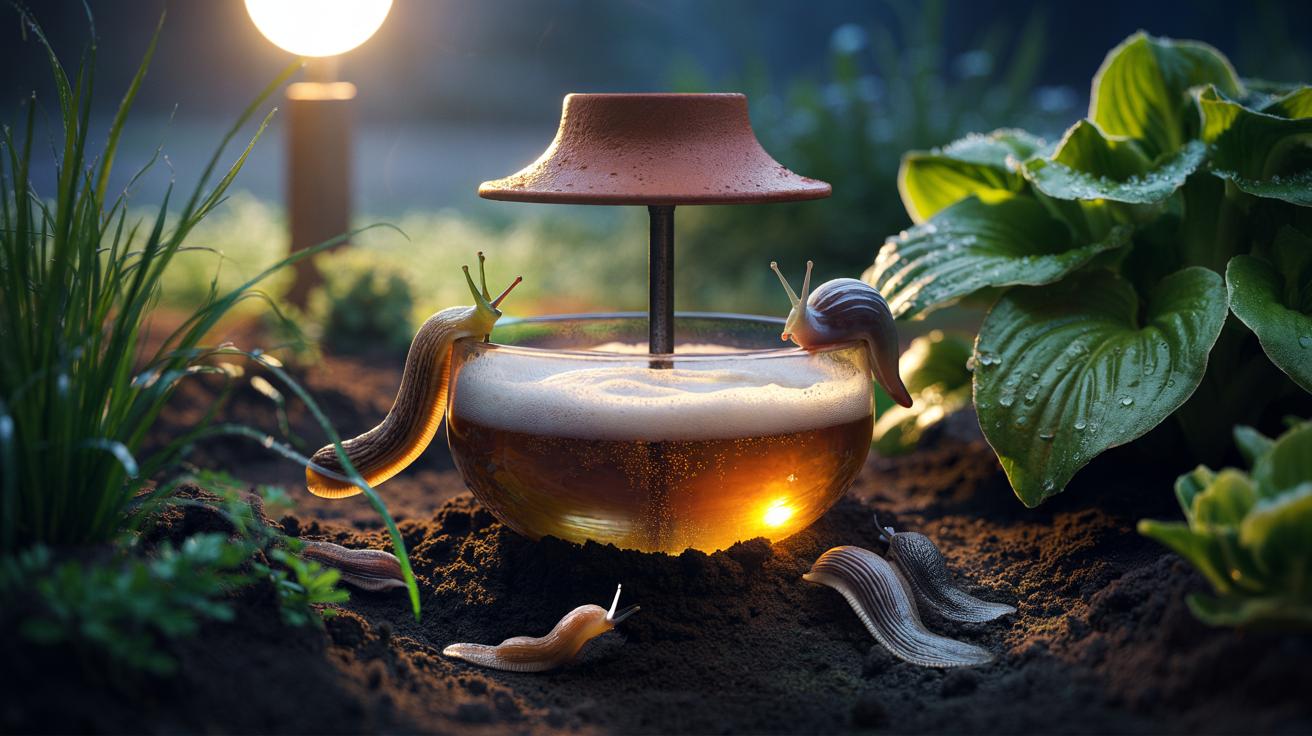
Use a wide, shallow container sunk so the rim sits flush with the soil. Depth of 4–6 cm is ample; a deeper pit increases mortality but also boosts non-target risk. Pour in 2–3 cm of bait—cheap lager, stout, or a yeast-sugar mix (1 tsp dried yeast + 1 tsp sugar in 250 ml warm water). Add a rain cover: an upturned saucer or lid propped on short pegs, leaving 10–15 mm gaps. This simple roof deters beetles and hedgehogs and stops the bait diluting in showers. Refresh every two to three nights, nightly in warm spells.
Placement matters more than brand. Cluster traps near damage hotspots—hostas, strawberries, lettuce—at roughly one trap per 1–2 m². Avoid edges where hedgehogs patrol and never site within reach of pets. In heavy infestations, run a line of traps upwind of vulnerable crops so the plume intercepts pests before they arrive. Each morning, dispose of contents responsibly—strain and bin, or bury away from beds to prevent re-attraction. Clean bowls between uses; residual slime reduces lure quality and invites flies.
| Bait | Approx. Cost (UK) | Longevity | Attraction | Non-Target Risk |
|---|---|---|---|---|
| Cheap lager | £0.50–£1 per trap | 1–2 nights | Good | Moderate |
| Stout/ale | £1–£2 per trap | 1–3 nights | Very good | Moderate |
| Yeast + sugar solution | Pennies | 1 night | Good | Low–moderate |
| Non-alcoholic beer | £0.80–£1.50 | 1–2 nights | Good | Moderate |
Ethical and Ecological Considerations
The beer trap is lethal. For some gardeners, that sits uneasily alongside wildlife-friendly practice. Beetles, frogs, and hedgehogs are allies; we should not entice them into harm. Mitigate by roofing traps, limiting fill depth, and running them only during peak damage periods. Use them as part of integrated pest management: pair with hand-picking at dusk, iron phosphate pellets certified for organic use, and habitat tweaks that favour predators. Copper barriers, sharp grit, and sacrificial beds can reduce reliance on killing traps altogether.
Another ecological wrinkle is the “honeypot” effect. A strong scent plume can recruit slugs from beyond your plot. To avoid importing trouble, position traps within beds rather than along boundaries, and run them for short, decisive bursts—two to three consecutive nights—after rain. Measure success by damage reduction, not body counts. Think of beer as a diagnostic lure that maps pressure and buys time while longer-term defences take root. That mindset balances effectiveness with care for the wider garden web.
Used thoughtfully, the bowl-of-beer trap is a practical stopgap: fast, inexpensive, and rooted in solid biology. The real trick is precision—fresh bait, covered bowls, smart placement—and restraint, so you protect allies while thinning the night-time nibblers. Yeast aromas do the quiet work while you sleep; the morning tells you how strong the pressure is and where to fortify next. What mix of traps, barriers, and planting have you tried, and which tweaks—beer type, yeast recipe, or siting—made the biggest dent in your slug and snail problem?
Did you like it?4.5/5 (27)