In a nutshell
- 🌱 Cold-tea feed supplies low-dose tannins that gently acidify the medium, chelate micronutrients, and steady the rhizosphere, supporting early seedling root initiation and denser root hairs.
- 🧪 Safe method: cold-steep one used tea bag per litre for 12–24 hours, dilute to a pale-honey colour, and apply once weekly; aim for pH 5.8–6.5 and EC < 0.4 mS/cm, with plain water between feeds.
- 🛡️ Polyphenols create a less hospitable environment for damping-off pathogens (e.g., Pythium, Rhizoctonia), offering a gentle shield without harsh biocides—helpful in cool, humid propagation conditions.
- ⚠️ Limits: it’s not a fertiliser; strong brews risk nutrient lock-up via chelation, pH dips, and caffeine/fluoride build-up, and may hinder mycorrhizae—so prioritise light dilution and periodic flushing.
- 🌿 Practical gains: sturdier plugs, smoother transplants, improved water uptake from more root hairs; success relies on restraint, observation, and adjusting dilution to your mix and species.
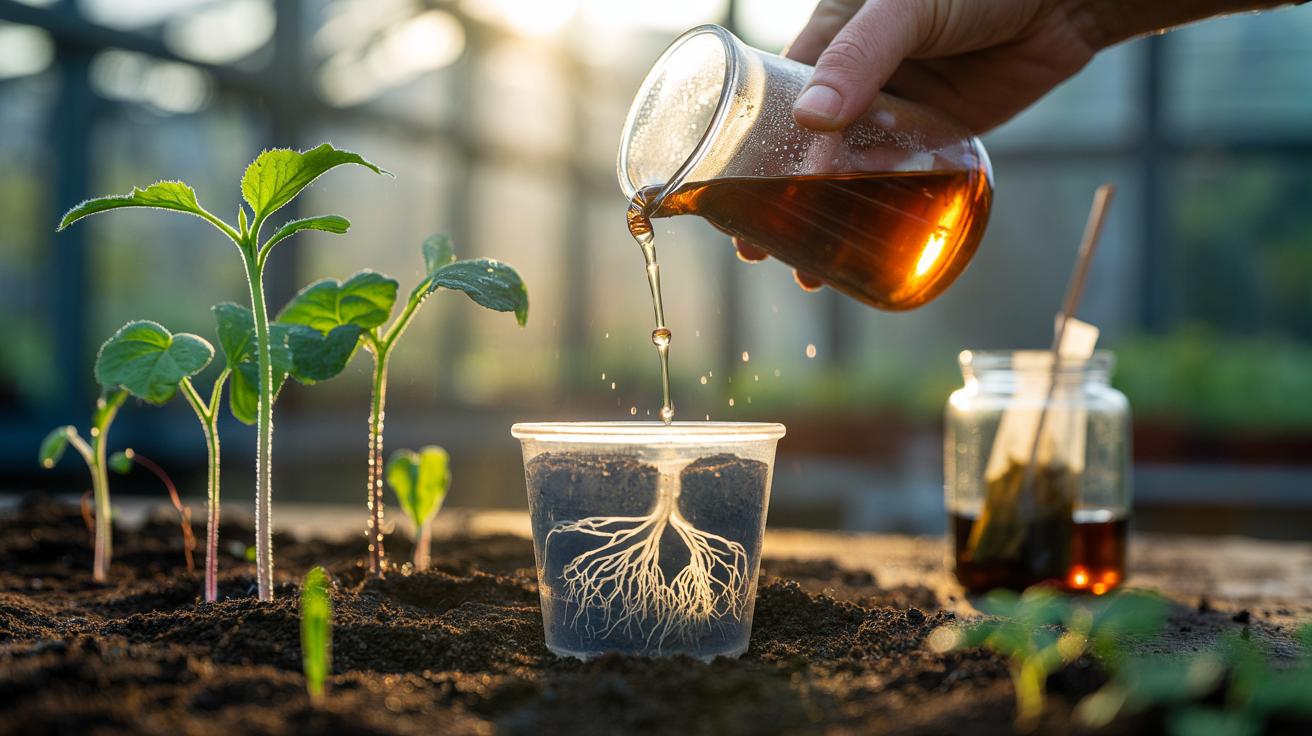
Across Britain’s potting benches, a quiet revival is brewing: gardeners are steeping used tea bags in cold water and giving the amber liquid to delicate seedlings. The practice sounds quaint, yet it has credible science behind it. Tea carries tannins and allied polyphenols that shape the microbial neighbourhood around roots and gently tweak chemistry in the growing medium. Handled carefully, a cold-tea feed can encourage early root development without the shock of conventional fertiliser. This is not a miracle potion, and it won’t replace a balanced feeding regime. But as a low-cost tonic during those precarious first weeks, it can tip the odds in favour of stronger, more resilient plants.
What Tannins Do in Seedling Substrates
Tannins are plant-derived polyphenols abundant in black and green tea. In dilute form, they act as mild acidifiers, nudging the substrate towards a pH that keeps iron, manganese, and zinc more available. That shift matters when roots are tiny and nutrient uptake is just beginning. Tannins also chelate certain metals, moderating sharp spikes in availability that can stress tissues. Equally important, they interact with proteins on microbial cell walls, subtly discouraging opportunistic fungi linked to damping-off. The result can be a calmer rhizosphere where roots initiate and branch more confidently.
Laboratory studies on phenolics suggest low-dose exposure influences oxidative signals at the root tip, encouraging lateral emergence and denser root hairs. Gardeners often report seedlings that hold moisture better between waterings, a likely outcome of improved root surface area. The caveat is dose. Strong tea concentrates can do the opposite, binding nutrients too tightly and tipping pH too low. With tannins, the strength of the brew is the difference between a tonic and a setback.
Brewing a Safe Cold-Tea Feed
Start with unflavoured black or green tea. Place one used tea bag (or about 1 g loose leaf) in 1 litre of cool water and steep 12–24 hours, then remove and dilute until the liquid is pale honey in colour. Avoid herbal blends containing essential oils. Use rainwater or tap water that has stood to let chlorine dissipate. Aim for a substrate pH of 6.0–6.5 for compost-based mixes or 5.8–6.2 for soilless media. Always test on a small tray of seedlings before adopting the routine across a whole batch.
| Parameter | Target | Why It Matters |
|---|---|---|
| Dilution | Pale honey colour | Limits tannin concentration to a gentle tonic. |
| pH | 5.8–6.5 | Supports micronutrient availability without acid stress. |
| EC | < 0.4 mS/cm | Keeps total salts low for tender seedlings. |
| Frequency | Once weekly | Prevents nutrient lock-up and build-up of residues. |
Water seedlings with the cold-tea feed no more than once a week, using plain water between applications. Think of it as a conditioning rinse, not a fertiliser. If leaves pale or growth slows, pause and flush with water to reset the medium.
Benefits and Limits: Root Growth, Disease Suppression, and Nutrition
Used judiciously, cold tea can support early root growth. Gardeners often see sturdier plugs that transplant with less sulking, thanks to better water uptake from increased root hair density. The brew’s polyphenols also create a less welcoming environment for damping-off culprits such as Pythium and Rhizoctonia, functioning as a gentle shield rather than a hard biocide. This protective effect is most noticeable in cool, humid conditions where seedlings are vulnerable. The slight acidity of tea can also stabilise trace nutrients, reducing transient deficiencies that show as interveinal yellowing.
Yet cold tea is not plant food. Its NPK contribution is negligible, and the same chelation that helps at low levels can hinder when overdone. Very strong brews risk tying up calcium and iron, while caffeine and fluoride—present in small amounts—can accumulate if you drench repeatedly. If you inoculate with mycorrhizae, keep doses mild; excessive phenolics may disrupt colonisation. The fix is simple: light dilution, modest frequency, and periodic flushing. When in doubt, go weaker and watch the plants.
Used as a measured nudge rather than a cure-all, a cold-tea feed offers a thrifty way to prime the rhizosphere and give seedlings a steadier start. The combination of mild acidity, low-dose tannins, and subtle microbial steering explains the results growers report—firmer plugs, cleaner stems, fewer collapses. It won’t replace balanced fertiliser or good hygiene, but it can stitch those practices together with surprising finesse. The art lies in restraint, observation, and small adjustments. How might you fold this tonic into your own routine—what dilution, schedule, and signs will you track to tune it to your plants and potting mix?
Did you like it?4.4/5 (27)