In a nutshell
- 🌑 Light deprivation halts photosynthesis, triggers etiolation, and starves roots, steadily weakening both annual and many perennial weeds.
- 📦 Build with 2–3 layers of corrugated cardboard, 15–20 cm overlaps, and 5–10 cm of mulch; use plain, unwaxed card, remove tapes, and seal edges for a light‑tight cover.
- ⏱️ Expect results on a timeline: annual knockdown in 3–8 weeks; perennial weakening over 3–12 months, while worms and fungi boost soil structure and moisture balance.
- 🌱 Plant by cutting X‑slits and adding compost; for seeds, use compost pockets above the layer—after ~1 year you gain a no‑dig, friable bed with ongoing weed suppression.
- ⚠️ Avoid gaps, thin mulch, and coated card; monitor edges, and for tough rhizomatous species, apply meticulous sealing and consistent, long‑term cover.
Cardboard has become an unlikely hero in climate‑savvy gardens and smallholdings. Laid as a continuous sheet, it forms a light‑tight skin that starves weeds and turns neglected plots into productive beds with minimal digging. The approach, often called sheet mulching, exploits plant physiology: deprive shoots of light and you starve their roots. As the cardboard softens in rain and breaks down, soil organisms remix the surface, leaving a friable layer that is easy to plant into. This method avoids herbicides, saves labour, and recycles packaging. Used correctly, it can disarm stubborn annual carpets and weaken many perennials while protecting soil structure.
Why Cardboard Stops Weeds: The Science of Light Deprivation
Plants live or die by photosynthesis. When a light‑proof layer denies photons to shoots, chloroplasts cannot capture energy, and the plant switches to a stress mode known as etiolation. The phytochrome system, which senses red and far‑red light, stays in a “dark” state, suppressing normal leaf development. Deprived of energy, shoots elongate weakly in search of light, then collapse under the cardboard. Without sugar production above ground, roots are cut off from a steady supply of carbohydrates. Within weeks, non‑woody weeds exhaust their limited reserves and die back, especially seedlings and shallow‑rooted annuals.
Perennials respond differently, depending on stored carbohydrate reserves and structure. Species with rhizomes, bulbs, or stout crowns can mobilise energy to push pale shoots laterally. Yet the barrier’s darkness, plus the physical drag of overlapping sheets and mulch, drains reserves faster than they can be replenished. Less photosynthate reaching roots means weaker root growth, reduced exudates, and curtailed mycorrhizal support. Over months, repeated failed attempts to reach light shorten rhizome spread and thin the root system. Light deprivation does not “poison” weeds; it engineers a controlled starvation that tilts the energy budget against persistence.
How to Build an Effective Cardboard Layer
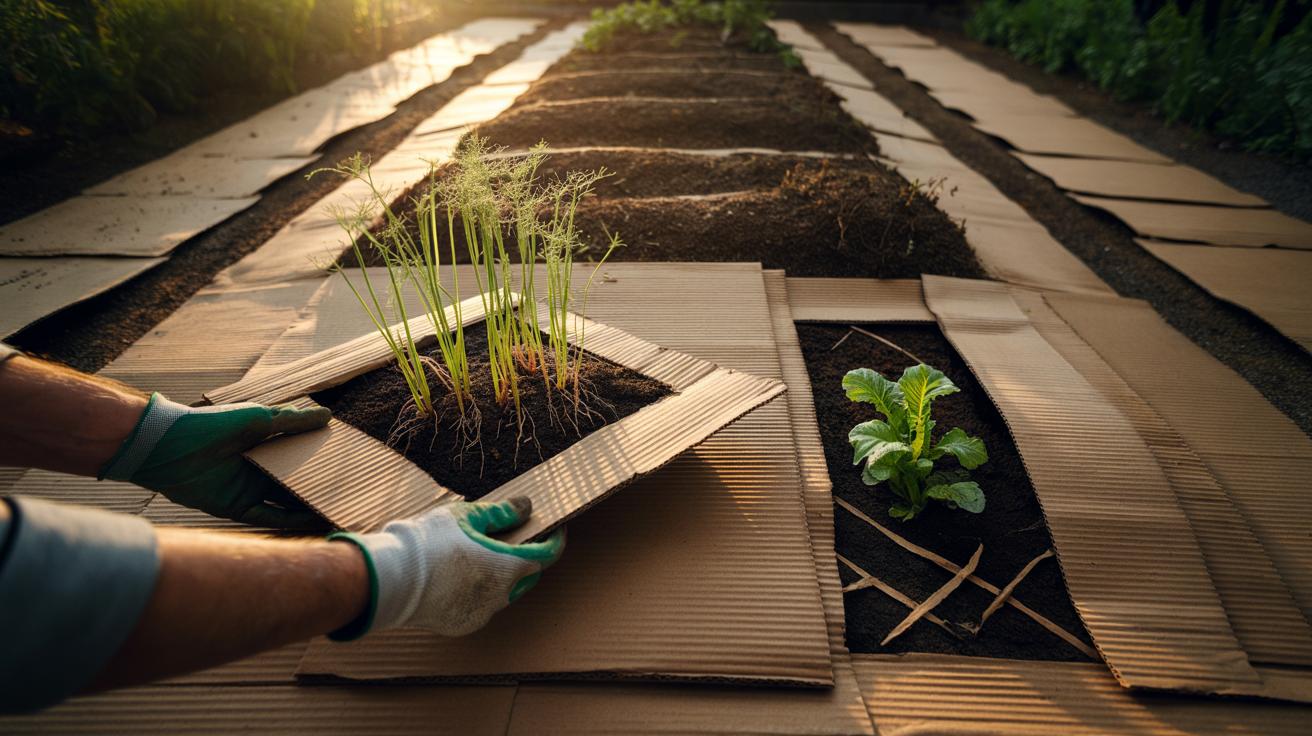
Choose plain, unwaxed boxes with minimal printing; remove tape and labels. Lay two to three plies of corrugated cardboard, overlapping edges by 15–20 cm so no chinks admit light. Pre‑soak sheets or water the ground first to help them drape and seal against the soil. Tuck pieces around perennials you want to keep, leaving trunk flares uncovered. Add a top dressing of 5–10 cm organic mulch—compost, well‑rotted manure, chipped bark—to weigh the layer down, improve moisture retention, and block stragglers. Gaps are the enemy; continuity is what turns cardboard into a weed‑control membrane. Edge with boards, bricks, or a low soil berm to resist wind lift.
Timing sets the tone. Late winter to mid‑spring captures the first germination flush; late summer tackles post‑harvest regrowth. Water during dry spells so the system settles and soil life thrives under the cover. Avoid glossy or plastic‑coated card, as it sheds water and resists decay. For paths, add extra thickness; for beds, keep it breathable. Expect earthworms to tunnel up, dragging fibres down and aerating the profile. Within weeks, the surface microclimate stabilises: cooler in heatwaves, warmer under frost. What begins as a barrier becomes a scaffold for soil repair.
| Element | Recommendation |
|---|---|
| Cardboard thickness | 2–3 layers of corrugated sheets (5–8 mm total) |
| Overlap between sheets | 15–20 cm to ensure no light leaks |
| Mulch depth | 5–10 cm for beds; 10–15 cm for paths |
| Annual weed knockdown | 3–8 weeks under full cover |
| Perennial weakening | 3–12 months, species‑dependent |
| Safe materials | Plain brown card, soy‑based inks, no plastic coatings |
What to Expect Over Time and How to Plant Through It
In the first month, seedlings blanch and fold. Annual roots shrivel as respiration outpaces sugar supply. By month three, most annuals are gone; perennials with deep stores may still probe. Cardboard softens, but remains intact enough to screen light. The top mulch layer begins to knit with fungal hyphae, and worm castings appear at seams. This is the pivot: weed pressure drops, while soil biology ramps up. Moisture evens out, reducing summer stress and winter heave. Expect some opportunists at edges; swift hand‑pulling prevents a new seed bank. Where rhizomatous grasses persist, maintain the cover and slice back any escapees.
To plant, cut X‑shaped slits, fold back flaps, and set transplants with compost. For seeds, create shallow pockets of blended compost above the layer, or wait until decomposition opens the surface. Keep watering targeted to plants, not bare mulch, to discourage weed invitations. In a year, the cardboard’s cellulose is mostly digested, leaving a dark, friable tilth. At that point, you’ve made a no‑dig bed while continuously suppressing light‑hungry weed regrowth. For aggressive bindweed or horsetail, expect a longer campaign: re‑cover gaps promptly and consider an additional season of smothering.
Common Mistakes and How to Avoid Them
The most frequent failure is skimping on coverage. Small cracks act like skylights that re‑energise weeds. Use large sheets, generous overlaps, and weigh edges firmly. Too little mulch is next: without mass, wind lifts sheets and light sneaks under. Avoid waxed produce boxes, glossy cartons, or plastic tapes that persist in soil. Everything you lay down should be biodegradable and light‑tight. Don’t bury woody stems or tree collars; leave breathing space to prevent rot. On compacted ground, a light rake or fork to break the glaze helps water move through and gives worms easy entry.
Another pitfall is underestimating weeds with major reserves. Couch grass, ground elder, and bindweed can tunnel for months. Pre‑weaken them by grubbing out big crowns, then seal the site meticulously. Inspect monthly, especially along fences and edging stones where blades can sneak up. Watch for slug build‑ups in wet spells; encourage predators and avoid over‑watering bare mulch. In very arid zones, add a permeable irrigation line beneath the mulch so the system doesn’t desiccate. Consistency, not brute force, is what tips the energy balance against perennial weeds.
The cardboard‑layer method works because it re‑writes the weed economy: no light, no sugar, dwindling roots, and a soil surface that heals while the invaders fade. It is low‑tech, low‑cost, and aligns with no‑dig principles that protect carbon and structure. After a single season, many plots become workable without spade or spray, and by year two you’ll often see fewer weeds and richer tilth. The trick is vigilance at edges and patience with stubborn species. Ready to test a roll of boxes where you’ve battled weeds—what patch will you smother first, and how will you measure the change?
Did you like it?4.4/5 (23)