In a nutshell
- 🌱 Damping-off is a seedling-killing syndrome driven by pathogens like Pythium, Rhizoctonia, and Fusarium; prevention is the only effective strategy.
- 🍵 A chamomile tea spray acts as a gentle natural fungicide; compounds such as apigenin and bisabolol make the seedling surface less hospitable to spores.
- 🧪 Brewing guide: 2 tea bags (or 2 tsp dried flowers) in 500 ml boiling water, steep 8–10 minutes, cool, strain, then dilute 1:1; use within 24–48 hours.
- 💧 Application: fine mist pre-sowing and daily for 3–5 days post-emergence; shift to bottom-watering as roots establish to keep stems dry.
- 🧼 Pair with hygiene: sterilised trays, sterile seed-starting mix, early dome removal, ample airflow and spacing—because prevention beats rescue.
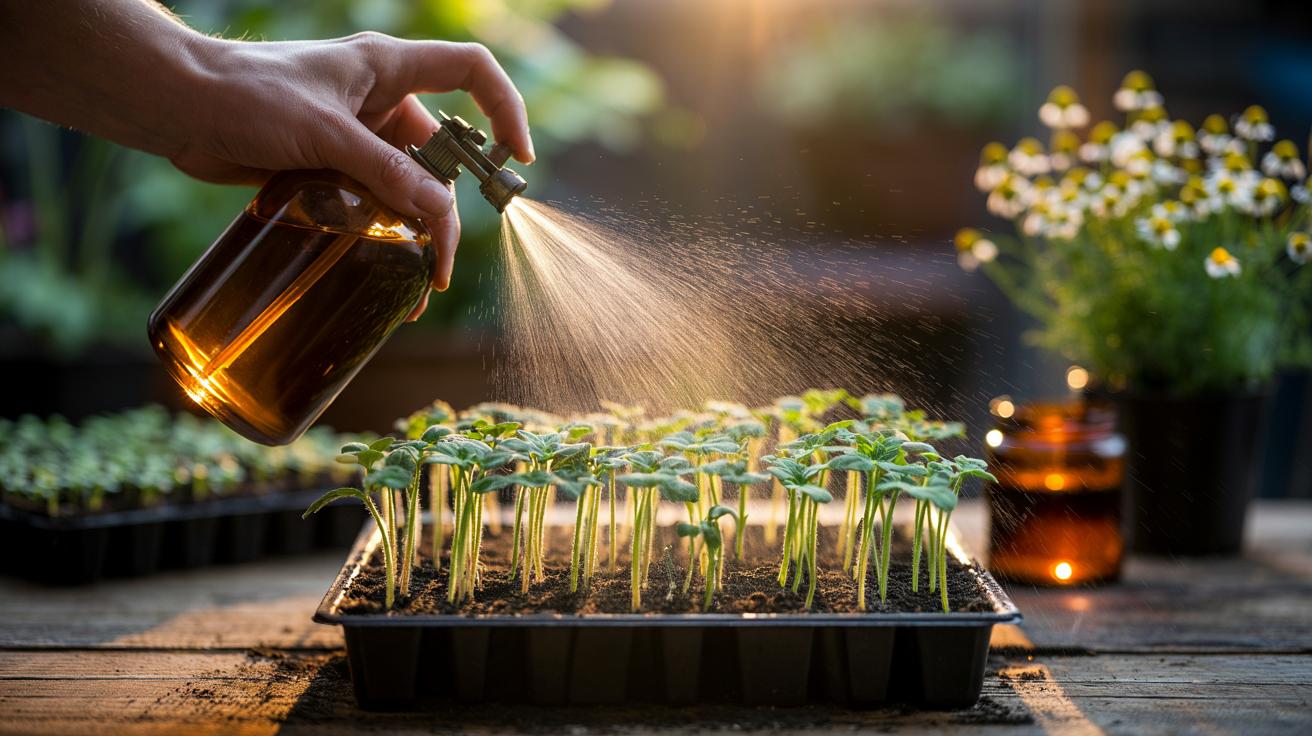
Every spring, growers face the same quiet catastrophe: trays of promising seedlings buckling at the soil line overnight. The culprit is damping-off, a catch-all for soilborne diseases that prune dreams as ruthlessly as frosts. Among the simplest countermeasures sits a humble teacup. A fine mist of chamomile tea can help keep pathogens at bay without harsh chemicals. This gentle spray acts as a natural fungicide that protects your plant “babies” at their most vulnerable stage. Cheap, accessible, and fragrantly old-fashioned, it fits neatly into a preventative routine built on sanitation and good airflow. Here’s how to use it well—and why it works.
Why Seedlings Succumb to Damping-Off
Damping-off isn’t a single disease but a syndrome triggered by opportunistic fungi and oomycetes, notably Pythium, Rhizoctonia, and Fusarium. They flourish in cool, stagnant, overly wet conditions, exactly the microclimate many seed trays provide. Seedlings have thin cuticles, threadlike stems, and undeveloped immune responses. Pathogens exploit this tenderness, collapsing stems at the soil line or rotting seeds before emergence. Once the tell-tale constriction appears, there is no cure. Prevention—through clean media, measured moisture, and mild antimicrobial tools—is the only sensible strategy.
Risk factors are easy to stack without noticing. Reusing unsterilised trays, sowing too densely, watering late in the evening, and parking flats in dim corners all favour pathogen growth. Garden soil in propagation cells adds another variable, importing spores and gnats. A sterile or pasteurised seed-starting mix, warm germination temperatures, and consistent but light moisture deny pathogens the foothold they seek. That’s where a chamomile tea spray complements good hygiene: it nudges microbial balance toward the seedling’s side.
How Chamomile Tea Works as a Natural Fungicide
Chamomile flowers contain a suite of bioactive compounds—apigenin, bisabolol, and chamazulene among them—associated with antimicrobial and anti-inflammatory effects. In propagation, a cooled tea extract acts as a mild, broad-spectrum suppressant against damping-off organisms. It doesn’t sterilise the medium, nor does it behave like a synthetic systemic fungicide. Instead, it creates a less hospitable environment for spores on the surface film where seedlings emerge. Think of it as a gentle shield, tough on spores yet kind to tender stems.
The slight acidity and phenolic profile of chamomile tea are central to its usefulness. Repeated light misting on the compost surface and hypocotyl zone disrupts pathogen establishment during the narrow window between germination and true leaf formation. Crucially, the tea is mild enough to use frequently without scorching, and it integrates smoothly with other low-impact measures—airflow, spacing, bottom-watering, and temperature control. This compatibility is why many growers treat chamomile as a first-line, low-risk intervention.
Brewing and Dilution: The Goldilocks Recipe
For propagation, brew a strong, unsweetened tea and then dilute to a seedling-safe strength. A practical method: pour 500 ml of freshly boiled water over two plain tea bags or 2 teaspoons of dried flowers. Cover and steep 8–10 minutes to extract key volatiles, then cool to room temperature. Strain thoroughly to protect spray nozzles. Dilute 1:1 with cooled, boiled water to reduce phytochemical load while keeping efficacy. Freshness matters—mix only what you will use in a day or two.
Load the diluted tea into a clean fine-mist sprayer. Pre-wet sterile seed compost before sowing, then mist the surface lightly. After germination, mist stems and the topmost compost once daily for 3–5 days, tapering as airflow and light increase. Avoid drenching; the goal is a thin, even film. For bottom-watering, substitute diluted tea for plain water for the first week only. Consistent light touch beats heavy, occasional soaking.
| Step | Specification |
|---|---|
| Brew strength | 2 tea bags per 500 ml boiling water (or 2 tsp dried flowers) |
| Steep time | 8–10 minutes, covered; cool to room temperature |
| Dilution | 1:1 with cooled, boiled water |
| Application | Mist surface pre-sowing; mist seedlings daily for 3–5 days post-emergence |
| Shelf life | 24 hours at room temperature; up to 48 hours refrigerated |
| Notes | Use plain, unsweetened chamomile; discard if odour changes |
Application Timing, Safety, and Complementary Hygiene
Timing is the difference between success and soggy compost. Start with a light pre-sow mist to condition the surface. After hooks appear, mist daily in the morning so foliage dries by night. Increase airflow with a small fan, remove humidity domes as soon as cotyledons open, and space trays to reduce leaf-to-leaf contact. The golden rule is clean, airy, and evenly moist—not wet. Switch to bottom-watering as roots establish, which keeps stems drier and less exposed to pathogens.
Safety is common sense: use only food-grade chamomile, sterilise sprayers, and never sweeten the brew. Store any leftover tea chilled and label clearly. Combine the spray with high-standards hygiene—wash trays, use sterile seed-starting mix, and avoid garden soil in modules. If pressure is high, a dusting of ground cinnamon on the compost surface can complement the tea, while hydrogen peroxide should be used cautiously and at low concentration. No single trick is a silver bullet; integrated habits beat disease pressure.
A chamomile spray costs pennies, smells like calm, and quietly tilts the odds in favour of your seedlings during their frail first fortnight. It aligns with a modern, sustainable toolkit: low toxicity, minimal waste, and results you can see in upright stems and unblemished cotyledons. Prevention beats rescue, and this is prevention you can brew in a kettle. Will this be the season you trial a side-by-side test—one tray with the tea routine, one without—and fine-tune a protocol that suits your space, climate, and favourite crops?
Did you like it?4.5/5 (21)