In a nutshell
- 🧪 Cinnamon’s antifungal bite: Cinnamaldehyde and eugenol disrupt spores of Pythium, Rhizoctonia, and Botrytis, creating a dry barrier on wounds; it complements rooting hormone rather than replacing it.
- 🛠️ Step-by-step application: Sterilise tools, use a free‑draining mix (50% perlite, 50% peat‑free compost), let cuts callus 20–60 minutes, apply a light dusting (not a crust), plant into a pre‑made hole, and maintain 18–24°C heat with gentle ventilation.
- 🔬 Evidence and limits: Potency varies by spice freshness; it inhibits key fungi but is not a miracle rooter or a fix for bacterial blight—results hinge on clean media, careful watering, and airflow.
- 🔄 Smart alternatives: Horticultural sulphur, 3% hydrogen peroxide dips, and Trichoderma biologicals offer targeted support; start least‑toxic and scale only if rot persists—blends (e.g., cinnamon + sulphur) can boost protection.
- 🌱 Best practice for fewer losses: Prioritise hygiene, stable warmth, bright indirect light, and dry collars with bottom watering; especially effective for succulents, pelargoniums, and softwood herbs in humid conditions.
Every propagator knows the heartbreak: a tray of promising cuttings collapsing into sludge almost overnight. The culprit is usually opportunistic fungi that feast on tender wounds and waterlogged compost. A thrifty, time‑honoured fix sits in the spice cupboard. Dusting stems with cinnamon—used as an antifungal powder—creates a hostile surface for pathogens and buys precious days for roots to form. Simple, cheap, and plant‑safe when used lightly, it fits neatly into a British gardener’s routine without special kit. Below, a practical guide to why it works, how to apply it with newsroom clarity, and where it sits among professional options.
Why Cinnamon Works on Fresh Cuttings
The aromatic bite of cinnamaldehyde and eugenol in cinnamon disrupts fungal cell membranes and spore germination. On a fresh wound, a dusting acts as a dry, mildly antiseptic barrier that blunts the advance of Pythium, Rhizoctonia, and Botrytis—the usual suspects behind damping‑off and collar rot. Think of it as a tactical shield, not a silver bullet. Because cinnamon is desiccating, it helps the cut surface dry into a firm callus, the prelude to clean root initials. That early window is when most losses occur, and where the spice earns its stripes.
Crucially, antifungal powder does not replace a rooting hormone; it complements it. Many growers dip the basal end in hormone gel or powder first, then flick on a whisper of cinnamon. The combination deters rot while signalling new roots. Used sparingly, it won’t scorch soft tissue or clog pores. It is notably helpful with succulents, pelargoniums, basil, and softwood herbs prone to stem melt in humid British summers.
How to Apply Antifungal Powder Step by Step
Start with sanitation: sterilise your blade with isopropyl alcohol, and prepare a free‑draining, fresh medium (50% perlite, 50% peat‑free compost is a reliable UK mix). Take a clean 8–12 cm cutting below a node, remove lower leaves, and let the wound air‑dry for 20–60 minutes, depending on sap flow. A brief callus is your first defence against rot.
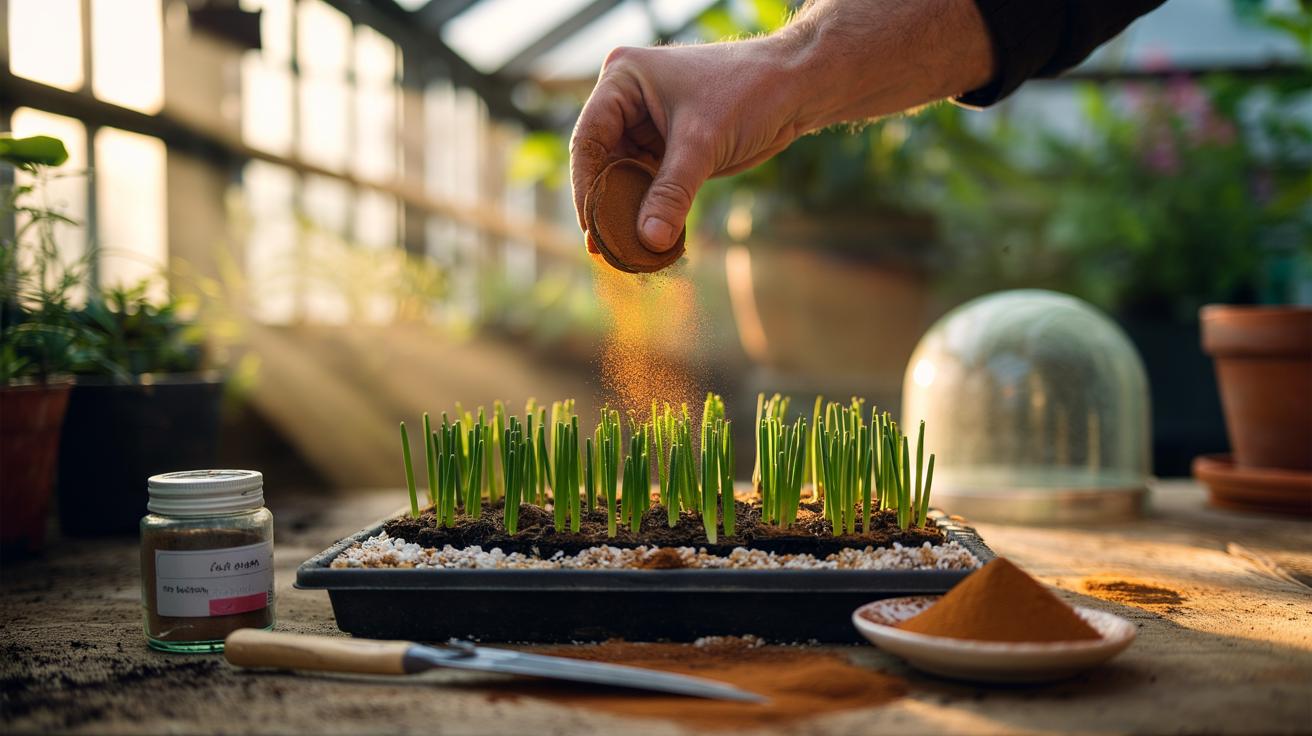
If using rooting hormone, apply it now. Tip a teaspoon of cinnamon onto a saucer and gently roll the basal centimetre of the stem, tapping off any excess—aim for a light dust rather than a crust. Plant into a pre‑made hole to avoid scraping the powder away. Firm gently, water once to settle, then keep the medium barely moist. Bottom heat of 18–24°C with 70% humidity is ideal; avoid stagnant air.
Additions: a 1:1 blend of ground cinnamon and horticultural sulphur gives a stronger antifungal punch for fussy ornamentals. Never dust wet foliage; apply only to the wound and immediate stem. Ventilate propagators daily, and irrigate from below to keep the collar dry. If a stem is nicked during handling, re‑dust the wound promptly.
Evidence, Myths, and Limits of the Spice Rack Cure
Laboratory assays and nursery trials show cinnamon oil and ground spice inhibit a suite of pathogens, with stronger effects against Pythium and Fusarium than against yeasts or oomycetes encased in biofilms. Potency varies by brand and freshness; volatile compounds dissipate with time. That variability explains why some growers report near‑perfect saves while others see modest benefits. Cinnamon is an inhibitor, not a miracle rooter, so it won’t rescue a cutting already riddled with infection or planted into contaminated compost.
Myths persist. No, cinnamon does not “make roots” on its own, and it is not a cure‑all for bacterial blights. It is kinder than copper on tender stems but less persistent than registered fungicides. The reliable, repeatable gains come when it is folded into a hygienic routine: clean tools, fresh medium, careful watering, and vigilant airflow. That stack of small advantages is what stops rot dead.
Smart Alternatives and When to Use Them
There are times when the spice needs reinforcements. High‑value stock plants, chronic rot hotspots, or winter propagation in dim conservatories may warrant targeted products. Below is a quick‑glance comparison to help you choose the right antifungal ally for your bench.
| Option | Mode | How to Use | Best For | Cautions |
|---|---|---|---|---|
| Cinnamon (ground) | Surface antifungal, drying barrier | Light dust on wound | Softwood herbs, succulents | Variable potency; avoid heavy coating |
| Horticultural sulphur | Contact fungicide | Dust lightly or mix 1:1 with cinnamon | Botrytis‑prone ornamentals | Can irritate skin; don’t inhale |
| Hydrogen peroxide (3%) | Oxidises spores | Quick dip of basal end, let fizz stop | Emergency sterilising | Overuse scorches tissue |
| Biologicals (Trichoderma) | Beneficial microbes outcompete pathogens | Dust or water in | Ongoing protection in media | Needs warm, active medium |
As a rule, start least‑toxic and scale up only if losses continue. Clean technique beats fire‑power nine times out of ten. Pair any option with stable warmth, bright but indirect light, and meticulous moisture control to keep collars dry and roots hungry.
Used intelligently, a pinch of cinnamon tilts the odds in favour of every stem you set. It is accessible, frugal, and—backed by sound hygiene—remarkably effective against the rot that ruins trays. The trick is to treat it as part of a system: sharp tools, clean media, gentle airflow, and measured watering. That way, your cuttings callus quickly, root cleanly, and harden with fewer casualties. Which plant on your bench will be the first to test this spice‑rack safeguard, and how will you fold it into your propagation routine this season?
Did you like it?4.4/5 (30)