In a nutshell
- 🌱 Cinnamon shields seedlings by creating a dry, antifungal barrier; compounds like cinnamaldehyde and eugenol suppress damping-off culprits (Pythium, Fusarium, Rhizoctonia).
- 🧂 Apply lightly and evenly using a tea strainer—about 1 tsp per litre of surface area—reapplying after heavy watering; avoid essential oils and “cinnamon tea” to prevent tissue burn and soggy media.
- 💨 Integrate with good practice: sanitation, free-draining mix, and ventilation amplify results; cinnamon also helps deter fungus gnat larvae by drying the top layer.
- 🔍 Diagnose accurately: use cinnamon preventatively for soil-surface fungi; it won’t correct nutrient deficiencies or bacterial rot, which require feeding or disposal and disinfection.
- ⚖️ Compare controls wisely: cinnamon is a low-tech, stable surface shield versus hydrogen peroxide, neem, or Trichoderma; best results come from a layered strategy.
Gardeners dread the sight of sagging, pinched stems and grey fuzz around their trays. These are the signatures of damping-off, a cluster of seedling diseases that can wipe out a sowing overnight. A simple pantry remedy is gaining respect: a fine dusting of cinnamon on potting mix. This culinary spice contains natural compounds that disrupt problem fungi just as seedlings are emerging. Applied correctly, it is inexpensive, accessible and surprisingly effective as a preventative layer. Cinnamon will not replace good hygiene or proper watering, but it can form a reliable frontline. Here is how and why this earthy, aromatic powder protects vulnerable plants at their most fragile stage.
Why Cinnamon Works Against Seedling Fungus
Cinnamon’s protective punch comes from bioactive molecules, primarily cinnamaldehyde and eugenol. These compounds interfere with fungal cell membranes, derailing growth and spore germination. In laboratory trials and gardeners’ benches alike, cinnamon suppresses fungi associated with damping-off, including Pythium, Fusarium and Rhizoctonia. By reducing the spore load at the soil surface, it gives seedlings time to establish sturdy tissues. The magic is not fertility, but microbial pressure control at the exact interface where stems meet soil. Think of it as a dry, aromatic shield that favours tender cotyledons during their first vulnerable days.
Equally important, cinnamon is a dry agent. A thin layer helps wick surface moisture, disrupting the constantly damp film these pathogens prefer. It also masks organic scents that attract pests such as fungus gnats, whose larvae graze on roots and spread disease. Used as a light dust, cinnamon creates an unfriendly zone for both spores and larvae without saturating compost with harsh chemicals. That is why it works best as a preventative barrier rather than a late-stage cure.
How to Apply Cinnamon Dust Safely and Effectively
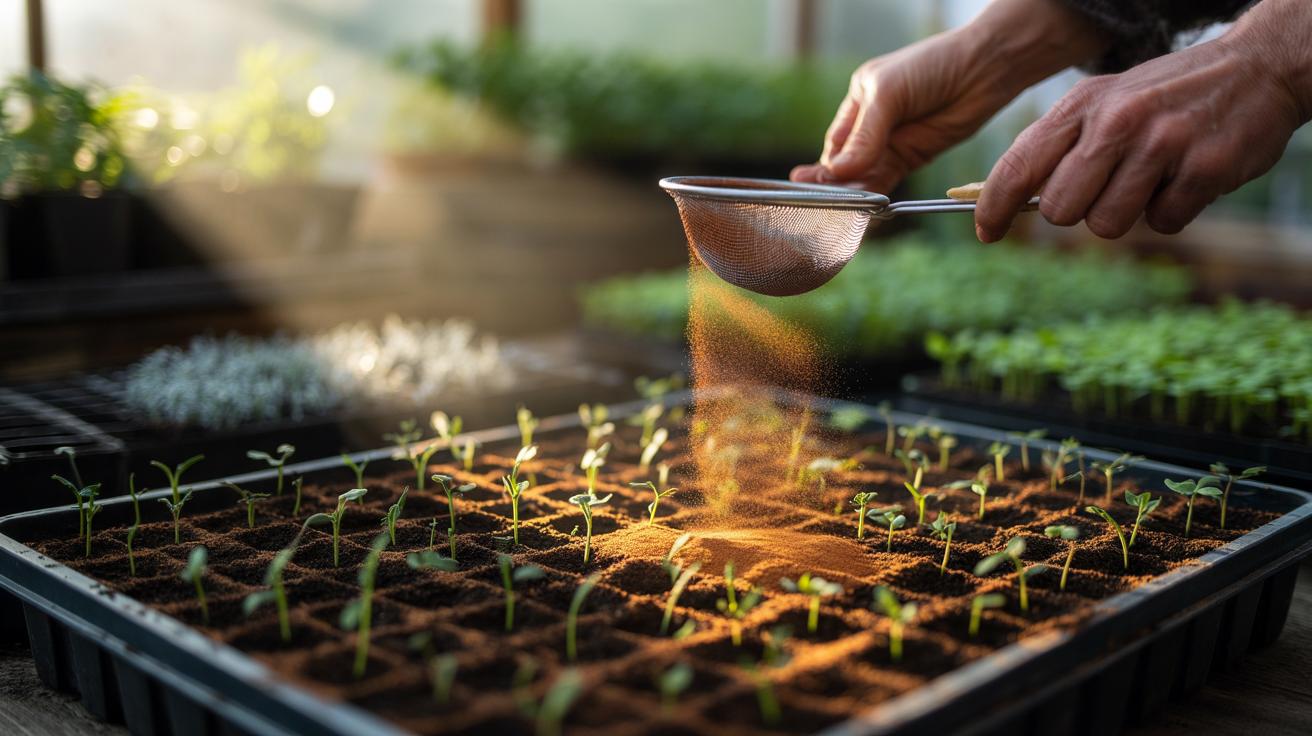
Sterilise tools, use a clean seed tray, and sow into a quality, free-draining mix. After watering in, allow the surface to lose its sheen. Then tap a tea strainer loaded with ground cinnamon to produce an even veil across the compost—just enough to tint it tan. A typical guide is 1 teaspoon per litre of surface area; heavy piles are unnecessary. Less is more: a translucent film protects without clumping or hindering emergence. If damping-off has been a recurring issue, you can also blend a tiny amount—around 0.5–1% by volume—into the top centimetre of the mix.
Reapply after heavy bottom-watering or when the dust visibly dissolves. For crowded pricking-out sessions, ring the stem base with a fingertip pinch of powder as you transplant. Keep airflow moving with a small fan or ajar propagator lid. Good ventilation multiplies cinnamon’s benefit by keeping the surface intermittently dry. Resist the temptation to drench with “cinnamon tea”; waterlogged compost negates the goal of a drier surface and may dilute efficacy.
Handle wisely. Choose fresh, fine-ground Ceylon or cassia; stale spice loses potency. Avoid blowing dust; wear a light mask if sensitive. Cinnamon essential oil is far stronger and can scorch tissue, so stick to culinary powder. Always pair cinnamon with sanitation: clean labels, uncontaminated seed, and careful watering at the base. Cinnamon complements hygiene; it does not excuse lapses.
Common Seedling Problems and Where Cinnamon Helps
Not every seedling setback is fungal. Cinnamon excels at suppressing damping-off fungi on the soil surface and can deter fungus gnat larvae, yet it will not correct nutrient deficiencies or bacterial blights. Distinguish problems early: a threadlike constriction at the soil line suggests Rhizoctonia; waterlogged collapse points to Pythium; algae scum signals persistent moisture and light. Accurate diagnosis ensures you deploy cinnamon where its antifungal edge matters most. Keep irrigation measured and light levels strong, and rotate trays so surfaces dry between waterings.
Use the guide below to match symptoms with sensible actions. Cinnamon plays best as a preventative shield and part of a wider routine: clean media, spaced sowing, airflow, and prompt thinning reduce the humid microclimate pathogens love. When in doubt, rebalance water and air before adding any treatment.
| Problem | Typical Symptoms | Cinnamon’s Role | Extra Actions |
|---|---|---|---|
| Damping-off (Pythium/Fusarium/Rhizoctonia) | Pinched stems, sudden flop, water-soaked base | Preventative barrier at soil surface | Improve drainage, thin seedlings, increase airflow |
| Fungus gnat larvae | Tiny flies, larvae in top 2 cm, nibbed roots | Deters larvae; dries surface layer | Sticky traps, bottom-watering, sand/grit top-dress |
| Algae and green scum | Slippery green film on compost | Minor help via drier surface | Reduce light on media, water less, increase air |
| Nutrient deficiency | Pale or purple leaves, slow growth | No direct effect | Balanced feed at first true leaf stage |
| Bacterial rot | Soft, foul-smelling stems | Limited effect | Discard affected trays, disinfect kit |
Comparing Cinnamon With Other Natural Controls
Compared with chamomile tea or diluted hydrogen peroxide, cinnamon is dry, simple, and stable on the surface. Peroxide adds oxygen and can disinfect, but repeated use risks root tip stress. Neem targets insects more than fungi at seedling stage. Beneficial microbes like Trichoderma are powerful but need careful handling and can be overrun by saturated media. Cinnamon slots neatly into a low-tech routine: dust, ventilate, water sparingly. It is affordable, shelf-stable, and gentle when applied lightly.
There are limits. Heavy dusting can create hydrophobic patches; essential oils may burn; and spices vary in potency by source. For persistent outbreaks in warm, wet setups, biologicals or a sterile media reset may outperform spice alone. The smart strategy is layered: sanitation first, airflow second, then cinnamon as a targeted shield. This stack reduces risk while keeping inputs natural and costs low for home and small-scale growers.
Used thoughtfully, cinnamon turns a kitchen staple into a precise tool for seed-starting success. Its antifungal chemistry, combined with a drier soil surface and improved airflow, buys seedlings those crucial early days to establish. Pair it with clean trays, measured watering, and spacing, and you will see fewer mysterious collapses and stronger stems. Think of cinnamon as a gentle guard, not a silver bullet. As you plan your next sowing, which part of your routine—sanitation, airflow, watering, or surface protection—will you upgrade first, and how will you measure the difference in your trays?
Did you like it?4.6/5 (25)