In a nutshell
- 🌿 Coffee grounds provide slow-release nitrogen that drives chlorophyll production and lush, green foliage while feeding soil microbes.
- 🧪 Apply safely: use thin top-dress layers (3–5 mm), mix up to 10% in potting blends, or add up to 20% in compost to avoid crusting and nitrogen lock-up.
- 🧩 Balance nutrition: pair grounds’ N with phosphorus and potassium to support bud formation and blooms, especially in roses, dahlias, and containers.
- 🪱 Soil health boost: grounds stimulate microbial activity, improve aggregation, and enhance water retention, benefiting both sandy and clay soils.
- 🚩 Troubleshoot smartly: reduce rates if you see mould, gnats, or stalled flowering; break crusts, improve airflow, and adjust to a higher-P feed when needed.
Few household leftovers are as quietly powerful as used coffee grounds. Gardeners keep returning to this earthy by-product because it adds gentle nutrition while awakening soil life. The standout is nitrogen, the engine behind leafy expansion and rich green colour. Spread with care, coffee grounds behave as a slow-release tonic, feeding microbes that in turn feed roots. Handled properly, this everyday waste can energize containers, borders, and houseplants without the shock of fast salts. The secret lies in understanding how nitrogen works, what rates are safe, and how to balance it with phosphorus and potassium so flowers don’t play second fiddle to foliage.
Why Nitrogen From Coffee Grounds Matters
Plants build their lush canopies on a backbone of chlorophyll and proteins—both dependent on nitrogen. Coffee grounds typically clock in around 2–2.5 percent nitrogen by weight, with trace amounts of potassium and phosphorus. Because they decompose gradually, they provide a steady trickle of nutrients rather than a surge. Coffee grounds are a gentle, slow-release source of nitrogen that fuels vigorous leaf growth without scorching roots. In practice, that means sturdier stems, deeper greens, and faster recovery after pruning or transplanting.
The real magic happens in the soil food web. Grounds act as a buffet for bacteria and fungi, increasing microbial activity and improving aggregation, which enhances aeration and water retention. As microbes process organic matter, they release plant-available nitrogen and valuable humus. With a moderate C:N ratio, used grounds integrate readily into compost or mulches. When paired with carbon-rich materials, they avoid nitrogen “lock-up” and keep the nutrient cycle humming through the growing season.
How to Apply Coffee Grounds Safely
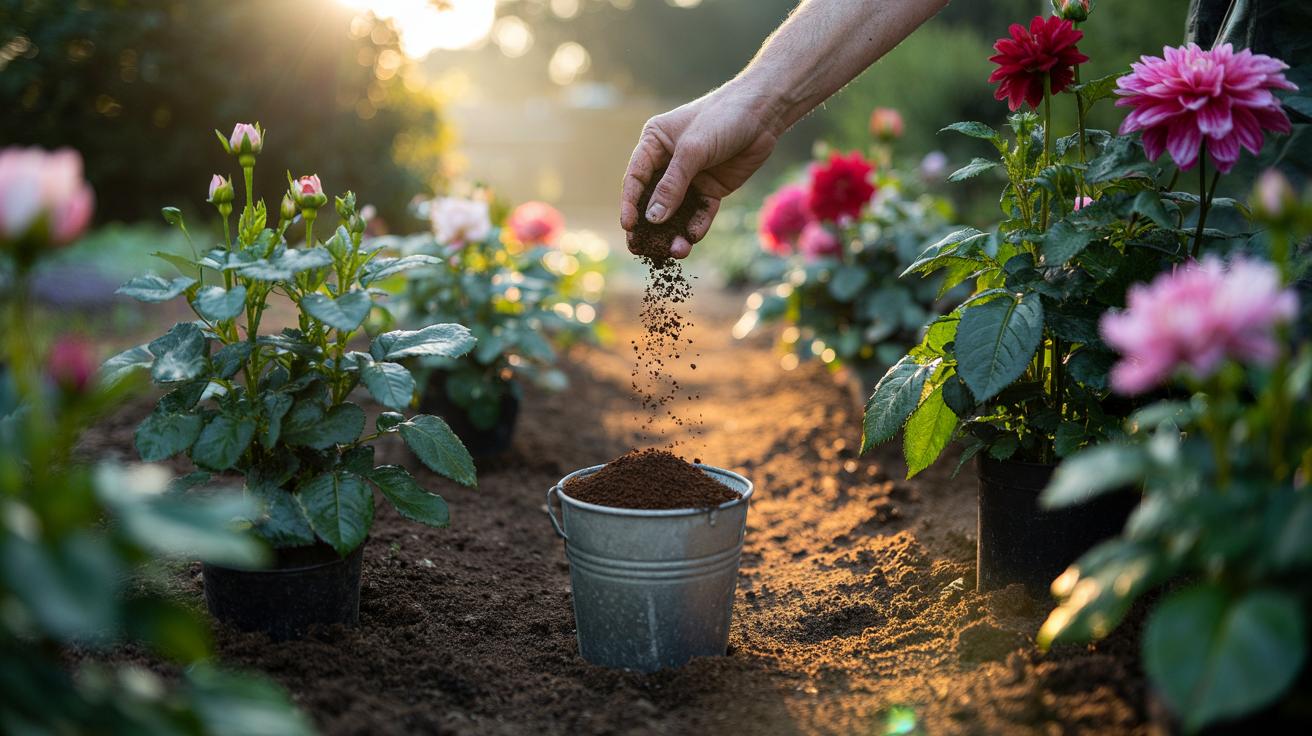
Less is more. Scatter a thin layer—no more than 3–5 mm—around ornamentals and lightly fork it into the top few centimetres. Water in to settle particles and avoid crusting. For potted plants, mix no more than 10 percent grounds into a fresh potting blend or reserve grounds for compost. Thick mats can repel water, encourage mould, and temporarily tie up nitrogen as microbes feast. Used grounds skew close to neutral pH, so acidification concerns are overstated, but moderation prevents compaction and drainage issues.
| Method | Rate | Frequency | Notes |
|---|---|---|---|
| Top-dress beds | 0.5–1 litre per m² | Monthly in season | Rake in lightly, water well |
| Compost addition | Up to 20% of mix | As available | Balance with dry “browns” |
| Liquid soak (“tea”) | 1 cup in 5 litres | Fortnightly | Strain before applying |
If you see fungus gnats or a sour smell, dry the surface, fluff the mulch, and cut the rate. Keep grounds a few centimetres from soft stems to discourage slugs. Test on a small area before broad use, particularly with seedlings and delicate houseplants.
Pairing Coffee Grounds With Other Amendments
Strong foliage is only half the story for flowering plants. To support bud formation and colour, pair coffee’s nitrogen with a source of phosphorus and potassium. Rock phosphate, bone meal, or well-rotted manure complement grounds in beds, while kelp meal or wood ash (used sparingly) supplies K and micronutrients. Excess nitrogen can drive leaves at the expense of flowers, so aim for a balanced feeding regime as buds initiate. In containers, blending 10 percent grounds into compost plus a slow-release complete fertiliser keeps nutrition even.
Balance the carbon side, too. Mix grounds with shredded leaves, straw, or cardboard to keep the carbon-to-nitrogen ratio near composting sweet spots. This prevents nitrogen immobilisation and creates a friable, moisture-sensible texture. For roses and dahlias, a seasonal routine works well: spring compost with some grounds for growth, followed by a bloom booster before peak flowering. For houseplants, use a diluted “tea” as an occasional tonic and watch foliage response carefully before repeating.
Troubleshooting and Myths
Myth-busting first: used coffee grounds are not highly acidic; most rinse to near-neutral pH, and leftover caffeine is minimal. Problems usually trace back to over-application. If leaves yellow from the bottom with pale veins, that suggests nitrogen deficiency—a light top-dress or compost addition can help. If growth is lush but buds stall, you’ve likely overshot nitrogen; switch to a higher-phosphorus feed and pause grounds. Reading the plant is quicker than chasing lab-perfect ratios.
Surface crusting or water beading? Break up the layer and blend with coarse mulch to restore infiltration. Musty odours and gnats point to anaerobic patches; dry the area, add airflow, and reduce the dose. For clay soils, prioritise compost first, grounds second, so structure improves before extra nitrogen arrives. In sandy beds, grounds help retain moisture and slow nutrient leaching. Consistency and small doses beat sporadic dumping every time.
Handled thoughtfully, coffee grounds become a steady ally for vigorous, glossy foliage and resilient soil. Their nitrogen fuels chlorophyll, their organic matter feeds microbes, and their texture nudges structure in the right direction. The art lies in proportion: combine grounds with compost, balance N with P and K, and observe how each plant responds through the season. Turn a routine morning brew into a reliable, low-cost boost for your borders, containers, and indoor jungles. What mix, timing, or companion amendment will you experiment with next to coax both abundant leaves and a crescendo of blooms?
Did you like it?4.5/5 (28)