In a nutshell
- 🌿 Proper cutting improves yield: break apical dominance by cutting above a node to wake lateral buds, boosting branching, flavour, and leaf mass.
- ✂️ Technique by herb: pinch soft herbs (basil, mint, oregano), base-cut parsley and coriander, and trim semi-woody thyme/rosemary/sage only into green growth—avoid old woody stems.
- 🕘 Timing & hygiene: use sharp, clean tools; prune mid-morning after dew; follow the one-third rule; lightly feed containers post-cut; avoid heavy winter pruning on Mediterranean herbs.
- 🌬️ Canopy management: thin congested stems to improve light and airflow, reducing disease pressure and pushing energy into vigorous shoots.
- 🧭 Shaping & training: combine pinching, heading, and thinning for compact plants; deadhead promptly; shape rosemary and sage, shear chives—consistency beats severity.
Healthy herbs respond joyfully to careful cutting. Whether you keep pots on a windowsill or steward a plot on a breezy allotment, the route to bushier plants and a heavier harvest runs through purposeful pruning. Done correctly, pruning nudges herbs to branch, thickens stems, and extends the season before flowering. It also refreshes tired leaves and keeps flavours bright. The trick is knowing where, when, and how much to cut. With a little anatomy, clean tools, and a rhythm of light, frequent harvests, you can turn modest plants of basil, mint, thyme, or parsley into generous, long-lasting providers of fresh, aromatic growth.
Why Proper Cutting Improves Yield
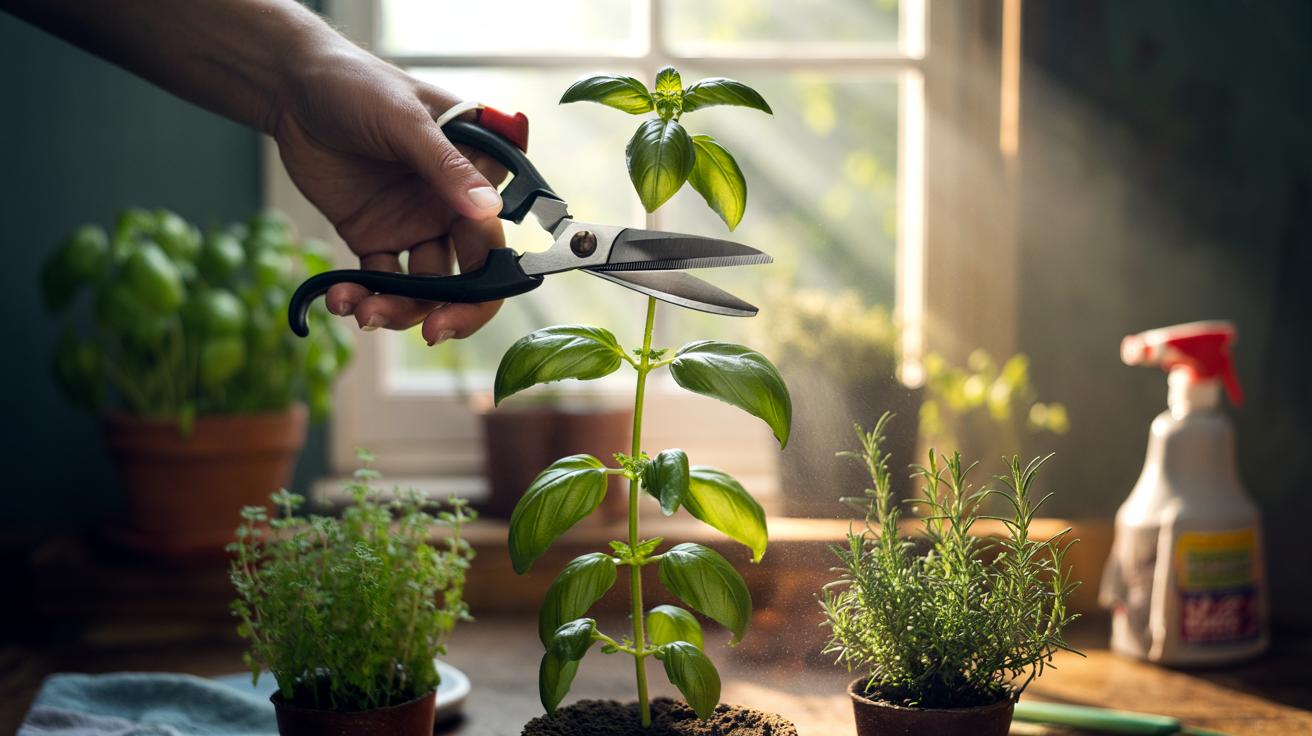
Herbs are governed by apical dominance: the top bud produces auxins that suppress side shoots. When you snip that tip, hormones rebalance and lateral buds wake up, doubling or tripling productive stems. Always cut just above a visible node (the point where leaves meet the stem), leaving 3–5 mm of stem so the node doesn’t die back. This “heading cut” redirects energy into branching rather than height, creating a denser canopy of young leaves—the stage when flavour and tenderness peak.
Pruning also improves light and airflow through the plant, reducing the conditions that invite mildew on basil and rust on mint. By removing lanky or shaded growth, you help the plant allocate carbohydrates to vigorous shoots with bigger, tastier leaves. On semi-woody herbs such as thyme and rosemary, cutting back into green, flexible growth triggers fresh shoots from lower nodes, renewing ageing plants. Do not hack into brown, woody stems that lack leaves; those sections rarely reshoot and can set the plant back.
Where and How to Cut Common Herbs
Soft herbs, including basil, mint, oregano, and marjoram, respond best to regular “pinching”. Take the top 2–3 sets of leaves, cutting just above a pair of leaves to leave two dormant buds. Remove flower spikes the moment they appear to keep oils focused in the leaves. For parsley, harvest whole outer stems at the base, leaving the central crown to push fresh growth. With coriander and chervil, which bolt swiftly, cut frequently and hard—entire stems to the base—to delay flowering and refresh foliage.
On semi-woody perennials like thyme, rosemary, and sage, take a third of the plant at a time, trimming tips back to green, leafy sections just above a node. Avoid cutting into old, leafless wood. For chives, shear handfuls 2–3 cm above the soil; they regrow as neat clumps. Consistency beats severity: light, frequent cuts produce compact plants with many branch points, which translates to a larger, ongoing harvest through the season.
| Herb | Cut Point | Frequency | Caution |
|---|---|---|---|
| Basil | Above a leaf pair (node), remove top 2–3 sets | Weekly in active growth | Pinch off flower buds early |
| Mint | Above a leaf pair, to 10–15 cm height | Every 1–2 weeks | Thin congested stems to aid airflow |
| Thyme | Back to green shoots, just above nodes | Monthly light trims | Do not cut into bare, woody wood |
| Rosemary | Tip prune into soft green growth | Little and often in summer | Avoid heavy winter pruning |
| Parsley | Remove outer stems at soil level | As needed | Leave inner crown to regenerate |
| Coriander | Whole stems at base | Weekly; sow succession | Bolts fast in heat—keep cutting |
Timing, Tools, and Hygiene
Use sharp, clean scissors, snips, or secateurs to make tidy cuts that heal fast. Wipe blades with alcohol before moving between plants to prevent transferring pests or disease. Mid-morning, after dew has dried, is the best time to prune; plants are turgid, and cuts dry quickly. Water the day before a big harvest so tissues are hydrated. In the UK’s changeable weather, avoid cutting heavily just before a cold snap or stormy winds that stress tender regrowth.
Adopt a “little and often” rhythm, especially for fast growers. A good rule is the one-third principle: never remove more than one-third of the foliage in a single session. Feed container herbs with a light, balanced liquid fertiliser after pruning to support recovery. For perennials, do major shaping just after peak flush in late spring or mid-summer, then switch to tip-pruning. In winter, restrict cuts on Mediterranean herbs to tidying only, protecting plants from deep trims that could slow spring rebound.
Shaping, Pinching, and Training for Compact Plants
Pinching removes only the softest tip to trigger two new shoots; repeat every 7–10 days on basil and oregano for dome-shaped plants. A “heading cut” shortens a stem above a node to thicken structure, while a “thinning cut” takes a stem back to its origin to open the canopy. Use thinning to stop mint and oregano becoming tangled mats, which harbour pests and reduce leaf size. Deadhead any stray flower buds quickly to keep herbs centred on leafy production.
Training can multiply yield in small spaces. Encourage rosemary and sage into compact cones with light, regular tip work, or grow rosemary as a single-stem standard by staking and removing lower side shoots. Let thyme spill slightly, then clip edges to maintain a tight cushion that renews from the sides. For chives, shear the whole clump a couple of times a season to reset tenderness. Shaped plants intercept more light per cubic metre, translating directly into more usable leaf mass.
Pruning is not punishment; it is guidance. By targeting nodes, keeping tools immaculate, and working to a gentle rhythm, you invite herbs to branch widely and push a steady stream of youthful leaves. The reward is flavour, form, and a longer season before bolting or woodiness sets in. Make every cut with a reason—stimulate branching, improve airflow, or reset a plant’s shape. Which herb in your garden most needs a thoughtful trim this week, and how will you cut it to encourage the next flush of growth?
Did you like it?4.3/5 (30)