In a nutshell
- ☕️ The coffee-ground ring delivers slow-release nitrogen that suits tomatoes, enriches organic matter, improves soil structure, and pairs well with a high-potash feed during fruiting.
- 🧪 Acting as a light mulch, the ring lets microbes mineralise nutrients over weeks; keep it 5–8 cm from the stem, about 5–10 mm thick and 20–25 cm across to avoid crusting and stem rot.
- ⏱️ Treat each ring as a month-long nudge: top up every 3–4 weeks in vegetative growth, then taper as flowering begins to steer energy to fruit and reduce risks like blossom-end rot from imbalanced feeding.
- 🛠️ Practicalities: air-dry grounds, apply 50–75 g per plant, water through, and for containers blend 1:3 with compost to prevent hydrophobic patches and keep release even.
- ⚠️ Safety and adjustments: avoid unbrewed grounds, don’t overlayer, keep pets away, and watch foliage colour—pale leaves signal more N, while lush growth with few flowers calls for scaling back nitrogen and boosting potassium.
Tomato growers love simple tricks that work, and the humble ring of used coffee grounds is one of the most talked‑about. By encircling plants with a thin layer of spent grounds, gardeners harness a steady trickle of slow-release nitrogen that fuels leafy growth and sets the stage for heavy trusses of fruit. The approach is thrifty, environmentally sound, and easy to manage alongside regular feeding. Yet, its success rests on understanding soil biology, moisture, and balance. Applied correctly, a coffee-ground ring acts as a gentle, living fertiliser that supports strong vines without burning roots or skewing pH. Here’s how and why it works, and how to make it part of a reliable tomato routine.
Why Coffee Grounds Suit Tomatoes
Tomatoes are hungry plants that respond to a steady, moderate supply of nitrogen during vegetative growth, before shifting towards potassium for fruiting. Used coffee grounds typically contain around 1.5–2% nitrogen by dry weight, tied up in organic compounds that soil microbes gradually unlock. This fits tomatoes well: instead of a surge that creates soft, sappy foliage, the release is paced by temperature and microbial activity. Organic matter in the grounds also improves soil texture, helping sandy beds retain moisture and heavy soils crumble into a friable structure. pH worries are largely misplaced; once brewed, most grounds test near neutral, slotting into typical tomato ranges.
There’s a practical angle too. Coffee grounds are free for households, abundant from cafés, and simple to handle. Mixed judiciously, they sit neatly with high‑potash tomato feeds used from flowering onward. The result is a resilient plant: firm stems, balanced canopy growth, and a root zone alive with decomposers that keep nutrients circulating. Crucially, this method complements—not replaces—regular watering and pinching practices that shape yield and flavour.
How the Coffee-Ground Ring Works
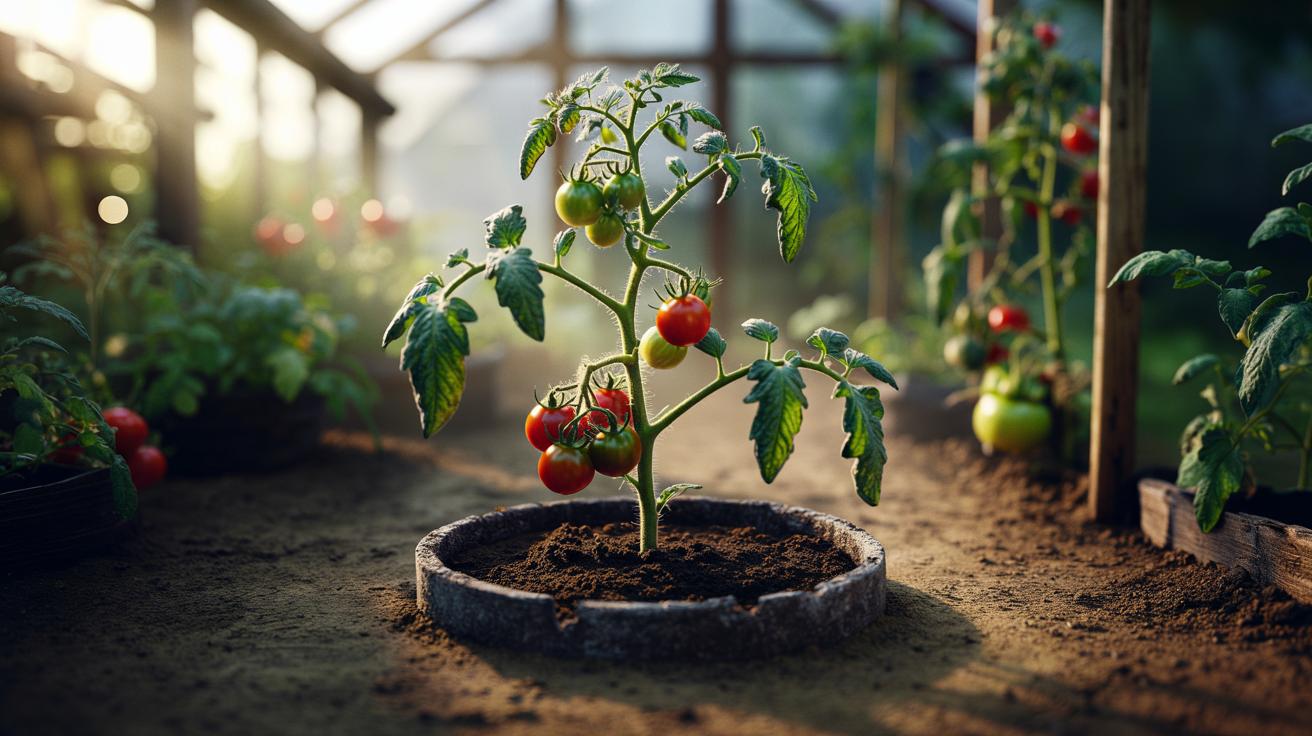
The “ring” is a shallow donut of spent grounds laid on the soil surface around each plant, set back from the stem. As watering and rain moisten the ring, microbes and worms pull particles downward, converting organic nitrogen into plant‑available forms. This mimics a small, slow-release fertiliser band that feeds the root zone without flooding it. The ring also serves as a light mulch, moderating evaporation and buffering temperature swings, which reduces blossom stress during hot spells and keeps irrigation more efficient.
Never pile grounds against the stem; keep a 5–8 cm gap to prevent rot and discourage fungus gnats. Aim for a ring about 5–10 mm thick and 20–25 cm across. That footprint is large enough for microbial action yet thin enough to avoid forming a hydrophobic crust. If your soil is already rich in nitrogen, reduce the ring’s thickness and pair it with a potash‑focused feed to steer energy into fruit set rather than excess foliage.
Key Nutrients and Release Timing
Although grounds are celebrated for nitrogen, they bring more than one note. They offer small amounts of potassium and phosphorus, plus a carbon‑rich matrix that fuels microbial life. As microbes mineralise proteins and complex compounds, ammonium and nitrate emerge over weeks, synchronising with the plant’s growth arc. The effect is subtle but cumulative, particularly in warm beds or containers where microbial turnover is brisk. In cool spells, release slows, which helps guard against leaching and waste.
Thinking in timelines helps. Treat a ring as a month‑long nudge rather than an instant fix. For cordon tomatoes, a modest top‑up every three to four weeks during early growth is usually sufficient, tapering as flowering accelerates and high‑potash feeds take centre stage. Consistency beats volume: little and often keeps nutrition even and reduces disorder risks such as blossom-end rot linked to erratic watering and imbalanced feeding.
| Component | Typical Content | Role for Tomatoes | Release Pattern |
|---|---|---|---|
| Nitrogen (N) | ~1.5–2.0% | Leaf and stem growth; chlorophyll | Weeks to months via microbial activity |
| Potassium (K) | ~0.3–0.6% | Fruit development; disease resilience | Gradual, low-level contribution |
| Phosphorus (P) | ~0.2–0.3% | Roots, flowering, energy transfer | Slow mineralisation |
| Organic Matter | High carbon | Soil structure; moisture retention | Ongoing humus formation |
| pH (spent) | Approx. 6.5–6.8 | Usually compatible with tomato ranges | Stable in typical garden soils |
Practical Steps and Safety Tips
Air‑dry used grounds so they don’t clump, then lay a ring 5–10 mm thick, 5–8 cm away from the stem. For a full‑sized plant, 50–75 g per application is ample. Water through the ring to kick‑start breakdown, and lightly fork the surface after a week if it crusts. From first truss, switch emphasis to a high‑potash tomato feed, keeping the ring modest so growth remains balanced. Blending grounds 1:3 with compost or leaf mould improves structure and avoids hydrophobic spots in containers.
Moderation matters; heavy layers can repel water and tie up nitrogen temporarily as microbes multiply. Avoid fresh, unbrewed grounds—they’re stronger and less predictable. Keep pets away: caffeine residues can be harmful if ingested. If slugs are a problem, the texture may help a little, but don’t rely on it. Monitor foliage colour and vigour; pale leaves suggest you should extend the ring schedule, while lush but flower‑light plants need less nitrogen and more potassium.
Used thoughtfully, the coffee‑ground ring is a tidy, sustainable way to feed tomatoes with slow-release nitrogen while enriching soil life. It complements routine watering and potash‑led feeding, trims waste from the kitchen, and helps maintain an even growth curve that translates to cleaner trusses and reliable flavour. The trick is balance: thin layers, steady top‑ups, and attention to what the plant is telling you. As the season unfolds, how might you fine‑tune ring thickness, frequency, and potash support to match your climate, soil type, and chosen tomato varieties?
Did you like it?4.6/5 (29)