In a nutshell
- 🧄 Crushing garlic generates allicin and volatile thiosulfinates (notably sulphur compounds) that mask host-plant cues and act as an antifeedant to deter aphids, whiteflies, flea beetles, and caterpillars.
- 🧪 DIY mix: 4–5 cloves + 500 ml water, strain well, add mild soap as a surfactant; refrigerate and use within 24–48 hours; patch-test to avoid phytotoxicity and never spray in heat or bright sun.
- 🌱 Application: start at hardening-off; mist both leaf surfaces, focusing on undersides; reapply every 3–5 days and after rain; pair with integrated pest management—scouting, sticky cards, pruning, and row covers.
- ⏳ Limits: effects are short-lived because compounds are highly volatile; repeated light sprays work better than heavy, infrequent treatments, with minimal residues on plants and in the plot.
- 🔬 Evidence: Garden trials report reduced probing and lower early-stage pest survival; results are strongest within a day and improve when used as part of a layered strategy that preserves tomato leaf area for photosynthesis.
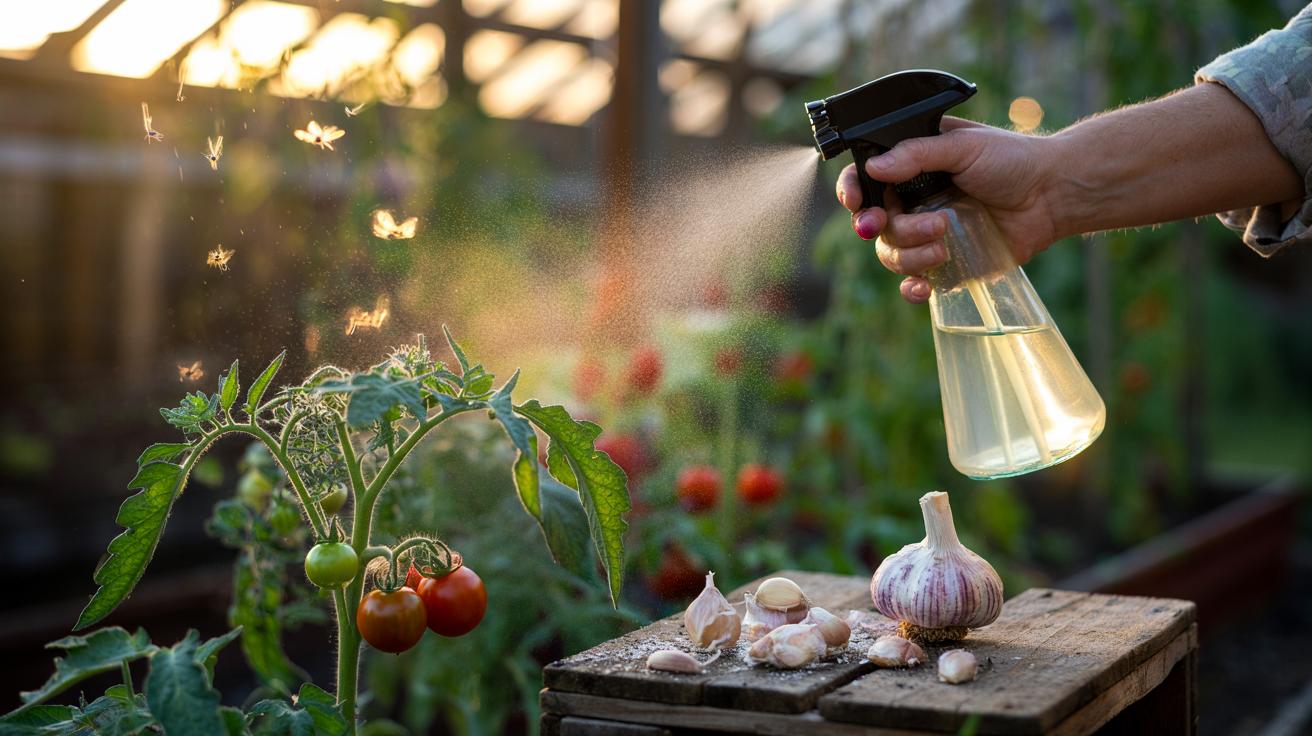
Gardeners have long sworn by garlic as a natural shield for vulnerable crops, and tomatoes top that list. Crush a bulb and the air fills with a sharp tang: that aroma is chemistry at work. When deployed as a fine spray, garlic’s sulphur compounds create an invisible line of defence that confuses and repels leaf-eating insects. In a season when flea beetles, aphids, and caterpillars can strip foliage in days, a kitchen-made solution offers a quick, low-cost intervention. Used correctly, a crushed-garlic spray deters feeding without loading your plot with synthetic residues. Here’s how it works, how to make it safely, and when to use it for the best results on UK tomatoes.
Why Garlic Works: The Chemistry Behind the Smell
Garlic’s power lies in the cascade that begins the moment a clove is crushed. The enzyme alliinase converts alliin into allicin, which rapidly transforms into a family of volatile thiosulfinates and polysulphides, including diallyl disulfide and diallyl trisulfide. These sulphur-rich molecules create a strong olfactory signal that many insects interpret as a warning. They mask the host-plant cues leaf-eaters rely on, making it harder for pests to locate and settle on tomatoes. Allicin’s reactivity also interferes with insect chemosensory pathways and can act as a light antifeedant, nudging pests to move on in search of something more palatable.
Laboratory and field trials on Allium extracts report reduced probing by aphids and lower egg laying by certain moths when foliage is treated. The effect, though, is fleeting: these volatile sulphur compounds evaporate and degrade under sun and rain. Expect benefits for hours to a couple of days, not weeks, and plan for repeat applications during peak pressure. That ephemerality is a feature as well as a limitation—residues don’t linger, and your plot avoids a heavy chemical footprint.
How to Make a Safe, Potent Crushed-Garlic Spray
Start with 4–5 cloves of fresh garlic and 500 ml of clean water. Crush the cloves thoroughly to activate alliinase, then blend with half the water. Let the slurry stand for 15–30 minutes to allow allicin to form. Strain through a coffee filter or fine cloth to remove solids. Add the remaining water and ½–1 teaspoon of a mild, fragrance-free liquid soap as a surfactant to help the spray spread and stick. Always strain well—unfiltered pulp will clog nozzles and lead to uneven coverage.
For a stronger batch, steep the strained liquid for an hour in the fridge, then use it the same day; potency drops noticeably within 24–48 hours. Store any remainder chilled and discard after three days. Wear gloves, label the bottle, and keep out of reach of children. If your tap water is very hard, use rainwater to minimise leaf spotting. Optional extras like a pinch of chilli or a little neem can increase deterrence, but test first for sensitivity.
Before treating the whole plant, spray a small leaf set and wait 24 hours. Tomatoes can show phytotoxicity if mixtures are too concentrated or applied in heat. Do not spray in strong sun or above 25°C; aim for dusky evenings or early mornings. Avoid blossoms to protect pollinators and reduce the risk of tainting fruit flavour. If odour persistence worries you, switch to lighter, more frequent applications rather than a single heavy drench.
Using the Spray on Tomatoes: Timing, Frequency, and Coverage
Begin treatments as soon as seedlings harden off outdoors. A light film on both sides of the leaves is the goal—mist until glistening, not dripping. Focus on the undersides where whiteflies and aphids congregate, and on tender new growth that attracts flea beetles and leaf miners. Reapply every 3–5 days during peaks, and after rain or overhead watering. Combine with integrated pest management: remove heavily infested leaves, use yellow sticky cards for monitoring, and net young plants when beetle pressure rises. Always wash fruit before eating, even though garlic is food-safe.
If pressure is severe, alternate garlic days with a plain soap spray to improve contact on soft-bodied insects, or pair with reflective mulches that disrupt host-finding. Keep a notebook: note dates, weather, and pest counts; you’ll quickly see patterns. Garlic won’t reverse heavy infestations overnight, but it can tip the balance early, protecting leaf area so plants keep photosynthesising and setting trusses.
| Pest | Tell-tale Sign | Garlic Spray Effect | Notes |
|---|---|---|---|
| Aphids | Clusters on new tips, sticky honeydew | Repellent, reduced probing | Combine with gentle finger-squash or soap |
| Whiteflies | Cloud on disturbance, leaf yellowing | Deterrent, short-lived | Target leaf undersides; repeat after rain |
| Flea beetles | Shot-hole damage on young leaves | Antifeedant effect | Use row covers during peak emergence |
| Moth caterpillars | Chewed edges, frass pellets | Reduced settling/egg laying | Hand-pick at dusk for best control |
What Science and Garden Trials Say
Horticultural studies on Allium-derived extracts consistently note repellency and modest antifeedant activity on sap-sucking and chewing insects. Volatile thiosulfinates appear to overload or scramble pest chemosensory systems, while the harsh flavour profile reduces feeding time. Trials on tomato, brassicas, and cucurbits show fewer initial landings by aphids and lower survival of early-stage larvae when sprays are fresh. The effect is strongest within the first day and declines sharply thereafter. In UK allotments, repeated light applications often outperform occasional heavy ones, especially in showery spells that wipe leaves clean.
Crucially, garlic spray is not a silver bullet. It performs best as part of a layered strategy that includes vigilant scouting, healthy soil, balanced fertiliser, and airflow that discourages pests. Because it breaks down quickly, it places minimal burden on non-target organisms when applied away from flowers. Keep expectations grounded: think of garlic as a nudge that shifts the odds, not an all-out eradicator.
Crushed-garlic spray offers a nimble, home-made line of defence that suits the tempo of British weather and the realities of small plots. Its chemistry is potent yet fleeting, encouraging smart timing and good cultural practice. When you treat it as one tool among many—alongside sanitation, barriers, and careful watering—it buys tomatoes the leaf area they need to ripen heavy clusters. Used thoughtfully, it protects crops while keeping your garden’s ecology intact. How might you weave a garlic routine into your weekly gardening rhythm, and which companion tactics would you pair with it to keep leaf-eaters guessing all season?
Did you like it?4.4/5 (28)