In a nutshell
- 🍅 Blossom end rot is a physiological calcium-uptake problem; damaged fruit won’t heal, but new lesions can be prevented by restoring steady moisture and accessible calcium.
- 🥚 Ultra-fine eggshell powder (calcium carbonate) boosts availability; its effectiveness depends on particle size and consistent watering rather than quantity alone.
- ⚙️ Prep method: rinse and de-membrane shells, boil 5 minutes, bake at 120–150°C, grind to flour-fine in a coffee grinder, then sieve; ultra-fine texture is crucial for faster release.
- 💧 Application: sprinkle 1–2 tbsp at the drip line, scratch into 2–3 cm of soil, water deeply (3–5 L per plant), and mulch; for containers, use ~1 tbsp per 10 L and avoid ammonium-heavy feeds.
- 📊 Alternatives and prevention: gypsum offers moderate speed, calcium chloride foliar is fastest; keep pH ~6.2–6.8, maintain even moisture, prune modestly, and flush salts to prevent recurrence.
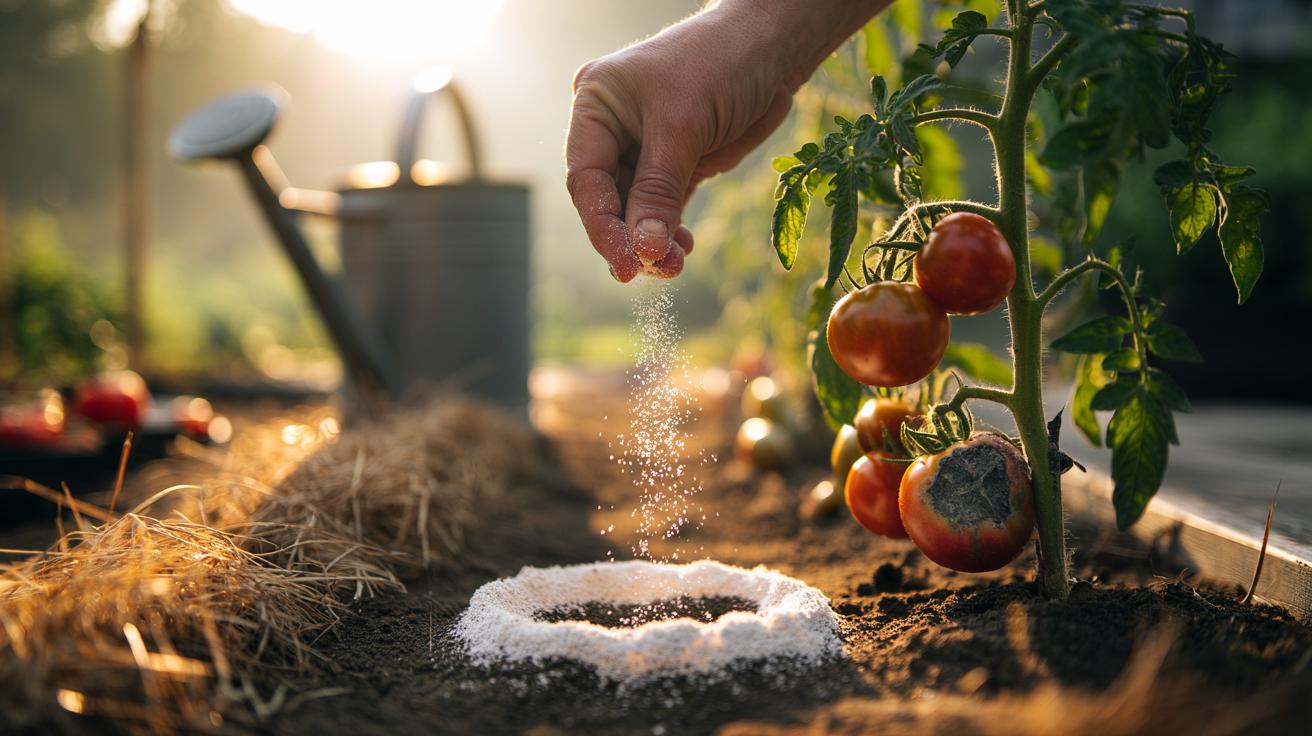
Every summer, gardeners gasp at the tell-tale blackened, leathery patch spreading from the blossom end of ripening tomatoes. This is blossom end rot, and it’s less a disease than a plant nutrition and watering mishap. A trending home remedy is the eggshell powder “sprinkle” touted to fix the problem overnight. The idea has merit when executed precisely: ultra-fine shells can supply calcium while you correct watering and root stress. Existing blemishes will not reverse, yet you can halt new fruits from spoiling if you stabilise moisture and deliver accessible calcium. Here’s the evidence-based way to make, apply, and benchmark eggshell powder—and what to do when speed matters.
What Causes Blossom End Rot, and Why Calcium Matters
Blossom end rot occurs when developing fruit cannot access enough calcium during cell expansion. The twist: many soils already contain calcium, but erratic watering, root damage, excess salts, or a flush of ammonium fertiliser disrupts uptake. It is a physiological disorder, not an infection. Blackened ends will not heal, but you can protect the next wave of fruit. Tomatoes rely on steady moisture to transport calcium; drought followed by deluge interrupts this pipeline. Windy heat, pruning shocks, or cramped roots in containers increase the risk by stressing transpiration and absorption.
Where does eggshell powder fit? It is mainly calcium carbonate. Coarse shells break down slowly, sometimes over seasons. Ground into an ultra-fine flour, surface area skyrockets, releasing small amounts of calcium into the rhizosphere faster. It is not as rapid as a foliar calcium chloride spray, but with correct particle size, even watering, and mulch, the “sprinkle” can help stop new lesions quickly. If watering remains erratic, no calcium source will perform.
Preparing Ultra-Fine Eggshell Powder Safely
Start with 10–12 clean shells per plant. Rinse to remove albumen, then peel off as much inner membrane as possible to reduce odour. Simmer the shells for 5 minutes to sanitise, drain, and bake at 120–150°C for 15–20 minutes until dry and brittle. This heat step also makes grinding easier. Use a dedicated coffee grinder or high-speed blender to produce a flour-fine powder; pulse in short bursts to avoid clumping. Sieve through a fine mesh; regrind the coarse fragments until uniformly powdery.
Ultra-fine texture is critical because it increases reactive surface area. Ultra-fine powder offers the fastest release of calcium from shells. Store in an airtight jar to prevent moisture uptake. If you need a quicker boost, some gardeners briefly pre-moisten the powder before application; others create a separate vinegar-shell solution for foliar use, though that is no longer a “sprinkle.” For this method, keep it dry and fine, and pair with deep watering to move calcium into the active root zone.
How to Apply for Fast Results in the Tomato Bed
Work with the plant’s hydraulics. For each tomato, sprinkle 1–2 tablespoons of eggshell powder in a shallow ring at the drip line—where feeder roots are most active. Lightly scratch it into the top 2–3 cm of soil without severing roots, then water slowly with 3–5 litres per plant until the bed is uniformly moist, not sodden. Mulch with 2–5 cm of straw, leaf mould, or compost to regulate evaporation. In containers, apply 1 tablespoon per 10 litres of pot volume, scratch, and water thoroughly until excess drains.
Consistency beats volume. Aim to keep soil evenly damp during fruit set; in heat, this can mean daily checks. Avoid heavy doses of high-ammonium fertiliser, which competes with calcium uptake; use balanced, nitrate-leaning feeds. You won’t rescue marked fruit, but within 24–48 hours, steady moisture plus accessible calcium can prevent fresh lesions on newly swelling tomatoes. Do not expect a miracle fix if watering remains erratic.
Eggshell Vs. Other Calcium Fixes: What Works Fast
Not all calcium sources act on the same timescale. If you’re mid-crisis, match the tool to the urgency. The table below summarises speed, use, and trade-offs. The eggshell powder “sprinkle” is practical and nearly free, but it’s at its best when paired with moisture control and planned a week ahead of heavy fruit set. For immediate triage, a carefully diluted foliar spray can deliver faster, though it must be applied correctly to avoid scorch.
| Source | Availability Speed | How to Use | Pros | Cons |
|---|---|---|---|---|
| Eggshell Powder | Moderate (faster if ultra-fine) | 1–2 tbsp per plant, scratch in, water deeply | Free, sustainable, soil-friendly | Not truly instant; depends on watering |
| Gypsum (Calcium Sulphate) | Moderate | Broadcast and water in | Adds Ca without raising pH | Still slower than foliar sprays |
| Calcium Chloride Foliar | Fastest | Label-rate spray to young fruit/leaves | Rapid delivery | Risk of leaf scorch; needs precision |
Choose speed for the crisis, and shells for resilience. Blending approaches is often best.
Troubleshooting and Preventing Recurrence
If BER persists, audit your watering first. Use your finger or a moisture meter; the top 2–3 cm should not swing from dust-dry to soggy. In raised beds and containers, heat accelerates drying; shade cloth on extreme days helps. Maintain soil pH near 6.2–6.8 for optimal nutrient balance, and avoid aggressive root disturbance during cultivation. Salts from overfeeding impede calcium uptake; flush containers monthly with clear water until runoff equals 20% of the applied volume.
Prune modestly to maintain leaf area for transpiration, and do not strip foliage during heatwaves. Feed with a balanced fertiliser leaning toward nitrate rather than ammonium. Rotate crops and improve soil structure with compost to stabilise moisture. Keep the eggshell powder routine going early in the season so calcium availability is already improving before heavy trusses swell. Consistency of watering matters more than quantity; pair it with mulch and wind protection for steady growth.
The eggshell powder “sprinkle” can be the quiet ally that nudges your tomatoes past blossom end rot, especially when milled ultra-fine and married to disciplined watering. It will not erase scars on affected fruit, yet it can help prevent new losses while building long-term soil health at virtually no cost. For emergencies, combine it with faster calcium routes and good horticultural hygiene. Which part of this plan—powder preparation, moisture control, or an alternative calcium source—will you try first in your tomato patch, and how will you measure the difference across your next truss?
Did you like it?4.5/5 (24)