In a nutshell
- 🔥 The radiator foil trick reflects infrared heat back into rooms, cutting losses through external walls and delivering the biggest gains in poorly insulated, electric-heated homes.
- 🛠️ Easy DIY: use heavy-duty aluminium foil on card or reflector panels, keep the shiny side facing the radiator, maintain an air gap, and avoid covering vents or valves—quick, reversible, and renter-friendly.
- 💷 Savings potential: up to £180 in high-use electric-heated flats; gas-heated homes see smaller but worthwhile cuts—foil complements rather than replaces insulation and smart controls.
- 📊 What determines results: your heating type, level of wall insulation, and number of external-wall radiators; pair with system balancing, smart schedules, and draught-proofing to stack gains.
- ⚠️ Safety essentials: never wrap foil around the radiator, keep it on the wall, don’t block the TRV or sockets, and consider moisture-barrier reflector panels where condensation is a risk.
As temperatures bite, a humble roll of kitchen foil is being hailed as a money saver in British homes. The radiator foil trick involves placing reflective material behind radiators on external walls to bounce heat back into rooms instead of warming the brickwork. Advocates claim it can trim bills by as much as £180 this winter, particularly in poorly insulated, electrically heated flats. Here’s what actually happens, how to do it safely in minutes, and the numbers you should run before setting expectations. Done properly, this is a safe, reversible, low-cost tweak that plays nicely with rented homes and tight budgets. It won’t replace insulation or smart controls, but it can boost comfort and reduce wasted heat at pennies-per-radiator.
How the Radiator Tin Foil Trick Works
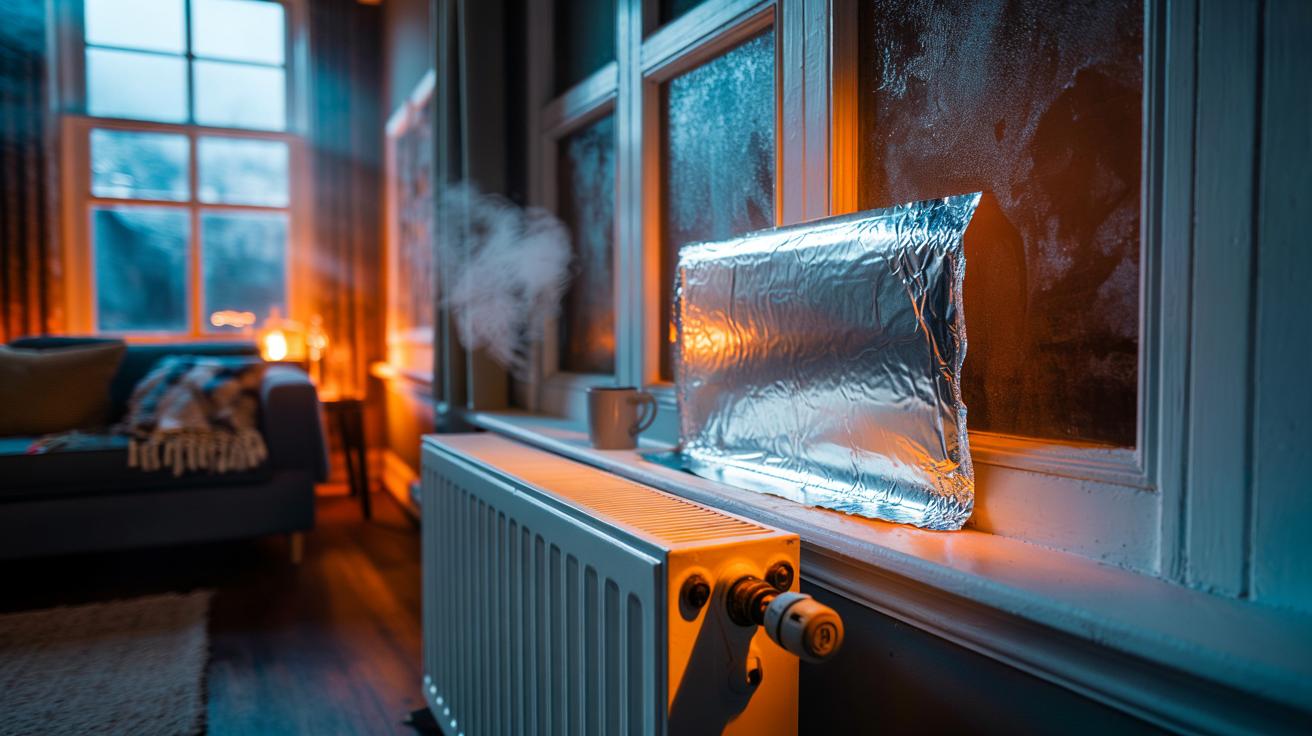
Radiators transfer warmth in two main ways: convection (warming air that circulates) and radiation (infrared heat moving in straight lines). On an external wall, a portion of that radiant energy heads straight into cold masonry. A reflective surface behind the radiator—either a purpose-made panel or heavy-duty aluminium foil on card—bounces that infrared heat back into the room. The result is a higher room-side temperature for the same boiler or electric input. It does not make the radiator “hotter”; it reduces the heat lost into the wall. That’s why the impact is strongest where walls are uninsulated or thin and where multiple radiators sit on outside walls.
The trick works best when there’s a small air gap between the wall and the radiator, letting warm air rise freely. Keep the foil flat, shiny side facing the radiator, and avoid blocking the convective airflow at the top and sides. On internal walls or well-insulated external walls, the gain is modest. But even a small improvement is welcome when energy prices are volatile. Think of foil as a targeted reflector that complements, but does not replace, insulation and good heating controls.
Step-by-Step: Do-It-Yourself Reflector in 20 Minutes
Gather materials: heavy-duty kitchen foil or (ideally) reflective radiator foil, a piece of cardboard or thin foam board cut to the radiator’s outline, scissors, spray adhesive or double-sided tape, and low-tack mounting strips or tabs. Turn the heating off and let the radiator cool. Measure the area behind the radiator that faces the wall and cut your backing board to fit, leaving clearance for brackets, pipes, and the valve.
Apply adhesive to the board and fix the foil shiny side outward, smoothing out creases to maximise reflectivity. Offer the panel up behind the radiator from above or the side and secure it to the wall using removable tabs. Keep a small gap off the floor to avoid damp transfer and leave space at the top so air can circulate. Never attach foil directly to the radiator surface, and never cover vents, fins, or the thermostatic valve (TRV).
Stand back and check: the radiator should be fully exposed to the room, with the foil hidden but facing it. If condensation is a concern, choose purpose-made radiator reflector sheets that are foil-laminated to foam or bubble wrap to reduce moisture risk. For a neater finish, consider a narrow shelf above the radiator to direct warm air into the space—just don’t let curtains drape over it. Minimal outlay, quick fit, and instantly reversible—ideal for renters and tight schedules.
Will It Really Save £180? The Numbers Explained
The answer hinges on three variables: your heating fuel, wall insulation, and how many radiators sit on external walls. Gas is cheaper per kWh than electricity, so even meaningful heat savings translate into smaller pound savings. Electric heating, by contrast, magnifies every kWh avoided. Typical studies suggest a few percent reduction in wall losses where radiators face outside walls; in older or poorly insulated flats with many external-wall rads, the effect can be higher. Your bill cut depends on your setup—there’s no one-size-fits-all figure.
| Scenario | Heating Type | Annual Heat Use (kWh) | Estimated Saving | Energy Price | Annual Saving |
|---|---|---|---|---|---|
| Conservative, modern semi | Gas | 9,000 | 1% | £0.07/kWh | £6 |
| Typical older terrace | Gas | 12,000 | 3% | £0.07/kWh | £25 |
| Draughty electric-heated flat | Electric | 15,000 | 5% | £0.24/kWh | £180 |
As the table shows, the headline £180 is plausible in high-use, electric-heated homes with multiple external-wall radiators. For gas users, expect more modest wins—still worthwhile given the cost is pennies. Combine the foil with radiator balancing, smart schedules, and draught-proofing to stack savings. The cheapest kWh is the one you never use, and reflectors reduce the need for heat rather than chasing higher boiler settings.
Common Mistakes, Safety Tips, and When to Upgrade
The biggest error is wrapping foil around the radiator itself: this traps heat, hurts convection, and risks damage. Keep the foil on the wall, not the appliance. Don’t block a TRV—a hidden valve can overheat locally and misread the room temperature. Avoid loose foil near sockets or cables, and use heat-resistant adhesive. If walls feel damp, pick purpose-made reflector panels that include a moisture barrier to limit condensation. Clean, secure installation is essential for both performance and safety.
If your home is well insulated or most radiators sit on internal walls, the gains are small. In that case, upgrade to reflective panels only where rads face the coldest outside walls and direct attention to higher-impact moves: sealing draughts, thicker curtains that clear the radiator, and bleeding and balancing the system. When a quick DIY fix is combined with better controls and basic maintenance, comfort rises and bills fall without touching the boiler’s max setting.
This winter, the radiator foil trick is a classic example of small effort, sensible physics, and incremental savings that add up—especially in flats with external-wall radiators and electric heating. For the price of a coffee, you can redirect warmth back into the room and make every cycle of the boiler or electric element work harder for you. Think of it as the finishing touch to a wider efficiency routine, not the whole plan. Where will you start: a roll of foil behind the coldest radiator, or a quick system balance and draught check to amplify the effect?
Did you like it?4.4/5 (20)