In a nutshell
- 🍅 Blossom-end rot (BER) is a physiological issue driven by water stress that disrupts calcium transport; aim for pH 6.2–6.8 and note containers/growbags are especially vulnerable.
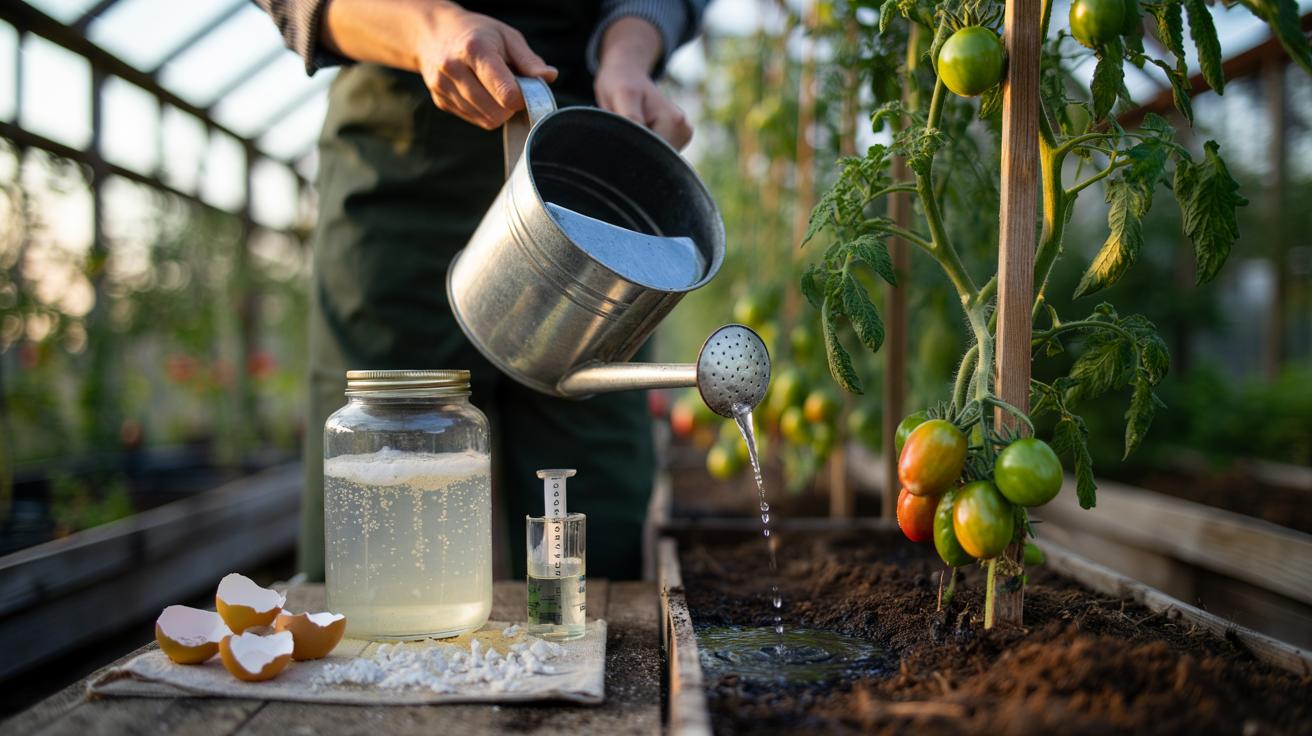
- 🥚 Make an eggshell + vinegar tea by reacting cleaned, baked, crushed shells with 5% white vinegar (24–48 hours) to form calcium acetate; strain to obtain a usable liquid calcium source.
- ⚗️ Safety and dilution: never use undiluted; apply 5–10 ml per litre as a soil drench and ~5 ml per litre as a foliar spray at dusk; avoid mixing with alkaline products or soaps.
- 🌱 Application and culture: start at first truss set; water with plain water, then apply liquid calcium (250–500 ml per plant weekly for 2–3 weeks); keep moisture consistent, mulch 5–7 cm, and use low-ammoniacal N feeds.
- 🔍 Evidence and myths: affected fruits will not heal—remove them; Epsom salts do not cure BER; consider gypsum for slow calcium, and maintain steady watering for prevention.
Tomato growers dread the dark, sunken scar that forms on the blossom end of fruits just as they promise to ripen. This is blossom-end rot, a physiological disorder caused by a shortfall of available calcium reaching the developing fruit. In Britain’s stop-start summers, swings between dry compost and sudden downpours can trigger it. One home-grown remedy getting attention is an eggshell and vinegar “tea” that creates a gentle, fast-available form of liquid calcium. By converting kitchen scraps into a targeted tonic, it aims to stabilise fruit development without buying specialist inputs. Used correctly, liquid calcium can steady the nutrient supply just when trusses are setting, helping to save a crop that might otherwise scar or collapse.
Why Blossom-End Rot Happens and Why Calcium Helps
Blossom-end rot (BER) presents as a leathery, brown patch at the flower end of the fruit. The underlying cause is a disruption in calcium transport inside the plant, typically when watering is erratic. Calcium moves with water in the xylem; if compost dries and then is suddenly soaked, flow to young fruits falters. Soil may hold plenty of calcium, yet transient shortage at the fruit tip can still develop. That is why even conscientious feeding fails if watering is inconsistent. Tomatoes in containers, growbags, or sunny conservatories are especially at risk because their root zones heat up and dry quickly.
Calcium matters because it builds strong cell walls. When supply lags during early fruit expansion, cells collapse, creating the tell-tale dark patch. Keeping pH between 6.2 and 6.8 ensures calcium remains available, while steady moisture helps it reach the fruit. The most powerful BER remedy is consistent watering and mulching; liquid calcium is best used as a supportive measure, aligning nutrient availability with critical growth windows.
Making Eggshell and Vinegar Tea (Liquid Calcium) Safely
The “tea” is essentially calcium acetate, formed by reacting eggshell (calcium carbonate) with household vinegar (acetic acid). Rinse and dry 8–10 eggshells, then bake at 120°C for 10 minutes to sterilise and drive off moisture. Crush to a coarse powder for faster reaction. Place shells in a glass jar and cover with enough 5% white vinegar to submerge them (roughly 100–150 ml per four shells). It will fizz as carbon dioxide escapes—loosen the lid to vent. When fizzing stops (24–48 hours), strain the liquid through a coffee filter to remove grit.
This concentrate is potent. Never spray or drench plants with the undiluted liquid. Label it and store out of reach of children. As a practical guide, dilute at 5–10 ml per litre of water for soil applications; for foliar use, keep to the low end (about 5 ml per litre) to reduce leaf scorch risk. The theoretical calcium content can be high because eggshells are about 95% calcium carbonate, but real-world solubility varies, so careful dilution is essential.
How to Apply Liquid Calcium to Tomatoes
Time applications to fruit set. Start with a soil drench of 5–10 ml per litre, watering 250–500 ml of the diluted solution around each plant’s root zone once a week for two to three weeks as the first trusses set. Water with plain water first so roots are moist, then apply the calcium solution, which helps distribute the nutrient evenly and avoids root burn. For foliar sprays (optional), use 5 ml per litre, apply at dusk to minimise leaf scorch, and keep spray light—aim for a fine mist on both sides of leaves and developing fruit.
| Use | Dilution | Timing | Notes |
|---|---|---|---|
| Soil drench | 5–10 ml per litre | Weekly for 2–3 weeks at first truss set | Apply to moist soil; 250–500 ml per plant |
| Foliar spray | 5 ml per litre | At dusk, once weekly during early fruit enlargement | Fine mist; avoid runoff and hot sun |
| Maintenance | 5 ml per litre | Every 10–14 days in containers | Monitor leaves; reduce if tip burn appears |
Do not mix with alkaline additives (e.g., bicarbonate sprays) or soaps, which can neutralise the solution. Keep watering steady, add a 5–7 cm mulch to keep compost cool, and feed with a balanced tomato fertiliser low in ammoniacal nitrogen, since excess N can aggravate BER by driving lush growth faster than calcium can be delivered.
Evidence, Myths, and Smart Prevention
Horticultural research shows BER stems primarily from water stress; calcium supplements help when timed to early fruit development but will not reverse damage on fruit already marked. Once a fruit shows a brown patch, it will not heal—remove it so the plant refocuses resources on the next truss. Liquid calcium from eggshells performs similarly to shop-bought calcium acetate or calcium nitrate in delivering available calcium, though nitrate supplies nitrogen as well. Crucially, avoid the myth that Epsom salts (magnesium sulphate) cure BER; they add magnesium, not calcium, and may even compete for uptake if overused.
For longer-term insurance, build soil with compost and consider gypsum (calcium sulphate) for a slow, pH-neutral calcium source. In alkaline soils, prefer gypsum over lime. In growbags and containers, keep a strict watering routine and size your pots generously. Liquid calcium is a useful tool, but consistency in moisture remains the decisive factor for a blemish-free harvest.
A handful of eggshells and a splash of vinegar can be turned into a targeted, thrifty tonic that steadies tomatoes at their most vulnerable stage. When paired with mulching, sensible feeding, and measured watering, this liquid calcium approach can help prevent the heartbreak of blossom-end rot across successive trusses. Use it as a supplement, not a substitute, for good husbandry, and you’ll stack the odds in favour of firm, flawless fruit. How will you weave eggshell tea into your routine this season, and what tweaks—watering timers, thicker mulch, or different dilutions—will you test to keep every tomato sound?
Did you like it?4.4/5 (29)