In a nutshell
- 🍅 Blossom-end rot is a physiological disorder caused by interrupted calcium delivery, not disease; steady moisture, mulch, and balanced feeding are first-line defences.
- 🧪 Eggshell + vinegar reacts to create calcium acetate—a plant-available form of liquid calcium; strain the stock, label it, and avoid sealing during active fizzing.
- 💧 Apply as a soil drench, not foliar: dilute roughly 1:20–1:40, give 50–150 ml per plant at early fruit set, and use a water–drench–water routine to protect roots.
- ⚠️ Safety: watch soil pH, avoid overuse and mixing with ammonium fertilisers, and prefer weaker, more frequent doses in sandy soils or containers.
- 📈 Troubleshooting: prioritise consistent watering, mulch, and drip irrigation; track truss-by-truss symptoms and nutrient competition (ammonium/potassium) to fine‑tune timing and dosage.
Homegrown tomatoes can be undone by a single brown scar: blossom-end rot. The culprit is not a pathogen but a shortfall of calcium reaching developing fruit, often triggered by erratic watering. Gardeners have long sought a simple, sustainable fix. Enter the “eggshell + vinegar tea,” a backyard chemistry trick that transforms brittle shells into liquid calcium that plants can actually use. By dissolving calcium carbonate with household vinegar, you create a gentle solution that, when correctly diluted, supports fruit integrity during the most vulnerable stages. Used judiciously and paired with steady moisture, this DIY amendment can reduce losses and firm up your harvest. Here’s how it works, why timing matters, and how to apply it without upsetting soil balance.
Understanding Blossom-End Rot and Calcium Uptake
Blossom-end rot (BER) is a physiological disorder, not an infection. It appears as a dark, sunken patch at the flower end of the fruit when calcium fails to keep pace with rapid cell expansion. Calcium keeps cell walls tight; when supply to the fruit is interrupted—by drought, heat spikes, or over-fertilising with ammonium—those walls collapse. Critically, soil can test high in calcium and the plant may still suffer BER because the issue is delivery, not raw abundance. Think of calcium as a bus that only runs on time when water is constant and roots are healthy. Mulch, steady watering, and avoiding root shock are first-line defences, while soluble calcium serves as a timely reinforcement during early fruit set.
Tomatoes absorb calcium with the transpiration stream, so leaves usually win the race for supply in hot, windy weather. Fruit—especially fast-growing varieties—can be last in line. That is why gardeners notice BER most on the earliest clusters or after a dry spell followed by heavy irrigation. A practical strategy is to keep soil evenly moist, moderate nitrogen, and add a modest, available source of calcium at the start of flowering. Consistency beats intensity: a stable routine protects ripening trusses far better than emergency measures.
How Eggshell and Vinegar Make Plant-Available Calcium
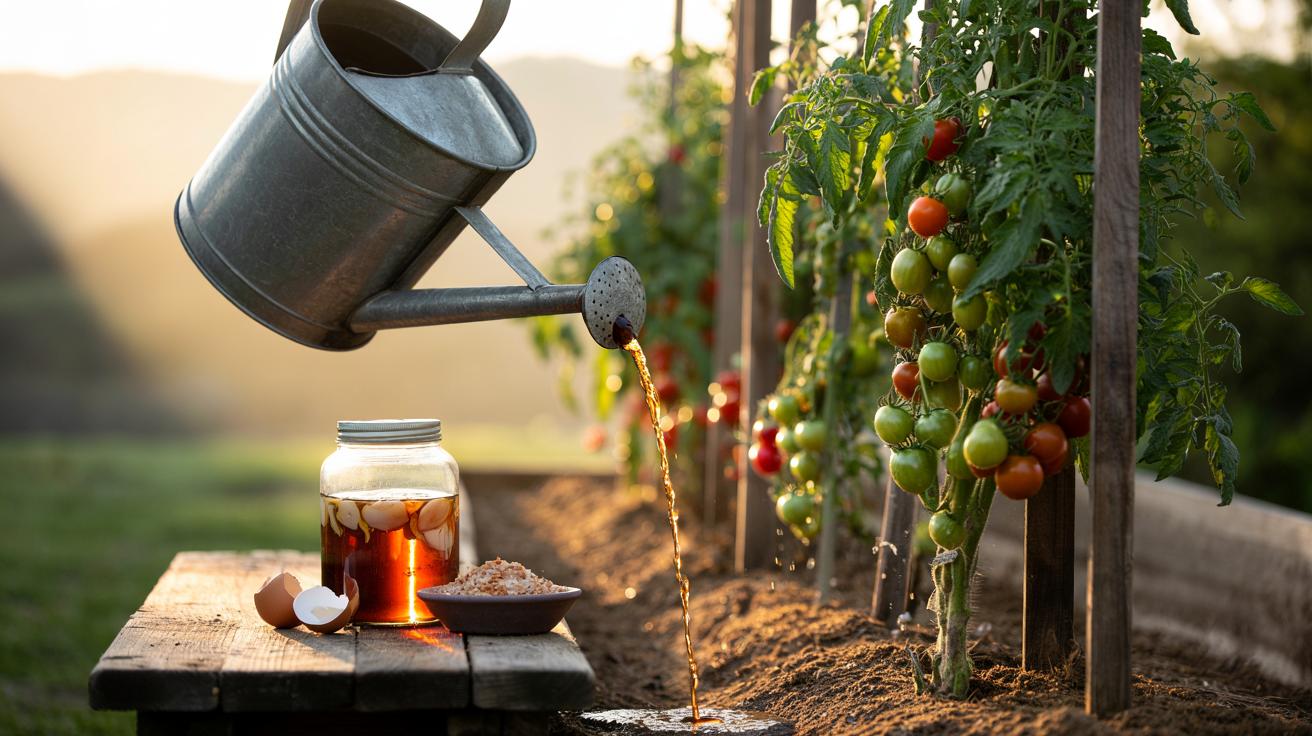
Clean, dried eggshells are mainly calcium carbonate. When combined with household vinegar (acetic acid), they fizz as carbon dioxide is released, producing water and calcium acetate—a form plants can access. This simple reaction converts a slow, gritty amendment into a gentle, soluble supplement. After the bubbling subsides, the liquid becomes your stock solution. Because vinegar is acidic, dilution is essential before it touches soil or roots. The goal is not to acidify your bed, but to supply modest, regular calcium during fruit set. Strain out any grit to prevent clogging watering cans, store the liquid loosely capped, and label the jar clearly. Avoid metal lids during the reaction stage, and never seal a jar while it is actively fizzing.
For predictability, standardise your batch and keep notes. Two to three doses applied as a soil drench around the dripline typically suffice for early and mid-season clusters. Pair applications with watering so the calcium moves into the root zone without stressing roots. Always test on a single plant first: tomatoes vary by variety, soil, and climate. The following table outlines a practical home recipe and dilution guide that balances availability with soil safety.
| Step / Ingredient | Quantity | Purpose / Notes |
|---|---|---|
| Dried, crushed eggshells | 6 shells (≈30 g) | Rinse, air-dry, then crush to increase surface area. |
| White vinegar (5% acetic) | 250 ml | Add slowly; allow controlled fizzing in a glass jar. |
| Steep time | 24–48 hours | Wait until fizzing stops; strain to obtain stock solution. |
| Dilution for soil drench | 1:20 to 1:40 (stock:water) | Target near-neutral solution; avoid acidifying soil. |
| Per-plant dose | 50–150 ml drench | Apply around dripline at early fruit set; repeat in 10–14 days. |
Application, Timing, and Safe Dosage for Tomatoes
Apply the diluted calcium solution as a soil drench rather than a foliar spray. Fruit skin resists calcium entry, and foliar acetic residues can scorch leaves in sun. Soil applications deliver calcium where roots can move it naturally with the plant’s water flow. Start when the first clusters are marble-sized, then repeat lightly for the next set. Water first, drench second, then water again; this buffers pH and distributes ions evenly. Keep total additions conservative—your aim is support, not overhaul. In sandy soils, slightly more frequent, weaker applications are safer than strong, infrequent doses.
Watch for red flags: persistent low pH, leaf tip burn, or white crusts on the surface indicate overuse. Skip applications if you recently limed beds or used high-calcium fertigation. Do not mix the stock with ammonia-based fertilisers or fresh compost teas; reactions and unpredictable pH swings can follow. Mulch to stabilise moisture, stake plants for airflow, and keep nitrogen moderate to avoid leaf-first growth that starves fruit. When in doubt, measure—simple pH strips and a moisture meter can prevent most mistakes.
Troubleshooting and Evidence: What Garden Science Says
Extensions and horticultural texts agree: BER prevention hinges on steady moisture and adequate, available calcium. Foliar calcium rarely reaches fruit flesh in meaningful amounts; soil delivery aligned with transpiration works better. The eggshell-vinegar approach provides calcium acetate—readily soluble and gentle when diluted—but it is not a silver bullet. If watering swings wildly or roots are damaged, no supplement can fully protect the earliest fruit. That’s why mulching with straw or compost, drip irrigation, and wind shielding often outperform any bottle.
Use observation to refine your routine. If only the first truss shows BER, you may need just one early drench and tighter moisture control. If multiple trusses are affected, reassess fertiliser balance—excess ammonium or potassium competes with calcium transport. Containers dry fast and often benefit from smaller, more frequent doses. Record dates, weather, and outcomes so you can right-size the method next season. Evidence-led tweaks turn a folk remedy into a reliable tool.
The eggshell and vinegar tea is appealing because it turns kitchen waste into a targeted, low-cost source of liquid calcium. When paired with mulch, consistent irrigation, and balanced feeding, it can lower the odds of blossom-end rot and produce firmer, more resilient fruit. Keep doses light, stay alert to soil pH, and treat the solution as a nudge rather than a cure. Consistency and observation will decide your success more than any single input. How might you adapt this method—dosage, timing, or watering—to your local climate and tomato varieties to make BER a rare exception rather than a seasonal norm?
Did you like it?4.3/5 (30)