In a nutshell
- 🌿 Magnesium sits at the heart of chlorophyll; deficiency is mobile, so older leaves show interveinal chlorosis first—act early to protect photosynthesis.
- 🧪 Epsom salt (magnesium sulphate) soaks, drenches, or foliar sprays supply Mg fast, with visible greening in 48–72 hours and fuller recovery in 7–10 days.
- 📏 Practical doses: container soak 5 g/L for 10–20 minutes; bed drench 3–5 g/L at ~5 L/m²; foliar feed 4–5 g/L at dawn/dusk with a mild wetting agent.
- 🩺 Diagnose accurately: Mg deficiency = older leaves yellow between green veins; iron hits youngest leaves; nitrogen causes uniform yellowing; manage pH (use dolomitic lime on acidic soils).
- ⚠️ Avoid pitfalls: prehydrate droughted plants, don’t overapply, and don’t mix magnesium sulphate with concentrated calcium or phosphate feeds; keep overall nutrition balanced.
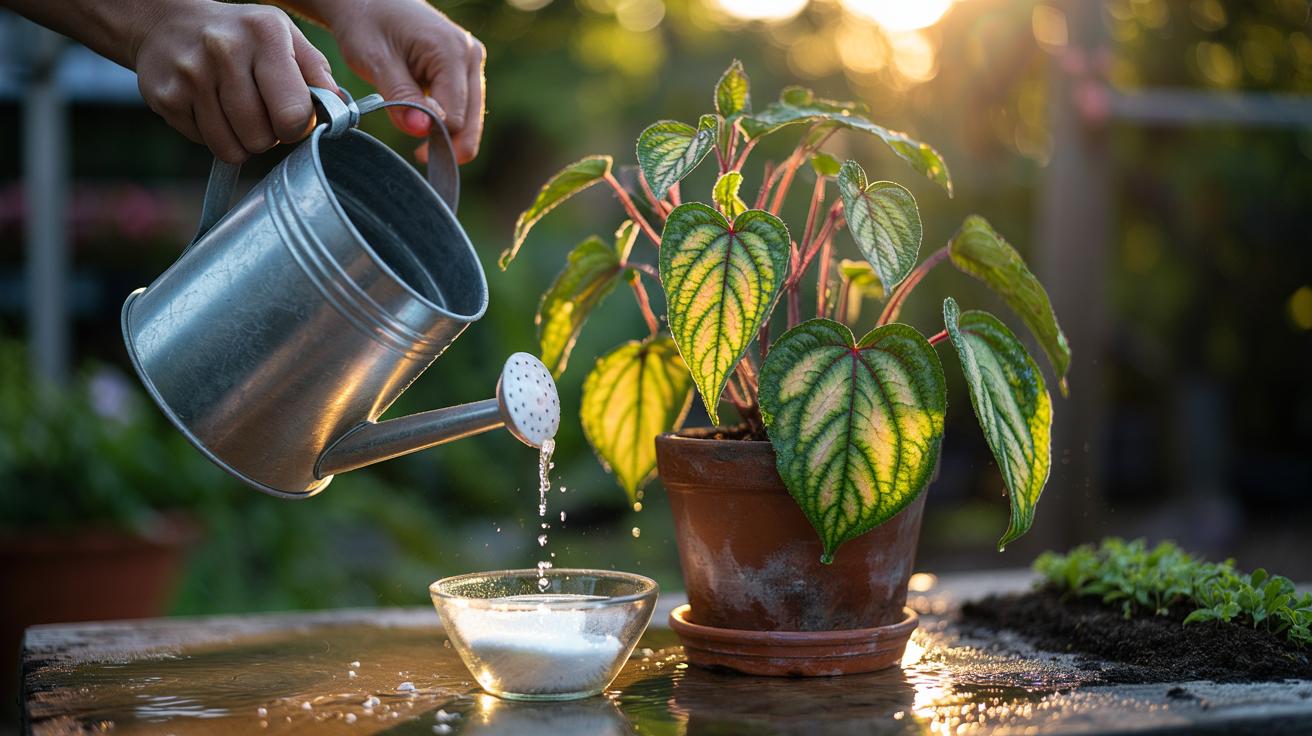
Yellow, interveinal leaves tell a story: the plant is short of magnesium, the central element in chlorophyll. For many UK gardeners, a swift Epsom salt soak is the fastest way to restore green. Magnesium sulphate dissolves readily, delivering an ion that plants can absorb through roots or foliage when speed matters. Act at the first sign of yellowing on older leaves to protect photosynthesis and prevent yield loss. This guide explains why magnesium deficiency appears suddenly, how a targeted soak corrects it rapidly, and the exact, practical rates that avoid damage while bringing plants back to health.
Why Magnesium Deficiency Turns Leaves Yellow
Magnesium (Mg) sits at the heart of the chlorophyll molecule, enabling plants to capture light and convert it into energy. It is also a cofactor for enzymes that shuttle sugars and stabilise ribosomes. Because magnesium is mobile within plants, it is reallocated to new growth during scarcity, which is why symptoms first show on older leaves. The hallmark is interveinal chlorosis: veins remain green while the tissue between them fades to yellow. In severe cases, edges may crisp and brown as photosynthetic capacity collapses.
Deficiency rarely stems from absolute absence in soil; it is commonly caused by antagonism or loss. High applications of potassium or calcium, sandy or peat-based mixes that leach readily, and prolonged wet weather deprive roots of available Mg. Cold substrates slow uptake. Recognising the pattern—older leaves yellowing between veins—lets you intervene before the canopy loses too much green area. A well-timed magnesium top-up stabilises chlorophyll and restores colour swiftly.
How an Epsom Salt Soak Works Biochemically
Epsom salt is magnesium sulphate heptahydrate (MgSO4·7H2O). It dissolves completely in water, releasing Mg2+ and SO4^2− ions. Roots and leaf surfaces absorb these ions quickly, especially when moisture levels are steady and stomata are open. The incoming magnesium is slotted into new chlorophyll, revives enzyme systems involved in carbon fixation, and helps reposition phosphorus where it is needed. The sulphur component supports amino acid formation, often giving a secondary lift to plant metabolism.
Because chlorophyll is constantly turned over, fresh Mg can translate into visible greening quite rapidly. Under favourable conditions, pale leaves may deepen in colour within 48–72 hours, with fuller recovery over 7–10 days. The speed depends on temperature, light, root health, and the severity of deficiency. A soak or drench provides an even, low-salt pulse of magnesium to the root zone, while a foliar spray supplies a rapid, targeted boost without waiting on root transport.
Practical Doses and Methods for Containers, Beds, and Leaves
For a container soak, dissolve about 5 g of Epsom salt per litre of water (roughly one level teaspoon per litre). Stand the pot in the solution for 10–20 minutes until the surface feels evenly moist, then drain thoroughly. This method feeds the entire root ball evenly without flushing nutrients from the compost. Do not soak drought-stressed plants; rehydrate first with plain water to prevent shock.
For border plants, apply a gentle root drench at 3–5 g per litre, watering the soil—not the stem—across the root zone at about 5 litres per square metre. Repeat once after 7–10 days if symptoms persist. Foliar feeding suits fast rescue: mix 4–5 g per litre and spray both leaf surfaces at dawn or dusk. A few drops of mild, unscented soap improve coverage. Avoid spraying in bright sun or high heat to reduce scorch risk.
Avoid mixing magnesium sulphate with concentrated calcium or phosphate products in the same can. Space feeds a few days apart and keep the overall fertiliser plan balanced. Epsom salt corrects magnesium deficiency, but it does not replace nitrogen or trace elements. If in doubt, test a small area first and observe for 48 hours.
Diagnosing Correctly and Avoiding Pitfalls
Correct diagnosis protects plants and wallets. Magnesium deficiency shows as interveinal yellowing on older leaves, veins green, with potential marginal browning later. Iron deficiency strikes the youngest leaves first, turning them pale while veins remain dark. Nitrogen shortage creates uniform yellowing across the plant, old and new. Pests, waterlogging, and root damage can mimic these patterns. Feed for the deficiency you have, not the one you fear. Soil pH also matters: Mg availability falls sharply in very acidic conditions. For a lasting fix in beds, consider autumn applications of dolomitic limestone where pH is low.
Overapplication brings its own issues—osmotic stress, poor calcium uptake, and salty composts. Keep rates modest, improve drainage, and review your base fertiliser. Hard tap water rich in calcium may still leave plants Mg-hungry in containers; a periodic, measured magnesium top-up is sensible, not constant heavy dosing.
| Symptom | Likely Cause | Quick Check | Epsom Salt Response |
|---|---|---|---|
| Older leaves yellow between green veins | Magnesium deficiency | High K feeds, sandy/peaty composts | Greening in 2–7 days after soak/spray |
| Young leaves pale, veins dark | Iron deficiency | High pH, cold, waterlogging | Minimal; use chelated iron instead |
| Whole plant evenly yellow | Nitrogen deficiency | Slow growth, thin stems | No direct fix; apply balanced N feed |
A thoughtful Epsom salt programme can revive tired foliage and rescue crops without fuss. By matching the dose to the plant and delivering it as a soak, drench, or foliar mist, you supply magnesium precisely where and when it is needed. Keep pH and overall nutrition in balance, monitor new leaves for colour, and adjust intervals to growth rate and weather. The aim is steady, green photosynthetic canopy—no more, no less. Which plant on your patch is showing the clearest magnesium hunger today, and how will you trial a carefully measured soak to bring that green back?
Did you like it?4.5/5 (20)