In a nutshell
- 🌱 Garlic spray deters pests by masking plant scents with sulphur-rich compounds like allicin, acting as a repellent rather than a poison.
- 🧪 DIY method: simmer crushed garlic in water, strain, then add mild soap (and optional oil); dilute 1:3 for tough leaves or 1:5 for tender foliage.
- 🕒 Application best practices: spray in the cool of morning/evening, coat leaf undersides lightly, reapply every 5–7 days or after rain, and avoid flowers.
- 🪲 Effective mainly against aphids, whitefly, and early spider mites; limited impact on heavy caterpillar damage, slugs, or fungal diseases.
- 🔁 Works best within integrated pest management: combine with rinsing, netting, pruning for airflow, sticky traps, and consistent plant care.
Across the UK’s vegetable plots and patio pots, one pungent staple has become a first response to nibbling pests: garlic spray. It’s cheap, quick to make, and surprisingly effective at protecting tender leaves without resorting to harsh chemicals. Gardeners praise it for deterring aphids on roses, holding whitefly in check on tomatoes, and giving brassicas a fighting chance in peak season. Results aren’t magic, yet they are tangible. Used carefully, garlic spray tilts the balance back in the plant’s favour. Below, we unpack why it works, how to mix a reliable batch at home, and the best ways to apply it for clear, lasting results.
The Science and Appeal of Garlic Spray
Garlic contains sulphur-rich compounds—most notably allicin—that release a sharp, lingering odour when cloves are crushed or heated. This volatile cloud confuses pest insects by masking the plant scents they home in on and creates an environment they’d rather avoid. There is also mild antimicrobial activity, which can help limit some superficial leaf issues. Crucially, garlic spray is a deterrent, not a conventional poison. You’re making plants unpalatable and harder to locate, tipping the odds away from infestation without carpet-bombing your garden’s ecosystem.
That’s the core appeal. A kitchen-cupboard remedy, minimal cost, and a lighter footprint than broad-spectrum insecticides. The smell dissipates within hours outdoors, but pests get the message. Still, there are caveats. Concentrated mixes can scorch foliage. Rain dilutes protection. Beneficial insects may dislike a direct blast. Sensible practice solves most drawbacks: dilute appropriately, avoid flowers, and spray at cooler times. For many UK gardeners, the trade-off is worth it. It’s a practical tool in an integrated approach, not a silver bullet.
How To Make A Reliable Garlic Spray
For a dependable batch, start with this tried-and-true recipe. Ingredients: 2 whole bulbs of garlic (or 12–14 large cloves), 1 litre of water, 1 teaspoon mild liquid soap (unscented), and 1 teaspoon light vegetable oil (optional) to help it cling to leaves. Add a small chilli if you’re targeting particularly stubborn sap-suckers. Crush or finely blitz the garlic with a splash of water, then simmer gently in the remaining water for 10 minutes. Cool, strain very well, and stir in the soap (and oil, if using). You’ve made a concentrated base.
For spraying, dilute the concentrate: 1 part concentrate to 3 parts water for tough, waxy leaves; 1:5 for tender foliage like basil or young lettuces. Label the bottle clearly and refrigerate the leftover concentrate for up to one week. Never spray in full sun or during heat stress. Test on a small patch and check for scorch after 24 hours. If leaves look crisp and clean, proceed. This careful preparation gives a consistent, garden-ready garlic spray every time.
When And How To Apply On Leaves
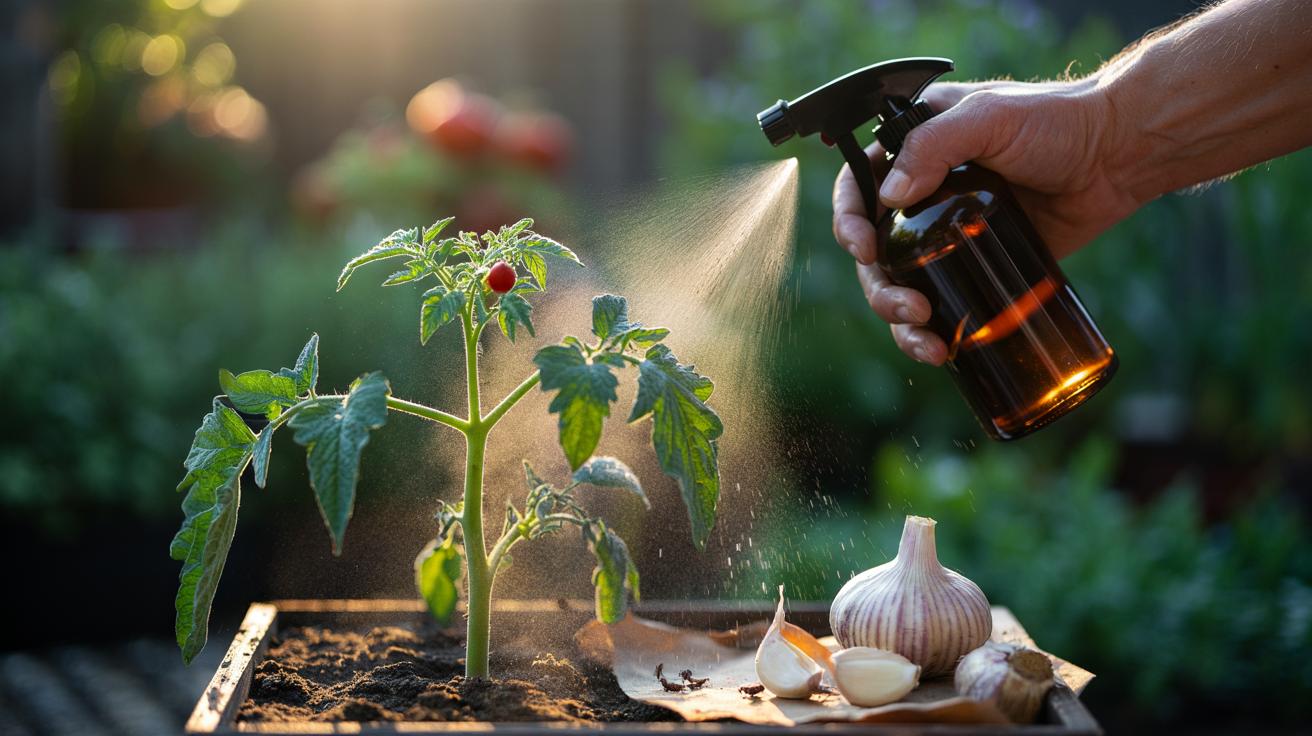
Timing and technique make the difference between “helpful” and “transformative.” Spray in early morning or after sunset when temperatures are cooler and pollinators are less active. Shake the bottle and coat both sides of leaves, focusing on the undersides where aphids, whitefly, and spider mites congregate. Aim for a fine mist, not a drench, and stop at first sign of runoff. Reapply every 5–7 days in an outbreak, or after heavy rain. Consistent, light applications beat occasional soakings.
Work with nature, too. Knock down heavy aphid clusters with a firm jet of water before spraying. Avoid flowers to reduce contact with bees. Keep air flowing around plants by pruning congested growth, and water early so plants aren’t stressed by evening. A weekly rhythm—inspect, rinse, then mist—builds protection that sticks. Over a fortnight you’ll often see a shift: fewer pests, fewer sticky leaves, and a plant growing away from trouble.
What It Does—and Doesn’t—Control
Garlic spray excels against soft-bodied sap-suckers and light mite pressure. It can deter early-stage caterpillars on brassicas but won’t fix a full-blown chewing frenzy. Slugs and snails ignore leaf sprays, though some gardeners use crushed garlic barriers around seedlings with mixed success. Fungal diseases? You might see mild suppression of cosmetic issues like powdery mildew, yet it’s not a cure. Think of it as a repellent layer within a broader integrated pest management plan, alongside crop rotation, netting, hand-picking, and healthy soil.
| Pest | Typical Signs | Expected Effect | Notes |
|---|---|---|---|
| Aphids | Clusters, curling leaves, sticky honeydew | Good deterrence; populations decline | Rinse first, then spray undersides weekly |
| Whitefly | Small white moth-like insects, leaf yellowing | Moderate; reduces settling and hatch | Combine with yellow sticky cards |
| Spider mites | Speckling, fine webbing in heat | Moderate; helps if caught early | Boost humidity; maintain regular coverage |
| Caterpillars | Chewed holes, frass pellets | Light deterrence at early stage | Use nets and hand-pick for heavy attacks |
Set expectations accordingly. If pressure is high, layer defences: mesh brassicas against cabbage whites, feed and water consistently, and plant sacrificial nasturtiums to draw pests away. Then keep the garlic spray routine steady for several weeks. You’ll notice the combined effect—healthier growth and fewer bite marks—without harsh interventions that disrupt the garden’s balance.
In short, garlic spray is popular because it’s accessible, adaptable, and it works when used with care. The smell vanishes, but the protective veil lingers just long enough to frustrate the usual suspects. It’s not a miracle solution, yet it’s a genuine ally for UK gardeners battling sap-suckers on a budget. Tweak dilution, keep a regular cadence, and partner it with sensible garden hygiene and barriers. What plant on your patch would benefit most from a gentle, garlicky shield—and what will your first trial look like this week?
Did you like it?4.5/5 (30)