In a nutshell
- 🔥 The bite comes from capsaicin, which acts as a repellent—it deters mammals and disrupts insect feeding rather than killing; sunlight and rain degrade residues, so reapplication is essential.
- 🧰 Mix a simple DIY recipe: 1–2 tsp chilli per litre of water, steep and strain, add a few drops of mild soap as a surfactant; patch-test, spray mornings/evenings, target leaf undersides, and repeat every 5–7 days.
- 🧿 Results vary: good for aphids, caterpillars, and browsing rabbits/deer, but limited on slugs/snails; combine with netting, hand-picking, and rinse edibles before harvest.
- 🛡️ Prioritise safety and UK compliance: capsaicin irritates eyes/skin, avoid flowers to protect pollinators, store/label clearly; it’s not an approved product for sale—keep it for personal use and check HSE guidance.
- ♻️ Fold chilli spray into Integrated Pest Management (IPM): pair with barriers, crop rotation, soil health, and regular scouting; protect beneficials, adjust strength modestly, and keep records to fine-tune timing.
Across UK allotments and back gardens, an old trick is making a spicy comeback: the chilli water spray. This pungent, DIY spritz leans on the natural firepower of capsaicin to discourage marauding insects and browsing mammals from tender seedlings and salad crops. Gardeners praise it for being inexpensive, quick to mix, and adaptable to different plants and pests. Yet it is not a magic shield. Correct preparation, careful timing, and realistic expectations are essential to avoid leaf scorch or harm to beneficial insects. What follows is a practical look at how chilli water works, when it excels, where it falls short, and how to fold it into a broader, resilient approach to pest management.
The Science Behind Capsaicin
The bite you taste in a fiery chilli comes from capsaicin, a compound that binds to heat-sensitive receptors. In mammals, this triggers an unmistakable burning sensation, so browsing rabbits, deer, or even curious pets often learn to avoid treated plants. Insects don’t perceive heat the way we do, but capsaicin still functions as a feeding deterrent, interfering with mouthparts and chemoreceptors. It’s a repellent, not a conventional poison, so it discourages nibbling rather than killing outright. That distinction matters: it lowers risk of residues while also requiring persistence from the gardener.
Once diluted in water and applied to foliage, capsaicin forms a temporary layer that tastes and feels unpleasant to many pests. Sunlight and rain degrade it, which is a double-edged sword. On the one hand, breakdown reduces long-term environmental load; on the other, it demands regular reapplication during peak pressure. Evidence from trials is mixed because plant species, pest types, and weather vary widely. Yet many growers report fewer bites on brassicas, lettuces, and beans when using a thoughtful regimen of chilli spray alongside other measures.
How Gardeners Make and Use Chilli Water
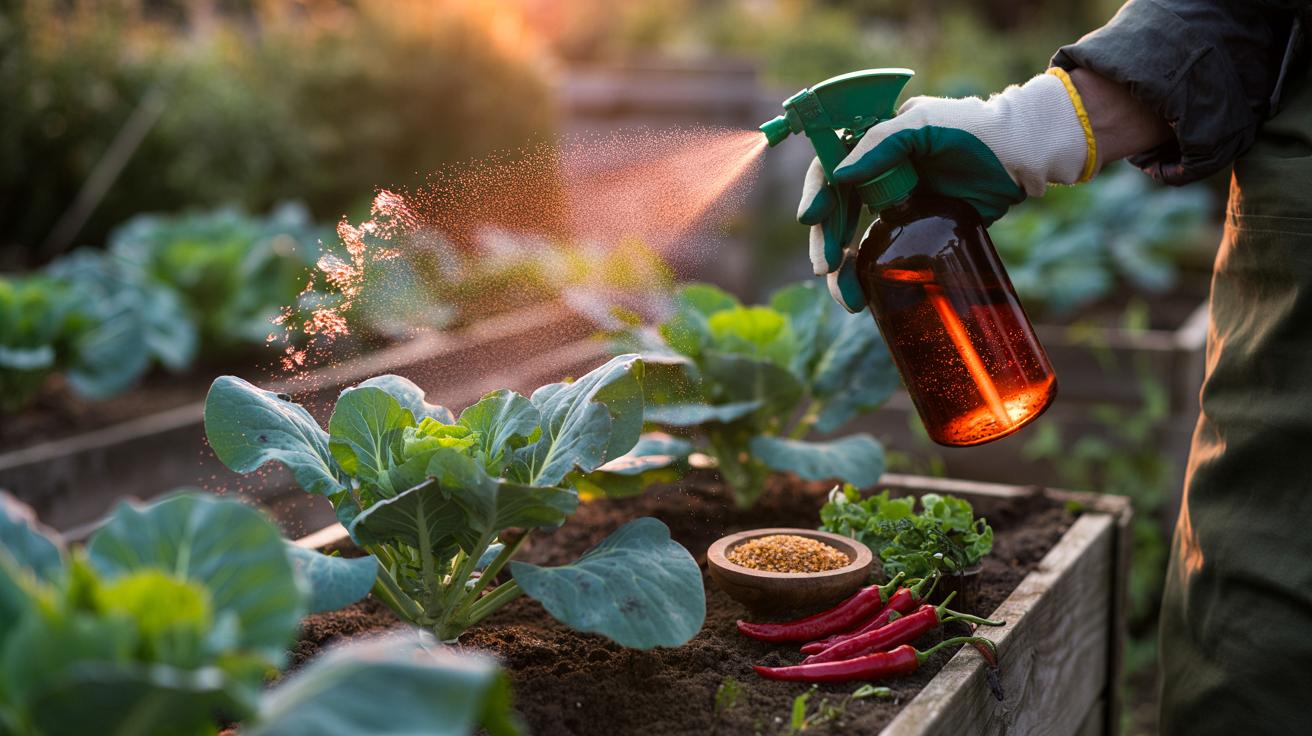
A simple mix is often best. Steep 1–2 teaspoons of chilli powder or crushed dried chillies per litre of hot water for 30 minutes, then cool and strain very thoroughly to protect spray nozzles. Add a few drops of mild, unscented liquid soap as a surfactant to help coverage. Decant into a clean trigger bottle and label clearly. Always patch-test on a single leaf and wait 24 hours—some plants, especially soft-leaved crops, can scorch. For application, spray in the cool of early morning or evening, aiming for both sides of leaves while avoiding open blossoms to protect pollinators.
Reapply after rain and every 5–7 days during heavy pest activity. Focus on young growth, which pests prefer. Wear gloves and avoid contact with eyes and skin. If residue builds up, rinse plants with water a day before harvest. The guide below summarizes common targets and usage notes.
| Target Pest | Typical Effect | Suggested Mix | Notes |
|---|---|---|---|
| Aphids, whitefly | Reduces feeding, disperses colonies | 1–2 tsp chilli per litre + 2–3 drops soap | Cover undersides; repeat weekly |
| Caterpillars, beetle nymphs | Discourages chewing | Slightly stronger end of range | Combine with hand-picking and netting |
| Rabbits, deer | Repels browsing | As above; focus on perimeter plants | Reapply after rain or irrigation |
| Slugs, snails | Limited effect | N/A | Use barriers, traps, and habitat tweaks |
Safety and Environmental Considerations
Despite its folk-remedy status, chilli spray demands respect. Capsaicin is an irritant; shield eyes and skin, and mix outdoors or in a ventilated spot. Store in a clearly marked container away from children and pets, and discard old batches—odours turn and effectiveness fades. Never spray in strong sun or during high heat; leaf burn is more likely when surfaces are hot or droplet evaporation is rapid. Choose calm conditions to limit drift, and avoid spraying flowers to protect pollinators and predatory insects such as ladybirds and lacewings.
From a regulatory standpoint, UK rules tightly control the sale and promotion of plant protection products. Home gardeners commonly use chilli water as a repellent, but it is not an approved, commercial pesticide. Keep it for personal use, label it clearly, and do not sell or advertise it as a product. If you’re unsure, check current guidance from the Health and Safety Executive. On edibles, wash produce before eating and keep intervals between final spray and harvest conservative—cap taste can linger on salads and herbs.
Limits, Myths, and Integrated Pest Management
Chilli water works best as part of Integrated Pest Management (IPM). It can nudge pest behaviour but won’t compensate for stressed plants, exposed soil, or heavy infestations. Pair it with physical barriers (fleece, mesh), regular scouting, and cultural practices: diversify plantings, rotate crops, and strengthen soil with compost to build natural resilience. When predator insects are active, reduce or pause sprays to avoid disrupting allies that keep pests in check. For persistent sap-suckers, use targeted biological controls or horticultural soaps in rotation to prevent overreliance on a single tactic.
Beware myths. Chilli spray is not “non-toxic” in the casual sense—capsaicin can harm eyes, irritate skin, and stress sensitive plants. It also won’t stop every pest: molluscs, vine weevils, or well-established aphid colonies may shrug off light treatments. Keep records of what you mix, where you spray, and the weather; patterns emerge that save time later. The most successful gardeners adjust concentrations modestly, time applications before outbreaks peak, and combine deterrence with good sanitation and plant spacing.
The chilli water spray is a sharp yet subtle tool: strong enough to teach pests that your veg are unpalatable, gentle enough to break down quickly, and flexible in a small-garden toolkit. Used with care, it protects young crops during vulnerable growth stages and reduces the need for harsher measures. Respect its limits, protect your allies in the border, and let observation guide your next move. What will you pair with chilli water this season—netting, companion planting, or a new routine of early-morning scouting to stay one step ahead?
Did you like it?4.5/5 (23)