In a nutshell
- 🌧️ Bare soil causes soil splashback, flinging pathogen-laden particles onto tender foliage and triggering damping-off and early blight in vulnerable seedlings.
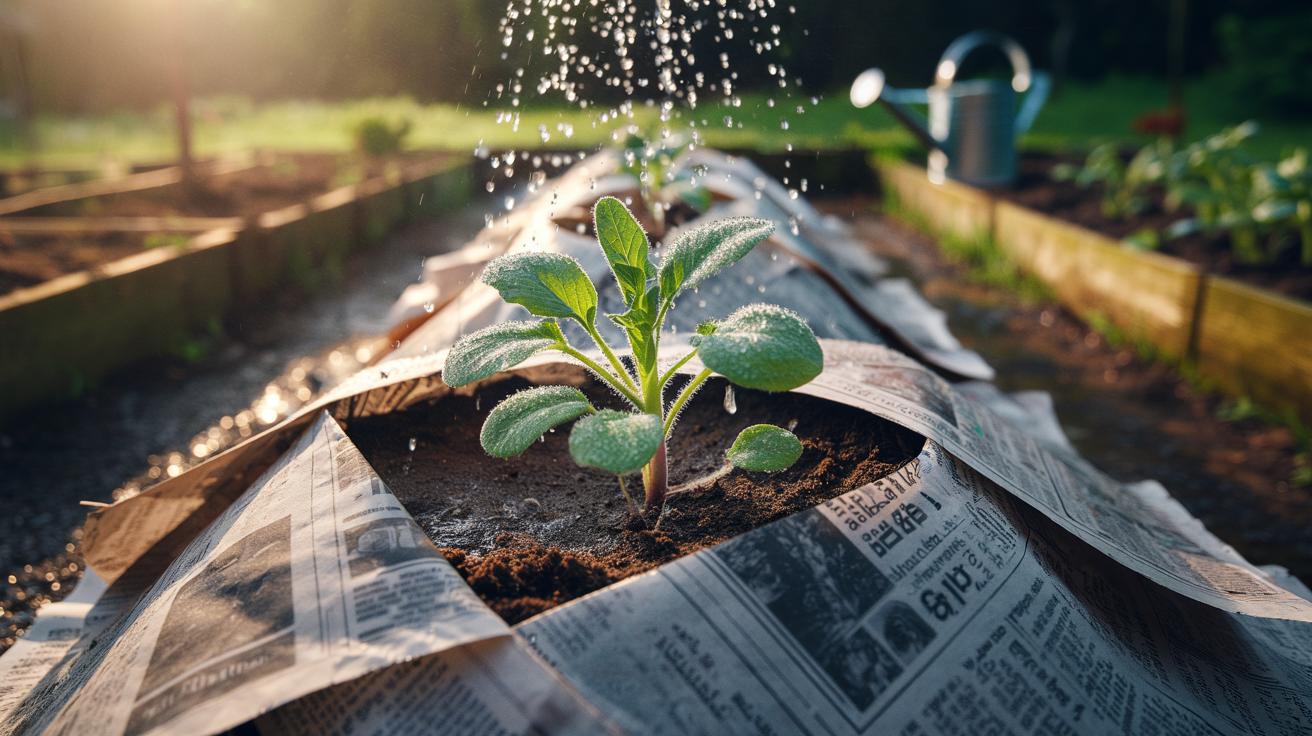
- 📰 Newspaper mulch absorbs raindrop impact to stop particle ejection, while its porous fibres allow gentle watering, stabilise moisture and temperature, and keep leaves clean.
- 🛠️ Practical setup: lay 4–8 sheets of non-gloss newsprint, overlap edges, leave a 2–3 cm stem gap, water in place, and top lightly with compost or straw; monitor wind lift and slugs.
- 📦 Material choices: pick newsprint with vegetable-based inks; adjust thickness for beds vs. exposed plots; expect ~6–10 weeks’ lifespan, longer with a straw cap.
- 🚿 Pair the mulch with clean watering (rose head, low pressure, morning soil-level watering) to cut infections, suppress weeds, and boost soil organic matter—ideal for UK spring starts.
Spattered leaves are an open door to infection. When heavy rain or a hose jet hits bare beds, it throws specks of soil onto tender cotyledons and stems, delivering a cocktail of microbes right where young plants are least defended. Gardeners are turning to an unflashy yet highly effective shield: newspaper mulch. Laid in thin layers around seedlings, it stops soil splashback at source, keeps the root zone evenly moist, and buys crucial time for fragile tissues to toughen. By interrupting the splash pathway, you remove one of the most common routes for disease to reach seedlings. Here’s how, why, and the simple steps to put this low-cost tactic to work in any British plot or balcony box.
Why Soil Splashback Infects Tender Seedlings
Each raindrop is a tiny hammer. On bare soil, impact ejects a mist of gritty particles laced with fungal spores and bacterial pathogens. That spray lands on baby leaves and stems, inoculating them with agents of damping-off such as Pythium, Rhizoctonia, and Fusarium, or foliar diseases like early blight and bacterial speck. Seedling tissues lack the waxy cuticles and lignified cell walls of mature plants, so a few contaminated droplets can be enough to trigger collapse.
Once on foliage, moisture creates a microfilm where pathogens germinate with ease. Cool spring nights and congested trays amplify the problem by extending leaf wetness. The first sign is often a water-soaked lesion at the soil line, followed by a sickening wilt by morning. Without a barrier, every watering becomes a fresh inoculation event.
Wind-driven showers worsen spread by hurling particles at angles mulch-free beds cannot resist. In compacted soils, the crater effect intensifies splash height, pushing contamination onto lower leaves just as seedlings begin rapid growth.
How Newspaper Mulch Creates a Protective Barrier
Newspaper’s superpower is its porosity. Overlapped sheets act like a spongey shield that absorbs droplet kinetic energy, so the rain’s impact is spent in the paper rather than the soil. No impact means no ejected particles, and without particles, pathogens lose their main vehicle to reach foliage. The paper’s fibres also trap fine silt, preventing muddy slurry from rebounding.
Because it breathes, newspaper allows capillary wicking to spread water gently. Instead of splashes, seedlings receive a slow percolation that keeps the root zone evenly moist, minimising stress cracks in soil that otherwise prime splashback on the next downpour. A light dusting of compost above the sheets improves contact and hides paper from wind, while still letting rain through.
Thermally, the layer buffers sharp temperature swings that can stall growth and invite infection. Weed seeds are shaded, reducing competition and stem abrasion. Used correctly, a simple sheet barrier creates a cleaner, steadier microclimate where seedlings can establish strong defences.
Practical Steps: Laying and Maintaining Newspaper Mulch
Start with weeded, lightly moist soil. Lay 4–8 sheets of standard newsprint (avoid glossy inserts and heavy-colour magazine pages) around seedlings, overlapping by 5–8 cm so gaps don’t open. Keep a clear skirt of 2–3 cm around each stem to prevent rot, and cut a neat slit to fit papers around established plants. Water the sheets in place so they conform to the soil and resist wind lift.
Top with 0.5–1 cm of fine compost or a sprinkle of straw to hide edges and improve durability. Water through the mulch as normal; it will darken, soften, and bed down within hours. Inspect after strong winds and re-wet or pin corners as needed. If slugs are active, combine with beer traps or copper bands and keep the stem zone airy. As the season advances, tear back papers to add feed, then re-cover.
At the end of the crop, incorporate softened paper into the topsoil where it decomposes quickly, boosting soil organic matter and feeding worms. Replace with fresh sheets for the next succession.
Quick Reference: Materials, Thickness, and Lifespan
Modern UK newspapers typically use vegetable-based inks, making them garden-safe. Choose non-gloss newsprint, which wets readily and breathes. The right thickness balances protection with permeability: too thin tears; too thick can hinder gas exchange in heavy soils. A modest stack of sheets, well wetted and lightly topped, is all that’s required to stop splashback.
Use this guide to pick a barrier that matches your bed, weather, and timing. In raised beds and containers, go slightly thinner; in exposed allotments, opt for more overlap and a firmer top dressing so winds don’t prise up edges. Replace or reinforce after prolonged downpours or when transplanting larger seedlings that need more room.
| Material | Recommended Thickness | Breathability | Approx. Lifespan | Notes |
|---|---|---|---|---|
| Newspaper (newsprint) | 4–8 sheets | High | 6–10 weeks | Best for seedlings; avoid glossy inserts. |
| Cardboard (brown) | Single corrugated layer | Medium | 2–4 months | Slower to wet; slit for stems; good weed block. |
| Straw over newspaper | 4–8 sheets + 2–3 cm straw | Medium–High | 10–12 weeks | Excellent splash control; monitor for slugs. |
Pair any option with clean watering practices: use a rose head on cans, lower the hose pressure, and water at soil level early in the day to dry foliage quickly. Together, these tweaks compound the benefits of the mulch barrier.
Newspaper mulch is not glamorous, but it is a journalist’s favourite kind of garden tip: cheap, testable, and quietly transformative. It blocks the dirty physics of splash, steadies moisture, and helps seedlings outrun the diseases that so often fell them in spring. A morning’s work with yesterday’s paper can save weeks of lost growth and disappointment. Will you trial a ring of newsprint around your next sowing, and if so, which crop—in your conditions—will give the most revealing before-and-after?
Did you like it?4.5/5 (22)