In a nutshell
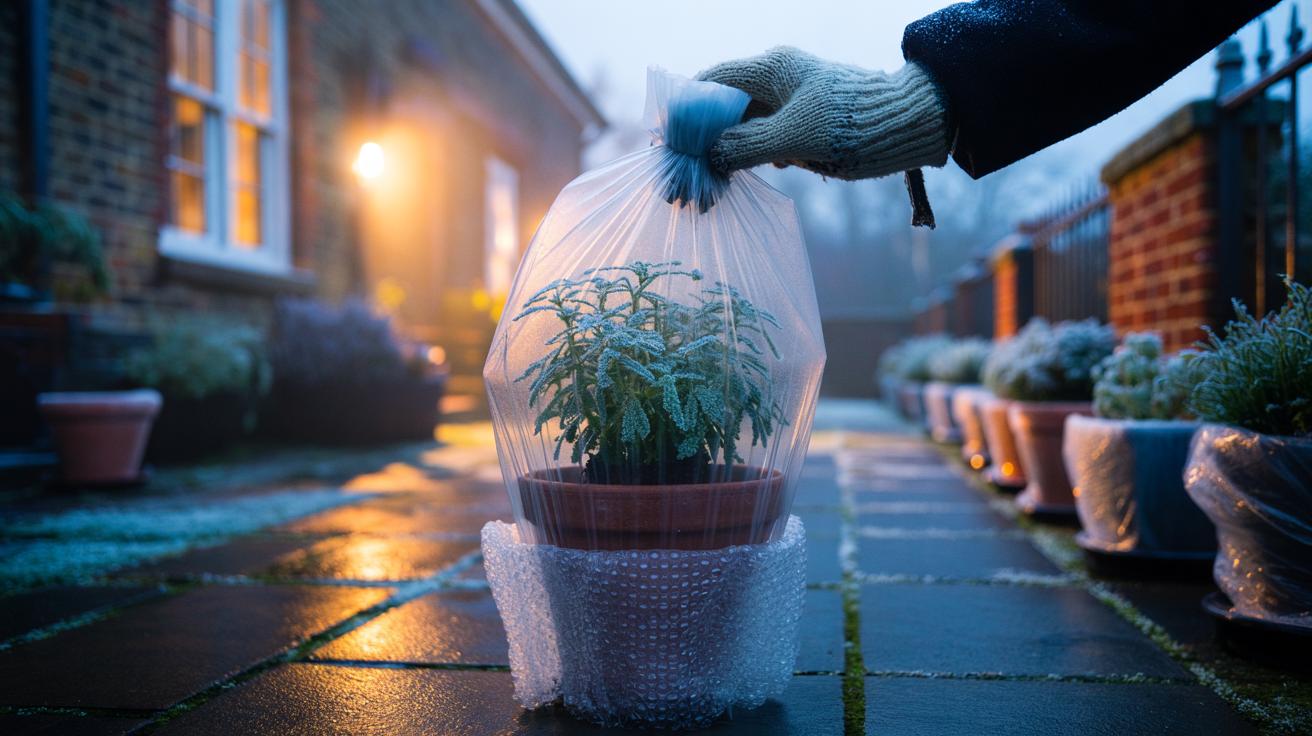
- 🌡️ Shower-cap covers act as mini cloches, slowing radiative heat loss and shielding foliage from sleet, giving potted plants in a British cold snap the crucial degree or two they need to avoid frost scorch.
- 🧢 Match cover to plant and pot: shower caps for small herbs/bedding, horticultural fleece for taller shrubs, and bubble wrap around containers to protect roots; consider microclimate, pot material, and hardiness ratings.
- 🛠️ Fit and vent correctly: cap before dusk, keep leaves off plastic with canes, leave drainage clear, elevate pots, and vent daily to release condensation and prevent mould.
- 🔍 Post-frost recovery: assess for blackened tissue, prune only once damage is clear, water lightly after thaw (>5°C), avoid high-nitrogen feeds, and watch for slugs and vine weevils under wraps.
- ♻️ Adopt a repeatable routine: pair a shower cap over foliage with bubble wrap on pots, then cap–vent–store on a schedule; consistency is the key to winter survival on patios and balconies.
When cold nights bite, gardeners across the UK reach for quick fixes to keep pots alive. One of the simplest is the humble shower-cap cover, the elasticated plastic you’d expect in a hotel bathroom rather than on a patio. Yet these cheap covers create a temporary shield that slows heat loss, fends off sleet, and buys vulnerable roots precious degrees. In marginal frosts, that small buffer is often enough to stop soft growth blackening and buds aborting. For renters, balcony growers, and allotment holders, the attraction is obvious: low cost, speed, and reusability. Here’s how—and why—improvised covers protect outdoor pots from frost, with tips drawn from British weather patterns and plant behaviour.
Why Shower-Cap Covers Work in a British Cold Snap
Frost harms potted plants in two main ways: it freezes tender tissue and accelerates root-zone heat loss from exposed containers. A shower cap acts as a mini cloche, trapping a pocket of air that warms slightly from the soil and the pot’s residual heat. This air layer slows radiative heat loss to the night sky, which is the key driver of frost on clear, still nights. The elastic band grips the rim, limiting draughts without strangling the plant. On rainy winter days, the cover keeps foliage drier, reducing evaporative chill and cutting the risk of rot from persistent wet.
UK pots are especially vulnerable because many are terracotta, a material that wicks heat and moisture rapidly. When temperatures dip to -1 to -3°C, a cap can help roses in pots, herbs like rosemary, and borderline shrubs such as bay retain just enough warmth to prevent leaf scorch. Think of the cap as a tiny greenhouse dome: not glamorous, but functionally sound for short, sharp frosts. It’s most effective on small-to-medium pots where the elastic can form a neat seal and the plant isn’t top-heavy.
Choosing the Right Budget Cover for Each Plant
Not every plant needs the same armour. For compact herbs, alpines, and bedding, a translucent shower cap offers splash protection and a modest thermal boost. Taller or spiky specimens fare better with horticultural fleece, which insulates while breathing. Tender perennials in decorative containers often benefit from a combination: fleece around the canopy and bubble wrap around the pot to protect roots. Prioritise the rootball—if roots survive, top growth can regrow in spring. Avoid airtight bags on succulents and drought-lovers; they resent trapped moisture and will rot. For edibles, stick to food-safe materials and ventilate daily.
Consider microclimate: balconies sheltered from wind need less insulation than open courtyards. In coastal areas, windchill is the main enemy; inland valleys suffer more from radiative frosts. Assess plant hardiness (H1–H7) and container size: smaller pots cool faster. Match the cover to the plant’s habit and the forecast, not to fashion. Below is a quick reference for thrifty coverings and best uses.
| Cover Type | Typical Cost | Breathability | Best For | Reusability |
|---|---|---|---|---|
| Shower cap (elasticated) | Very low | Low–medium | Small pots, herbs, bedding | High if dried/stored |
| Horticultural fleece | Low | High | Tender shrubs, salads, blossom | Medium |
| Bubble wrap (pot only) | Low | None | Root insulation, terracotta | High |
| Newspaper layers | Negligible | Medium | One-night emergencies | Single-use |
| Cardboard collar | Negligible | Medium | Windbreak at soil level | Single-use |
How to Fit and Vent Covers Without Causing Damage
Begin by checking the forecast; fit covers in late afternoon before temperatures plunge. Water lightly in the morning if the compost is dry—moist (not sodden) soil holds heat better. Slip the shower cap over the rim and ease foliage under without snapping stems. For shrubs, use short canes to prop the cap so leaves don’t stay wet against plastic. Always leave drainage holes unobstructed to avoid waterlogging and root rot. Secure bubble wrap around the pot with twine or tape, keeping the base open. Elevate pots on feet or bricks so cold water runs off.
Vent on milder days: lift the cap or fleece for an hour to release condensation. Stale, humid air invites mould and slug activity, which can be as damaging as frost. After a cold night, remove or loosen covers once the sun reaches the pots to prevent sudden heat spikes under plastic. Check elastic for cracks, and dry covers indoors to prolong life. Label sets so you can redeploy them swiftly when the Met Office signals another frost risk.
What to Watch After Frost: Watering, Pests, and Recovery
Post-frost, inspect leaves for glassiness or blackened tips. Prune only when tissue turns clearly mushy; cutting too early risks removing living wood. Resume light watering once daytime temperatures rise above 5°C and the compost thaws. Cold, saturated compost suffocates roots faster than the frost itself. Feed sparingly; high-nitrogen products encourage weak growth prone to the next cold snap. Instead, top-dress with compost or leaf mould to buffer roots and improve moisture balance. If plants look stressed, shift them against a south-facing wall to capture stored daytime warmth.
Watch for slugs and vine weevils lurking under wraps; hand-pick or use wildlife-friendly barriers. Reassess the container: thin terracotta may need a double layer of insulation or a move to a sheltered nook. For repeat frosts, adopt a rhythm: cap before dusk, vent late morning, store dry by midday. Consistency is the quiet secret of winter survival on patios and balconies. By March, taper protection to harden plants gradually, avoiding shock when spring sun returns.
Cheap, elasticated covers won’t turn a patio into a greenhouse, but used smartly they bridge those perilous nights that kill borderline plants. Pairing a shower cap over foliage with bubble wrap around pots delivers a quick, recyclable safety net, and thoughtful venting keeps problems at bay. On a budget and short of time, that’s a practical, proven strategy for British cold snaps. As you prep for the next frost advisory, which plants in your collection deserve a fast-fitting cover, and how will you adapt your routine to the quirks of your own microclimate?
Did you like it?4.5/5 (30)