In a nutshell
- 💧 Newspaper mulch creates a semi‑permeable barrier that slows evaporation, wicks moisture laterally via capillarity, and cools topsoil to stabilise hydration.
- 🌿 By blocking light, layered newsprint suppresses weeds, cutting transpiration losses and keeping more water for crops; topping with compost or wood chips boosts longevity and blackout.
- 🛠️ Apply 6–10 sheets of plain, black‑and‑white newsprint, pre‑soaked and overlapped by ~10 cm; water soil, lay paper, then water again, and anchor with 2–5 cm of mulch.
- ♻️ Use garden‑safe papers (typically soy/vegetable inks), avoid glossy inserts and plastics, watch for mild nitrogen tie‑up, and adjust for slugs, wet spells, and stem collars.
- 📊 Expect steadier growth, healthier soil microbiomes, and indicative water savings (e.g., 20–35% with 6–10 sheets), as worms integrate paper into the soil structure.
As British gardens face hotter summers and sporadic rain, low-cost strategies to keep beds hydrated have never been more valuable. One unsung hero is newspaper mulch: layers of ordinary newsprint that slow evaporation, temper soil heat, and starve weeds of light. Properly applied, it creates a breathable barrier that holds moisture where roots can use it, without sealing the ground. For water‑stressed plots, this simple sheet mulch can mean the difference between wilted crops and consistent growth. Gardeners from balconies to allotments can deploy it quickly, using materials that often cost nothing and break down into the soil food web.
Why Newspaper Mulch Conserves Moisture
The secret lies in the physics of paper. Newsprint is woven from cellulose fibres that trap air while wicking water laterally. Laid in overlapping layers, it forms a semi-permeable skin that slows vapour loss and shields soil from drying winds. Capillarity holds a thin film of water within the paper, acting like a temporary reservoir that roots can access as conditions fluctuate. By interrupting the pathway from moist soil to dry air, newspaper acts as a capillary brake, cutting the rate of surface evaporation dramatically. Because it breathes, it reduces water loss without creating anaerobic conditions.
Temperature is the other piece. Newspaper shades the surface, leading to cooler topsoil and lower evaporative demand. That stabilises microbial activity, curbs crusting, and improves infiltration during showers or irrigation. In clay-rich UK soils, reduced surface baking helps prevent fine particles from sealing over. Earthworms readily pull softening paper down, mixing it with organic matter. The result is a mild but meaningful boost to the soil microbiome and aggregate structure, which in turn improves water retention after rain or a watering can session.
Blocking Light to Suppress Weeds and Save Water
Weed seedlings need light to photosynthesise; starve them of photons and their energy reserves run out. A dark newsprint layer blocks germination triggers and smothers emerging shoots. Every weed you prevent is a tiny pump you switch off, because unruly foliage can transpire litres of water per square metre in a dry spell. With the competition quieted, crops keep more of the moisture you apply. Paper also disrupts the weed seed bank by preventing fresh seed rain from reaching the soil, reducing future labour and water use.
Light exclusion complements temperature control. Shading by newspaper lowers surface heat, slowing water loss even on blustery days. Where bindweed or couch grass persist, sheet mulch buys time and weakens regrowth between hand-pulls. In salad beds and young plantings, the effect shows up as steadier growth and fewer wilt events between waterings. Pairing newsprint with a top dressing of compost or wood chips both hides the paper and boosts its longevity, reinforcing the blackout layer that weeds struggle to breach.
| Layers of Newspaper | Light Penetration | Weed Suppression | Typical Lifespan | Water Saving (Indicative) |
|---|---|---|---|---|
| 4–6 sheets | Low | Good | 1–2 months | 10–20% |
| 6–10 sheets | Very low | High | 2–4 months | 20–35% |
| 10–12 sheets | Near zero | Very high | 3–5 months | 30–40% |
How to Lay Newspaper Mulch Correctly
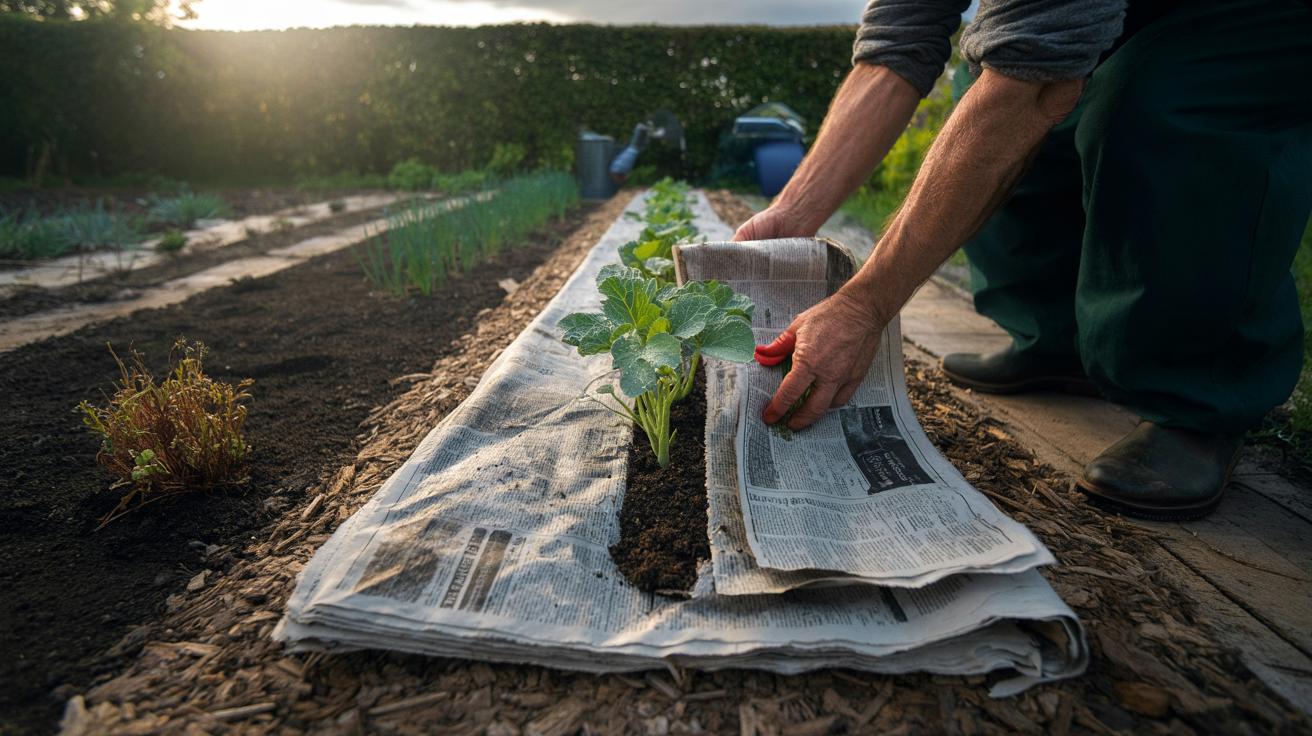
Choose plain, black‑and‑white newsprint; avoid glossy magazines and heavily inked inserts. Remove staples and plastic tape. Pre‑soak sheets in a trug or water butt so they drape neatly and resist the wind. Lay 6–10 sheets in staggered layers, overlapping edges by at least 10 cm to block light leaks. Cut or tear a planting hole and leave a small collar clear around stems to prevent rot. Anchor the paper immediately with 2–5 cm of compost, leaf mould, or wood chips so it stays dark, moist, and effective.
Water the soil first, then lay the paper, then water again to settle it. On paths, go thicker for durability; in beds, keep layers moderate so rain still percolates. Refresh thin spots after heavy downpours or where earthworms have feasted. If you notice slugs sheltering, reduce cover near vulnerable seedlings and use traps. For thirsty crops such as squash, newspaper under a decorative mulch creates a two‑tier barrier that sharply curbs evaporation.
Environmental and Practical Caveats
Modern UK newspapers largely use soy or vegetable inks and mineral pigments, making them garden‑safe. That said, skip glossy or heavily coloured inserts, which may carry clay coatings or synthetic binders. Tear off plastic address windows, nylon strings, and cellophane wrappers to avoid microplastic contamination. If you cannot source plain newsprint, brown packing paper is an excellent substitute with similar moisture performance. As the paper decomposes, it feeds microbes and worms, gradually transitioning from barrier to humus, so expect to top up through the season.
All carbon‑rich mulches can cause mild, temporary nitrogen tie‑up at the surface. Counter this by applying a light sprinkle of nitrogen (well‑rotted compost or diluted seaweed feed) before laying sheets. In very wet periods, open small vents around crowns to deter collar rot; in drought, keep the paper damp so it continues to buffer moisture. Wind is the chief practical foe: work on still days, pre‑soak, and weight edges promptly. Finally, avoid piling paper against woody trunks, where constant damp can invite pests and disease.
Newspaper mulch turns yesterday’s headlines into today’s hydration plan, cutting evaporation, cooling soil, and shutting out light for reliable weed control. It is frugal, quick to install, and compatible with organic growing, provided you pick plain newsprint and keep it anchored under a tasteful top dressing. The payoff is steadier moisture with fewer watering cans and fewer weeds stealing your efforts. From courtyards to cottage plots, this simple sheet method scales beautifully. What bed, border, or path in your garden could benefit most from a discreet layer of paper this season—and how will you tailor it to your conditions?
Did you like it?4.8/5 (20)