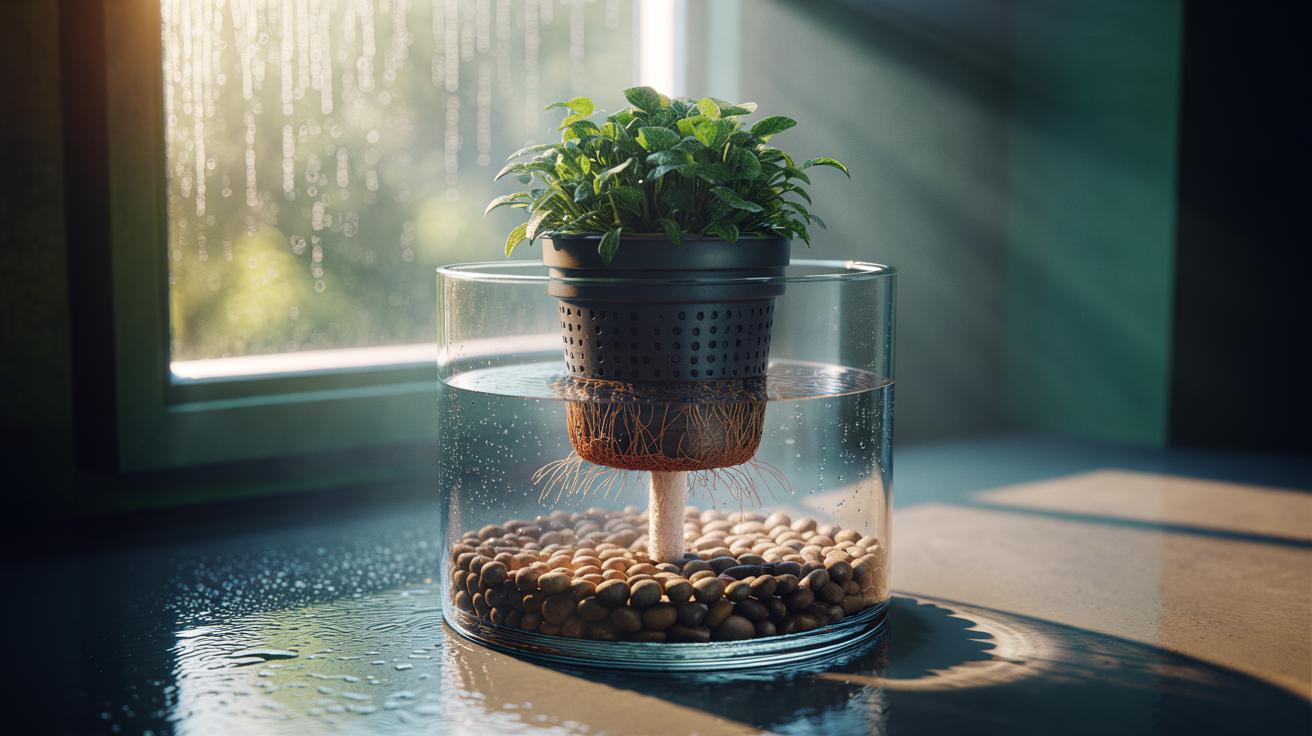
In a nutshell
- 🌱 The pot-in-pot method separates a holed inner pot from a slightly larger outer sleeve, creating an air gap that prevents waterlogging and root rot.
- 💧 Enhanced drainage and aeration disrupt the perched water table; optional wicking moves excess moisture away and feeds back gently as the mix dries.
- 🧪 Physics in practice: the air gap breaks capillary chains, encourages evaporation, and an overflow outlet stops accidental submergence; terracotta accelerates drying, glazed pots protect surfaces.
- 🧰 Setup essentials: inner nursery pot, outer container 2–5 cm wider, spacers or LECA, and an airy mix (bark/perlite/coir) to maximise aeration; keep water below the inner pot’s drainage holes.
- ⚠️ Seasonal care and fixes: if leaves yellow while soil stays wet, increase spacer height and water less; flush salt buildup, empty the sleeve, and winter-proof with reduced watering and frost-safe containers.
Houseplant problems often begin below the surface, where oxygen-starved roots invite disease. The pot-in-pot technique—placing a perforated inner container inside a slightly larger outer pot—creates a deliberate buffer that keeps compost from sitting in stagnant water. By improving drainage, boosting aeration, and giving excess moisture somewhere to go, the method curbs the conditions that trigger root rot. It also stabilises temperature and offers tidy presentation for living rooms, balconies, and patios. Think of it as a discreet lifejacket for roots: support when they need it, space to breathe when they don’t. For UK growers dealing with unpredictable rain outdoors and radiators indoors, this simple setup is a reliable, low-cost upgrade to everyday plant care.
How Double Containers Disrupt Root Rot
Root rot thrives in compacted, saturated compost where oxygen can’t reach the rhizosphere and microbes like Pythium and Phytophthora gain the upper hand. In a single pot that lacks an escape route, water accumulates at the bottom, forming an anaerobic zone. The pot-in-pot arrangement counters that by lifting the inner, holed pot above a deliberate space in the outer container, so surplus water drains away and air can circulate. Keeping roots out of stagnant water is the single best defence against rot. The result is reduced pathogen pressure, healthier fine roots, and a substrate that dries predictably from top to bottom.
The outer vessel acts as a sleeve rather than a reservoir. When paired with spacers or a thin layer of LECA/pebbles, it creates an air gap that breaks waterlogging and encourages gas exchange. Evaporation off the outer pot’s interior also helps wick moisture from the mix, maintaining a gentle humidity gradient around the root ball without drowning it. This added resilience means fewer dramatic swings between “too wet” and “bone dry,” which often stress plants and invite disease.
The Physics: Drainage, Wicking, and the Air Gap
Container soils develop a perched water table—a saturated layer near the bottom—regardless of pot size. The double-container method interrupts this by introducing both a lower-pressure drainage path and a ventilated cavity. Air breaks the capillary chain that keeps compost soggy. As water exits the inner pot, it doesn’t sit in contact with the root zone; instead, it collects below, where it can evaporate or be removed. The outer pot’s walls, especially if porous like terracotta, accelerate diffusion and moderate humidity, protecting roots from suffocation.
Optional wicking refines control. Thread a cotton strip or nylon cord from the inner pot down into a small layer of LECA or gravel in the outer pot. Capillary action pulls excess water away when it’s abundant and feeds a trace back when the mix dries, flattening peaks and troughs. Keep an overflow path by leaving a gap or drilling a discreet hole a few centimetres above the outer base to avoid accidental submergence. This physics-led design maintains the sweet spot: moist, not waterlogged; aerated, not desiccated.
Materials and Setup for Indoors and Patios
Choose an inner nursery pot with generous drainage and an outer pot 2–5 cm wider in diameter. For indoor rooms, glazed ceramic keeps furniture dry; for faster evaporation, use terracotta. Add rigid spacers, pot feet, or a shallow layer of LECA/pebbles so the inner base sits above any collected water. Use an airy potting mix—bark, perlite, and coir—to maximise aeration. Optional: a wick from inner to outer to smooth moisture between waterings. Water should never reach the inner pot’s drainage holes. That single rule prevents re-saturation and the suffocating conditions that promote rot.
| Component | Role | Practical Tip |
|---|---|---|
| Inner pot (with holes) | Holds root ball; primary drainage | Use slotted sides for extra airflow |
| Outer pot/sleeve | Collects excess water; improves stability | Terracotta boosts evaporation; glazed protects surfaces |
| Spacers or LECA | Creates the air gap | 3–20 mm lift prevents backflow |
| Potting mix | Supports roots and oxygen diffusion | Use bark/perlite blends for tropicals and a gritty mix for arids |
| Wick (optional) | Manages capillary transfer | Cotton or nylon cord; avoid dyed fibres |
| Overflow (optional) | Prevents flooding during heavy watering | Drill a small hole near outer pot’s sidewall |
To assemble: place spacers or a LECA layer in the sleeve, set the inner pot level, and backfill gaps for stability if needed. Water until you see a brief trickle into the outer vessel, then empty or let it evaporate below the inner base. Check by weight rather than calendar; in winter, extend intervals to avoid chill-induced stagnation. For patios in the UK, raise the outer pot on feet to clear rainwater quickly. This low-tech system makes watering more forgiving while hardening your plants against rot.
Troubleshooting and Seasonal Tips
If leaves yellow yet the mix remains wet for days, the air gap is too small or watering too frequent. Increase spacer height and ease off the jug. A sealed cachepot with no overflow can silently flood the inner pot after enthusiastic watering; fit a side hole or tip out excess promptly. Avoid overpotting—the pot-in-pot method manages moisture, but a huge volume of cold, wet compost still slows respiration. Watch for white crusts on the outer pot or soil surface; that’s salt buildup. Flush the inner pot thoroughly and let water drain into the sleeve, then empty it.
Winter brings cool rooms and short days; roots respire more slowly, so water sparingly and keep the inner base well above any pooled water. Around radiators, the air gap curbs rapid drying while preserving aeration. Outdoors, protect ceramic sleeves from frost cracks and shield the assembly from relentless rain with a covered spot or side overflow. In summer, a wick plus LECA can deliver gentle, self-regulating moisture during heatwaves. If leaves yellow while the mix stays wet for days, reduce water or increase the air gap. Adjust these variables and the method becomes a tuneable safeguard against rot.
By separating the root ball from lingering runoff, the pot-in-pot method tackles the chief cause of root rot—extended saturation without oxygen. It’s elegant, cheap, and adaptable to flats, balconies, and gardens, from peace lilies to patio shrubs. Once dialled in, you’ll water with confidence, enjoy steadier growth, and spend less time firefighting fungal problems. A small air gap can transform root health. Which plants in your collection would benefit most from a double-container setup, and how might you tailor the spacing, materials, or wicking to suit their specific moisture needs?
Did you like it?4.5/5 (21)