In a nutshell
- 🧪 Fatty acids and surfactants in washing-up liquid disrupt the leaf cuticle and cell membranes, causing rapid dehydration; the effect is contact-only, not systemic.
- 🧼 Dish soap vs horticultural soap: household detergents contain mixed additives and variable strength, while horticultural soaps use potassium salts of long-chain fatty acids with plant-safe formulations and directions.
- 🌱 Best targets and limits: effective on seedlings, algae, and moss; limited on deep-rooted perennials; results depend on full coverage, sunny dry weather, and tender growth stages.
- ⚠️ UK compliance and safety: using washing-up liquid as a herbicide is not HSE-authorised; avoid drift and drains, protect skin and eyes, and prevent harm to aquatic life.
- 🧠 Practical strategy: treat detergent sprays as short-term scorch; combine with mulching, hand-pulling, or approved contact herbicides for durable, low-impact weed control.
Across British patios and allotments, a quiet debate rages: can a spritz of washing-up liquid double as a weed killer? The answer lies in chemistry, not folklore. Many detergents contain fatty acids and related surfactants that compromise a weed’s protective barriers, causing visible scorch and collapse within hours. This is not a miracle cure but a contact action that hinges on how plant tissues are built. The effect is swift on tender growth, yet shallow against deep-rooted perennials. Understanding how these compounds dismantle plant cuticles and membranes clarifies when a washing-up-liquid spray appears to work, when it does not, and what responsible gardeners should consider in the UK.
What Fatty Acids Do to Leaves and Stems
Leaves wear armour. A waxy cuticle envelops the surface, reducing water loss and deflecting microbes. Fatty-acid-based soaps and other anionic surfactants can solubilise or emulsify these waxes, opening microscopic gateways. Once past the cuticle, surfactants disrupt the lipid bilayers of cell membranes, causing electrolytes and water to leak out. Cells collapse, tissues desiccate, and foliage wilts. The “burn” you observe is structural failure, not systemic poisoning. Because the mechanism is physical-chemical, visible injury often appears within hours on young, soft leaves.
This process mirrors the way commercial “herbicidal soaps” (potassium salts of long-chain fatty acids) work: they are contact herbicides, not systemic ones. They do not travel through phloem or xylem to kill roots. Consequently, annual seedlings, mosses, and algae succumb fast, while robust perennials typically reshoot. Sunlight and low humidity accelerate drying, enhancing impact; shade or immediate rainfall can blunt results. No carbohydrate-starvation or hormonal disruption occurs—only membrane and cuticle breakdown.
Dish Soap Versus Horticultural Soap: Key Differences
Washing-up liquids are blended for greasy plates, not plant safety. They often include synthetic surfactants (e.g., SLES), enzymes, dyes, fragrances, preservatives, and pH adjusters. Some additives can scorch ornamentals or linger as residues. By contrast, approved horticultural soaps are formulated around potassium salts of long-chain fatty acids with defined concentrations and label directions for plant use. The chemistry may overlap, but the risk profile and consistency do not. Gardeners drawn to DIY sprays should recognise that household detergents are not calibrated for leaves, blooms, or bark.
There is also a regulatory line. In the UK, only HSE-authorised plant protection products should be used as herbicides. Using a domestic detergent as a weed killer is not an approved pesticide use, and run-off into drains or watercourses can breach environmental rules. Always read UK guidance and the product label: “approved use” is a legal, not merely technical, concept. If you need reliability and compliance, choose an authorised contact herbicide or a horticultural soap with clear directions.
Where This Method Works—and Where It Fails
Because action is limited to the sprayed surface, efficacy tracks plant softness and coverage. Young annual weeds, liverworts, and algae have thin cuticles that yield quickly to surfactant attack, leading to dramatic browning. Established perennials store energy below ground, so scorched tops soon regrow. Hairy or waxy leaves—including some brassicas and succulents—resist wetting, reducing the kill. A spray that beads and runs will not deliver the same contact load as one that spreads and clings. Dry, bright conditions speed desiccation; rain dilutes and washes away active compounds.
Repeat applications may be necessary on sprawling mats or tight rosettes that shield inner leaves. Precise, close-range coverage improves results, but drift can mar desired foliage. Expect faster action in late spring when tissues are tender, slower in autumn as growth hardens. Think of the method as cosmetic defoliation on tough weeds, not eradication. Combine with hand-pulling or mulching if long-term suppression is the goal.
| Agent | Type | Mode of Action | Best Targets | Limitations |
|---|---|---|---|---|
| Washing-up liquid | Detergent mix | Cuticle/membrane disruption via surfactants | Seedlings, algae, moss | Non-selective; variable; not authorised as herbicide |
| Horticultural soap | Potassium salts of fatty acids | Contact desiccation | Tender annual weeds | Limited on perennials; needs full coverage |
| Systemic herbicide | Approved active (varies) | Translocated within plant | Perennials, deep roots | Slower symptoms; regulatory constraints |
Practical Tips, Safety, and Environmental Considerations
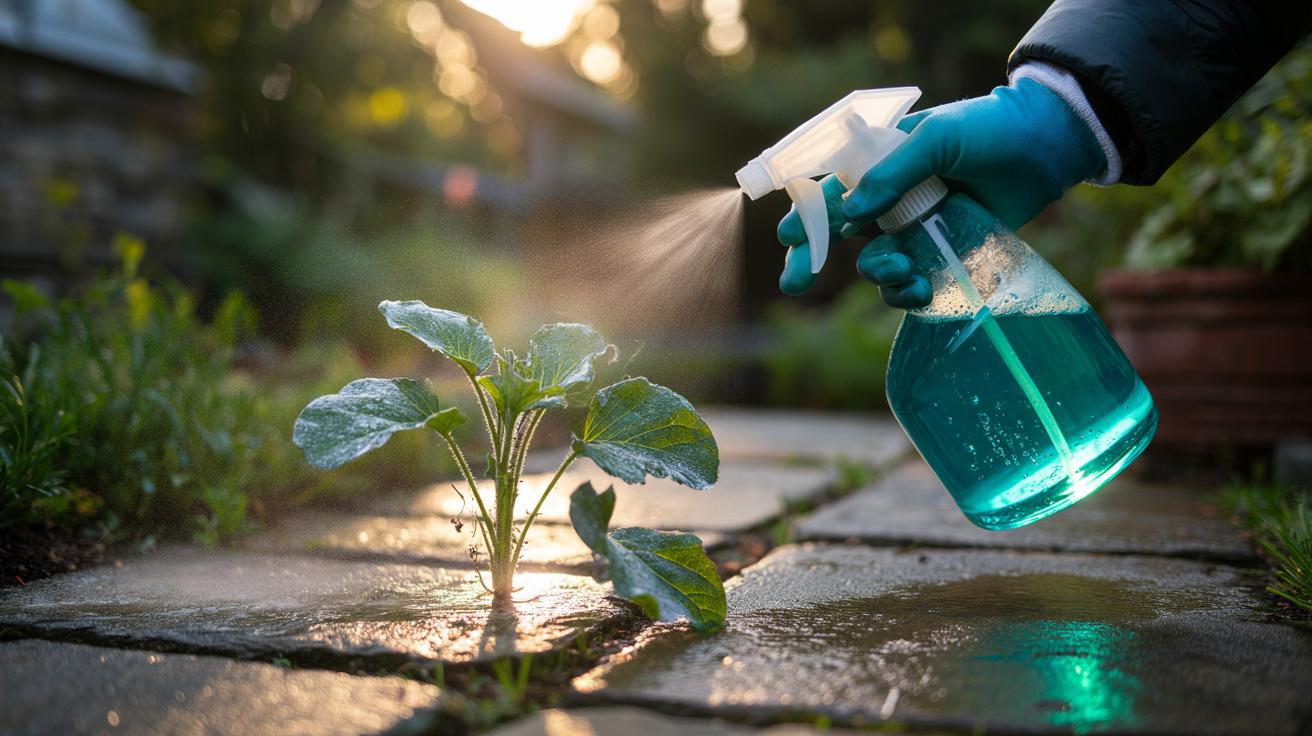
If you experiment with washing-up liquid on weeds, treat it as an informal trial, not a silver bullet. Shield ornamentals, test a small patch, and avoid windy days that invite drift. Keep spray off soil where possible; the target is foliage, not the substrate. Wear gloves and eye protection, especially with concentrated products that can irritate skin. Never spray near ponds, streams, or drains: even biodegradable surfactants can harm aquatic life before they break down, and foaming contamination is an offence with water companies.
From a sustainability angle, short-lived contact burn pairs well with non-chemical tactics. Smother regrowth with mulch, edge borders cleanly, and uproot crowns after the foliage collapses. Heat tools and hot water can manage cracks in paving without residues. For consistent, label-backed results, choose an approved contact herbicide or horticultural soap and follow UK instructions to the letter. The chemistry remains the same, but authorised formulations balance efficacy with plant safety, user guidance, and environmental stewardship.
Washing-up-liquid sprays “work” because fatty acids and related surfactants dismantle a weed’s waterproofing and rupture membranes, causing rapid dehydration. That action is real yet inherently limited: it blackens tender growth while leaving entrenched roots largely untouched. In the UK, the wisest route is to prioritise authorised products or pair contact scorch with robust cultural controls. The smarter question is not whether detergent can burn leaves, but how you can design a weed strategy that is targeted, lawful, and low-impact. Given your patch, weeds, and water proximity, what balanced approach will you choose this season?
Did you like it?4.3/5 (23)