In a nutshell
- 🌱 Phototropism drives leaning: blue-light receptors and redistributed auxin elongate shaded cells, while gravitropism keeps stems upward; rotation balances the signal for even growth.
- 🔄 The pot rotation trick: mark “12 o’clock,” turn 45–90° on a regular cadence (preferably mornings), keep distance to the window constant, and let consistent small turns guide symmetry.
- 🗓️ Adaptive schedule: tailor the rotation interval to light—south-facing winter every 3–4 days (45°), east/west weekly (60–90°), low light every 10–14 days, seedlings daily micro-turns.
- 💡 Beyond rotation: add reflective surfaces, clean leaves, use a full‑spectrum LED to fill the dark side, space plants evenly, and prune toward the shaded side to promote balanced branching.
- ⚠️ Avoid pitfalls: no sudden 180° spins, rotate groups together, provide support for tall stems, pause after repotting or heavy watering, mark the pot not the saucer, and practice patience.
Home growers often notice a curious habit: prized houseplants list towards the window, their stems gently arcing like sun-seeking periscopes. The effect is charming—until containers tip, foliage crowds one side, and growth becomes lopsided. A simple fix exists. By adopting a regular pot rotation routine, you coax balanced canopies, sturdier stems, and a neater silhouette. The trick is not force, but rhythm: tiny, timely turns that equalise light exposure. This approach works with spider plants, rubber trees, and even headstrong monstera. Think of it as a gardener’s metronome for light. Here is why plants lean, how to time those turns, and the extra steps that keep home jungles upright and thriving.
Why Houseplants Lean: Phototropism Explained
Plants do not wander, but they do perceive their surroundings. The tendency to bend toward light is called phototropism, governed by blue-light receptors known as phototropins. In uneven light, a growth hormone—auxin—redistributes to the shaded side of a stem, prompting those cells to elongate. The result is visible curvature toward the brightest source. This is not a quirk; it is a survival strategy to maximise photosynthesis. In windowsill habitats, light usually arrives from a dominant direction, so the bending never fully resolves unless we intervene.
Gravity also plays a backstage role. Through gravitropism, stems maintain an upward trajectory while roots seek downwards. Indoors, that gravitational desire collides with asymmetrical light, producing an angled compromise: upright-ish growth that leans window-wards. Left unchecked, the lean can stress tissues, cause uneven internode spacing, and distort leaf orientation. Rotation interrupts that one-sided signal. By sharing light around the compass, you slow the bias and promote even growth rings, sturdier petioles, and better airflow.
The Pot Rotation Trick: Simple Steps for Even Growth
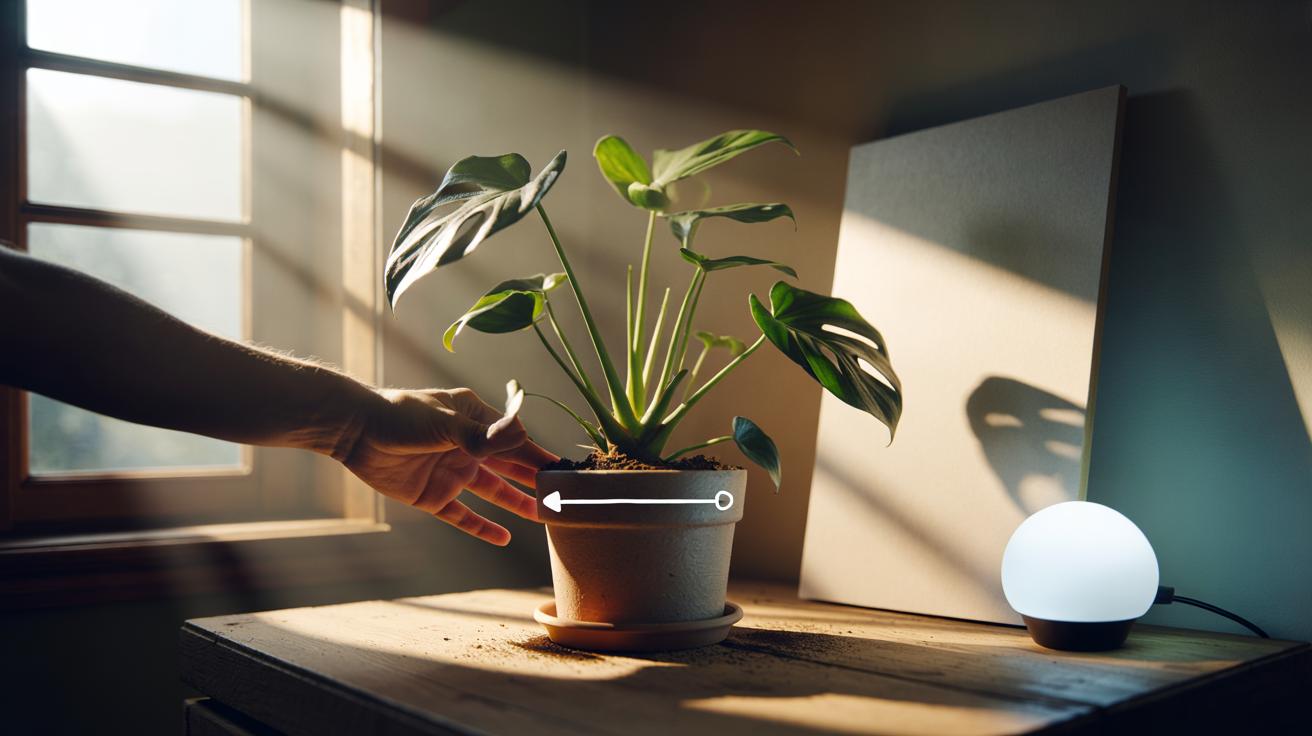
Start by marking your pot rim at “12 o’clock” with a discreet dot. Every few days, rotate the container a modest amount—typically 45–90 degrees—so a new flank faces the light. Consistent small turns beat sporadic big twists. For compact plants, a quarter-turn weekly often suffices; fast growers may prefer every three to four days. Use the same direction each time to avoid confusing your schedule and to prevent accidental over-rotation. Keep the plant’s distance to the window constant; moving it closer or farther will change the light recipe and muddle results.
Time your turns when the plant is not under midday stress—morning is gentle and reliable. After repotting or pruning, halve your rotation frequency for two weeks while the plant recovers. Stake taller stems before you begin, so new, symmetrical growth locks in a straight line. Observation is your guide: if the crown keeps drifting, increase frequency; if leaves droop after turns, reduce the angle. The goal is a slow choreography, not a spin.
When and How Often to Turn: A Practical Schedule
Light levels vary by aspect and season, so your rotation rhythm should adapt. Bright, low-angle winter sun through a south-facing window can create stark contrasts; east or west windows are gentler but still directional. Succulents and compact herbs tolerate slightly larger turns; tender foliage plants prefer smaller, more frequent adjustments. Use the following at-a-glance guide as a starting point, then fine-tune to your room.
| Light Situation | Rotation Interval | Turn Angle | Notes |
|---|---|---|---|
| South-facing, bright winter | Every 3–4 days | 45° | Strong directional light; watch for scorch |
| East or west window | Weekly | 60–90° | Balanced across the week; good for foliage plants |
| North-facing, low light | Every 10–14 days | 45–60° | Less lean; prioritise clean leaves for efficiency |
| Seedlings under LEDs | Daily micro-turn | 15–30° | Prevents lanky stems during rapid growth |
Seasonal shifts matter. As days lengthen, reduce rotation slightly to let new growth set; in autumn, increase frequency when the sun drops and streaks through windows. After any major move—new room, new shelf—restart with conservative angles while you assess the plant’s response. Let the leaves lead your schedule: symmetry signals success, persistent drift asks for quicker, smaller turns.
Beyond Rotation: Light Balancing Tips That Work
Rotation is the backbone, but you can soften light biases with simple tweaks. Place a white card, pale wall, or reflective surface opposite the window to bounce photons into the plant’s shaded side. Raise trailing species on stands so lower leaves see sky, not the back of the sofa. Clean foliage monthly; dust acts like sunglasses and reduces photosynthetic payback. Bright light plus clean leaves equals shorter internodes and stronger posture.
Supplement with a full-spectrum LED during short winter days, angling it to fill the dark side for two to four hours. Space plants so they do not cast competing shadows. Prune leggy stems just above a node facing the darker side to encourage compensatory branching. If you keep a crowded shelf, rotate the entire tray in one move to maintain even spacing. Light management is a system: small, steady interventions prevent heroic rescues later.
Common Mistakes and How to Fix Them
Too much enthusiasm can backfire. Spinning a pot 180 degrees after weeks of neglect shocks orientation and may cause leaf drop. Remedy: return to 45–90 degree turns and give it two growth cycles to correct. Another trap is rotating only one plant in a group; shadows from neighbours will undo your work. Align the set and rotate them together. Consistency across the collection breeds symmetrical growth.
Ignoring support is another culprit. Tall stems lean more as tissues lengthen toward light; without stakes, rotation can expose weak joints. Install discreet ties and remove them once new growth thickens. Avoid rotating immediately after heavy watering or repotting; roots need stability to re-anchor. Mark the “front” on your pot, not the saucer, so wash-ups do not scramble your reference. Finally, remember patience: structural change shows over weeks, not days, as new leaves set the record straight.
Even growth is not vanity; it is plant health made visible. The pot rotation trick blends plant biology with homely routine, creating compact silhouettes, stronger stems, and leaves that share the light. Add reflective aids, clean foliage, and a splash of supplemental illumination, and your windowsill turns from lopsided to lyrical. Small turns, big results—that is the bargain. As the seasons shift and your room’s light migrates, how will you tune your own rotation rhythm—and which plant will you transform first?
Did you like it?4.5/5 (21)