In a nutshell
- 🌱 Pinching basil tips breaks apical dominance, reduces auxin, boosts cytokinin, awakening dormant nodes into side shoots for fuller plants.
- ✂️ Best practice: start at 6–8 leaves, pinch 5–10 mm above a node, in the morning with clean tools; follow a cut-and-come-again routine and light, balanced feeding.
- 📈 Timing outcomes: pinch above 2nd node ≈ 2 strong shoots in 7–14 days; repeat every 7–10 days for a compact, multi-stem habit; remove flower buds promptly to extend vegetative growth.
- ⚠️ Avoid: cutting below the lowest node, topping too late, dirty blades (risk of fusarium), high-nitrogen overfeed weakening stems, and cramped pots that slow rebound.
- 🍃 Payoff: denser foliage with higher essential oils for pesto and salads, neater windowsill plants, soil shading outdoors, and a longer harvest season by delaying flowering.
Pinching the soft tops of basil plants looks counterintuitive, yet this tiny act unlocks a bushier, longer-lived crop. In kitchens and on windowsills across the UK, growers swear by a gentle prune to keep the herb leafy and aromatic through summer. The science is simple, the payoff substantial: remove the tip and the plant answers with a burst of side stems, doubling or tripling usable foliage. The art is knowing where and when to pinch so growth accelerates rather than stalls. Here’s why the technique works, how to do it cleanly, and the common pitfalls that hold back your basil’s full potential.
Why Pinching Triggers Side Shoots
Basil, like many herbs, is governed by apical dominance, a hormonal hierarchy where the top bud controls growth below. The tip produces auxin, which suppresses dormant buds at the leaf nodes. When you remove that tip, the auxin gradient collapses and the balance shifts towards cytokinin, a hormone that encourages cell division in lateral buds. Those previously inhibited buds awaken, forming two or more new shoots from just beneath the cut. In physiological terms, one growing point is traded for many, and the plant’s architecture changes in your favour.
Pinching also redirects carbohydrate reserves and water to side nodes, where new stems can form quickly. Light penetrates the canopy more evenly, reducing spindly, stretched growth and helping leaves thicken with higher oil content. The plant experiences a mild, controlled stress that it resolves by branching, not by stalling. Keep cuts small and clean, and basil answers with dense, harvestable greenery that lasts longer before bolting. Removing the tip is less about loss and more about strategic redistribution of energy.
How and When to Pinch Basil for Best Results
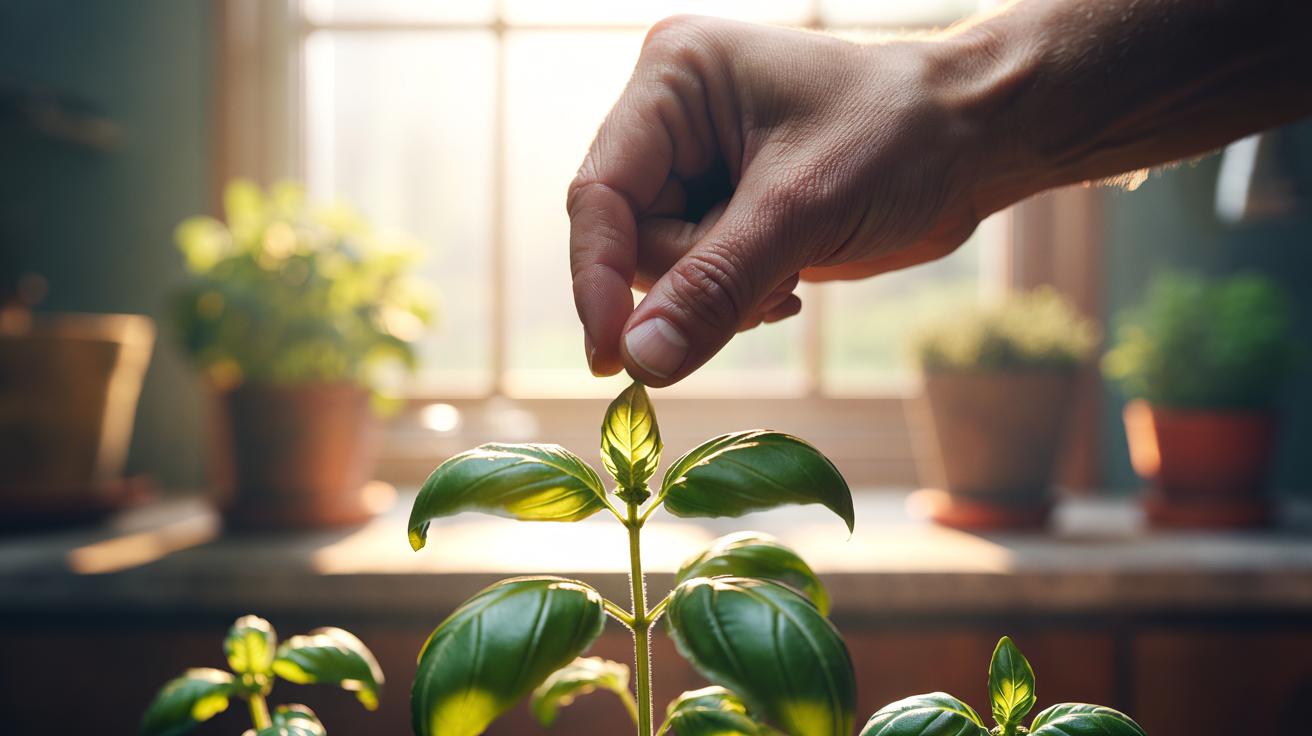
Wait until your basil has at least two to three pairs of true leaves (around six to eight leaves total). Then pinch or snip just 5–10 mm above a node—the point where a pair of leaves meets the stem. Use clean scissors or your thumb and forefinger, removing only the soft terminal cluster. Morning is ideal, when tissues are turgid and wounds dry quickly. Water the day before, not immediately after, to reduce split stems. Feed lightly with a balanced organic fertiliser to support regrowth. Precise placement matters: cut too low and you stunt; cut too high and you miss the dormant buds.
| Plant Stage | Action | Expected Response (7–14 days) | Harvest Impact |
|---|---|---|---|
| 6–8 leaves | Pinch above 2nd node | 2 strong side shoots | First small bunches |
| Established, 4–6 nodes | Repeat pinching every 7–10 days | Compact, multi-stem plant | Regular cut-and-come-again |
| Pre-flowering | Remove flower buds promptly | Extended vegetative growth | Leaves stay tender |
Adopt a cut-and-come-again routine: never remove more than a third at a time, and always cut back to a node. Rotate which stems you harvest so the plant keeps photosynthesising. Keep picking off flower buds—the moment basil blooms, leaves toughen and flavour dips. In warm spells, pinch smaller amounts more often to avoid shock. Consistency beats occasional heavy chops for steady, fragrant yields.
Common Mistakes and How to Avoid Them
Cutting below the lowest leaf pair is the classic error; it leaves no active nodes and stalls recovery. Always leave at least one healthy node beneath your cut. Another mistake is topping too late—once flower spikes form, energy shifts to seeds. Remove buds early and reassert vegetative growth. Avoid hacking half the plant in one go; basil needs leaf area to fuel regrowth. Small, accurate snips outperform dramatic trims.
Hygiene matters. Dirty blades can transmit fusarium and other diseases, so wipe tools with alcohol before use. Don’t prune at midday heat, when tissues are prone to wilting; aim for cool mornings with good airflow. Overfeeding with high-nitrogen fertiliser leads to lush but weak stems that snap after pinching; use balanced feeds. Finally, cramped pots restrict roots and slow rebound. Choose a container at least 15–20 cm wide with free-draining compost. Healthy roots recover fastest from pruning and power the side-shoot burst.
From Kitchen to Windowsill: Practical Uses of Fuller Basil
A well-pinched basil plant delivers more tender leaves per square inch, perfect for pesto, salads, and last-minute garnishes. Because branching increases total leaf area, you can harvest little and often, keeping flavour at its peak. Frequent pinching also concentrates essential oils in young growth, enhancing the signature clove-anise notes of Genovese types. Quality improves alongside quantity when you keep the plant in a youthful, leafy state. For cooks, that means brighter sauces and fresher chimichurri, without resorting to shop-bought bunches that wilt in a day.
On a windowsill, bushier plants are neater, less prone to toppling, and easier to light evenly. Pair basil with parsley or chives and rotate the pot weekly to prevent leaning. Outdoors, fuller basil shades soil, suppressing weeds and conserving moisture beside tomatoes. The repeated pinches extend the season by delaying the flowering switch, stretching harvests into early autumn. A deliberate pinch translates into pantry reliability and fewer herb runs to the supermarket.
Pinching is simple horticulture with outsized results: dismantle apical dominance, activate lateral buds, and your basil responds with structure, flavour, and stamina. Keep cuts just above nodes, harvest in modest cycles, and feed lightly to support rebound. Match this with clean tools, ample pot space, and vigilant flower removal, and you’ll produce dense, productive plants on sill or patio. Think of each pinch as an invitation for the plant to multiply its assets. What will your next harvest look like if every snip is placed to unlock two more stems instead of one?
Did you like it?4.5/5 (21)