In a nutshell
- 🌧️ Rainwater is naturally soft water with low alkalinity and EC, preventing mineral stress and helping roots absorb nutrients effectively.
- 🧪 Hard tap water leaves calcium/magnesium salts that raise EC and pH; high bicarbonates cause nutrient lockout, tip burn and chlorosis in sensitive plants.
- 🛢️ Collect safely with a downpipe diverter and first-flush diverter, keep storage lidded and shaded, use mesh filters, and refresh clean containers regularly.
- 💧 Water smart: blend rain with tap (50:50 or 75:25), occasionally flush pots to leach salts, feed lightly, and add Ca/Mg if using very pure water long-term.
- 📊 Track success with a TDS/EC meter, dechlorinate if needed, tweak pH gently with citric acid, and expect brighter leaves and cleaner edges within weeks.
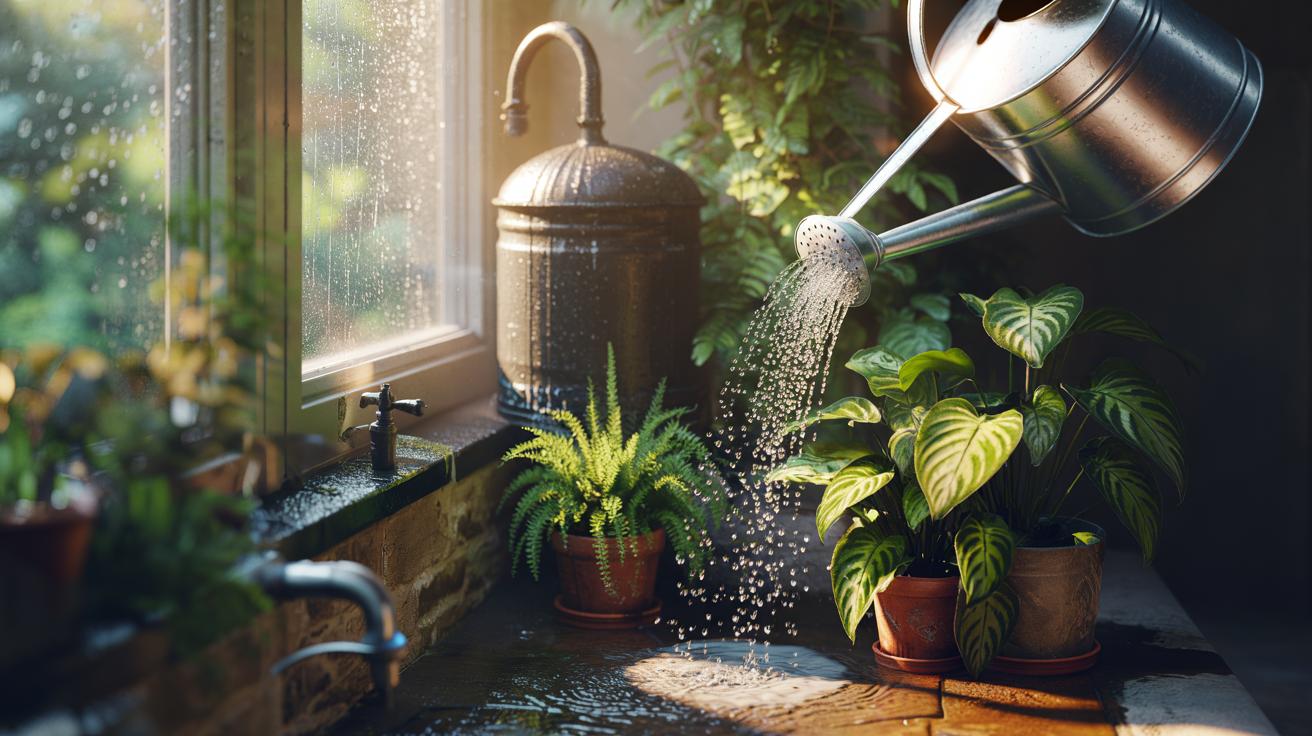
Across the UK, many of us water our beloved houseplants straight from the tap, then wonder why leaves crisp, tips brown and growth stalls. The quiet culprit is often hard tap water, loaded with dissolved minerals that gradually accumulate in potting mixes. There’s a simple, low-cost fix hiding in plain sight: rainwater. Collected from a balcony rail, shed roof or garden gutter, it provides naturally soft water that plants can easily absorb without chemical headwinds. Soft water prevents mineral stress and restores roots’ ability to take up nutrients efficiently. With a few basic precautions to gather and store it cleanly, rainwater becomes a reliable, eco-friendly resource that coaxes houseplants back to confident, glossy health.
Why Hard Tap Water Stresses Houseplants
Much UK water runs through chalk and limestone, picking up calcium and magnesium carbonates. That makes it “hard”, a quality homeowners recognise as limescale on kettles and, less visibly, as mineral crusts on pot rims. In containers, every watering leaves tiny residues. Over weeks, this raises the substrate’s electrical conductivity (EC) and buffers the pH upward. As salts accumulate, roots face osmotic pressure that makes water uptake tougher, even when compost is moist. The result is classic mineral stress: leaf-tip burn, dull colour and stalled growth, especially in sensitive species like Calatheas and carnivorous plants.
High bicarbonate levels are equally troublesome. They push potting mix closer to alkaline, which can lock out iron, manganese and phosphorus. That’s why you see interveinal chlorosis—yellowing leaves with green veins—even when you’ve fed regularly. Flushing with plain tap water rarely solves it in hard-water areas; you’re rinsing salts with more salts. Switching to genuinely soft water resets the root zone chemistry, prevents further buildup, and lets nutrients remain plant-available at a friendlier pH.
What Makes Rainwater Soft and Plant-Friendly
Rainwater starts virtually free of hardness minerals, with naturally low alkalinity and a mildly acidic pH, typically around 5.6–6.2 after contact with air. This chemistry mirrors the conditions many tropical plants evolved to love: gentle acidity that keeps micronutrients soluble and a low EC that prevents salt stress. Because rainwater carries minimal bicarbonates, it doesn’t keep forcing pH upward inside containers. You also dodge the chloride and, in some districts, the higher sodium that can sneak into tap supplies. For houseplants grown in peat-free mixes or bark-heavy substrates, that soft profile is especially forgiving.
| Water Type | Typical pH | Hardness/Alkalinity | EC/TDS | Plant Risk |
|---|---|---|---|---|
| Rainwater | 5.6–6.2 | Very low | Very low | Low; ideal for sensitive plants |
| Hard Tap Water | 7.2–8.5 | High | Moderate–high | Build-up, tip burn, chlorosis over time |
| RO/Distilled | ~6–7 | Near zero | Near zero | Excellent; add feed for long-term use |
Rain’s slight acidity also helps dissolve stubborn deposits during routine watering, gently rebalancing compost without dramatic swings. For plants that prefer neutral conditions, you can blend rainwater with your tap supply to land at a comfortable middle ground while still curbing mineral load.
How to Collect and Store Rainwater Safely at Home
The quickest setup is a downpipe diverter feeding a covered, food-grade butt. Balconies or sheds work too: channel runoff from a clean surface into a lidded container using a simple rail-hung gutter. Add a first-flush diverter if possible to divert the initial, debris-laden litres after dry spells. Always keep storage sealed against light and insects to prevent algae and pests. In cities, allow the first short shower to rinse dust before you collect. Rinse containers with a mild vinegar solution at the start of the season, then refresh every few months.
Position the butt in shade to keep temperatures stable and slow algal growth. A fine mesh on inlets stops leaves and mosquitoes. For houseplants, there’s no need to sterilise; just avoid visibly dirty water and use within a few weeks. In winter, leave expansion headroom to prevent ice damage. UK households can legally harvest rainwater; just ensure backflow prevention if you plumb into irrigation lines. Label containers clearly and keep child- and pet-safe.
Practical Watering Strategy: Blends, Flushing, and Monitoring
Switching abruptly to pure rainwater is safe for most plants, but you can blend with tap to stretch supplies. Many growers aim for a 50:50 mix in very hard-water areas, moving to 75:25 for sensitive species. Use rainwater for routine watering, then occasionally “flush” pots thoroughly to leach old salts from the root zone. If you fertilise, pick a balanced, complete feed and dose lightly; soft water carries nutrients efficiently, so you often need less. With RO/distilled or very pure rain, add calcium and magnesium in moderation if your fertiliser lacks them.
An inexpensive TDS/EC meter helps track salt levels in both feed solution and runoff; aim for modest EC unless you’re growing heavy feeders. If rain is scarce, dechlorinate tap water by resting it 24 hours or use a carbon jug filter. In very hard regions, a pinch of citric acid per watering can nudge pH down, but test sparingly. Empty saucers after watering to avoid reabsorbing salts. Watch for brighter leaves and cleaner edges within a few weeks—the strongest sign that mineral stress is easing.
Collecting and using rainwater is a quiet, sustainable upgrade that transforms how indoor gardens perform, especially in hard-water postcodes. By lowering EC and alkalinity, soft water restores root function, keeps nutrients mobile and curbs unsightly tip burn. The result is steadier growth, truer colours and fewer mysteries to troubleshoot. With a simple diverter, a covered butt and a mindful feeding routine, you can keep moisture chemistry on your side all year. What blend, storage trick or monitoring habit will you try first to give your plants the soft-water advantage they deserve?
Did you like it?4.4/5 (30)