In a nutshell
- 🌿 Magnesium sits at the centre of chlorophyll and stabilises ATP, so shortages trigger classic interveinal chlorosis on older leaves and weaken photosynthesis.
- 🔍 Diagnose before dosing: distinguish Mg lack from iron or nitrogen issues; confirm with soil/tissue tests and a SPAD reading since Mg is mobile and new leaves can look deceptively healthy.
- 🧪 Use Epsom salt (magnesium sulphate) precisely: foliar ~15 g per 4 L; soil drench 15–30 g per 4 L; start low, apply in cool conditions, and avoid salt build‑up.
- 🌱 Match remedy to soil: leached, acidic, or container media benefit, while high‑pH, lime‑rich clays often suffer K/Ca antagonism—consider dolomitic lime and more organic matter to rebalance.
- ⏱️ Follow a balanced strategy: treat confirmed shortages, monitor plant response, and keep nutrients in equilibrium so photosynthesis stays efficient rather than chasing symptoms.
Gardeners often swear that a light sprinkle of Epsom salt can coax a tired plant back to lush green. There is science behind the folklore: magnesium, delivered as Epsom salt (magnesium sulphate), is integral to leaf colour and energy capture. Used judiciously, it can correct hidden hunger and sharpen photosynthetic output. Yet the shortcut only works when the problem is genuinely magnesium scarcity. Rushing in with salts without reading the plant and soil can create new imbalances. Here’s how magnesium underpins chlorophyll, what true deficiency looks like, and how to apply Epsom salt with precision rather than hope.
Why Magnesium Makes Leaves Green
Magnesium is not just helpful to chlorophyll; it sits at chlorophyll’s very centre, a single Mg²⁺ ion anchoring the porphyrin ring that captures light. Without it, the pigment cannot efficiently absorb blue and red wavelengths, and leaves fade from deep green to a sickly yellow. Inside the chloroplast, magnesium also stabilises ATP, the cell’s energy currency, and activates key enzymes, including components tied to Rubisco function. That dual role—pigment core and biochemical co‑factor—means magnesium influences both light harvesting and carbon fixation.
Because Mg²⁺ is mobile in the phloem, plants prioritise new growth by drawing it from older leaves when supplies run short. The result is classic interveinal chlorosis on mature foliage, while shoot tips may stay deceptively green. When magnesium is restored, chlorophyll synthesis resumes rapidly, often re‑greening leaves within days in mild cases. Yet sustained deficits impair chloroplast development, reduce sugar transport, and blunt yields long before the gardener notices colour changes.
Reading the Plant: Deficiency Signs and False Alarms
True magnesium deficiency typically begins on older leaves: the veins remain green while the tissue between them turns yellow, later developing rusty speckles or marginal scorch. In tomatoes, peppers, roses, and citrus, this interveinal chlorosis can be striking, and leaf curling under stress is common. Because magnesium moves readily inside the plant, new leaves may mask the problem, staying green until the shortage becomes severe. Growth slows, fruit size falls, and in conifers needles can yellow from the tip inward.
But chlorosis has many impostors. Iron deficiency, by contrast, appears first on the youngest leaves. Nitrogen shortage yellows whole leaves uniformly. Drought, cold soils, or waterlogging can block uptake, mimicking deficiency even when soil magnesium is adequate. High potassium or calcium fertiliser can antagonise Mg²⁺ absorption, especially in sandy beds. A handheld chlorophyll or SPAD meter can track greenness objectively, yet the most reliable diagnosis pairs symptoms with a soil or tissue test, distinguishing a real shortage from a temporary uptake issue or nutrient competition.
Using Epsom Salt Wisely
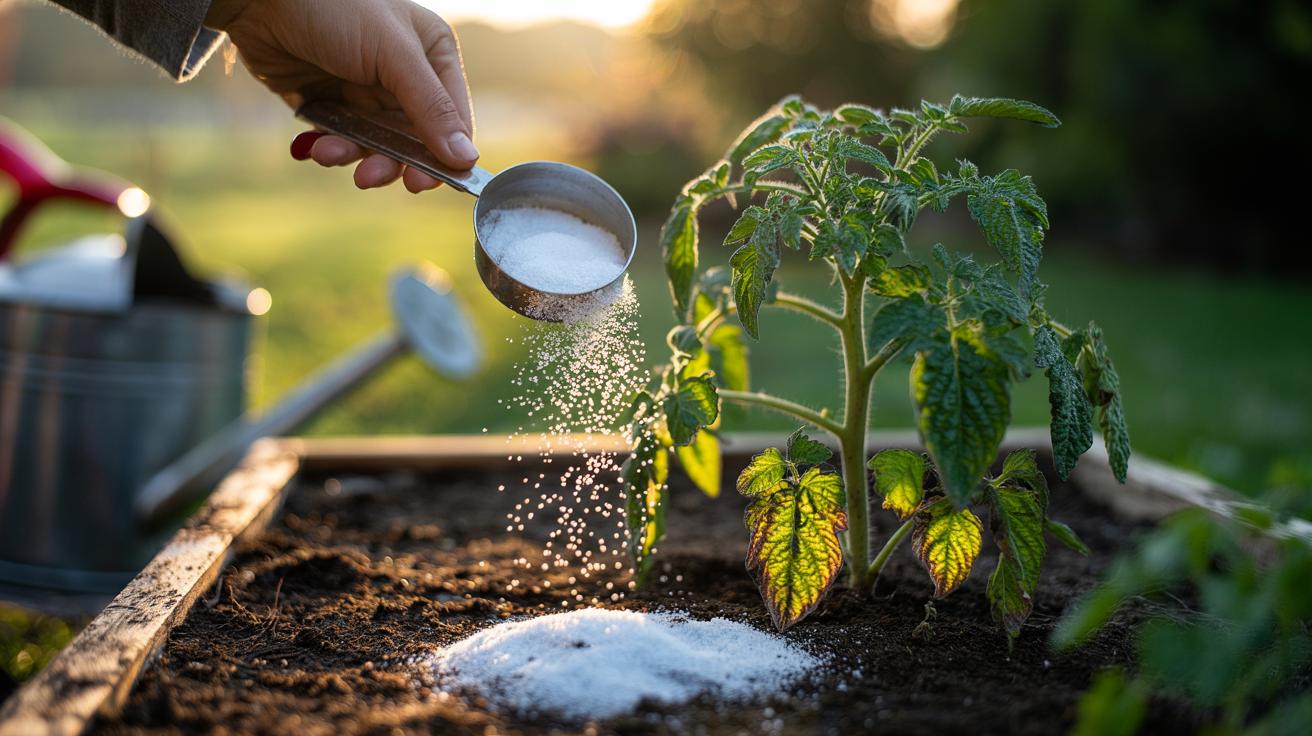
Epsom salt is simply magnesium sulphate (MgSO₄·7H₂O), highly soluble and fast‑acting—ideal for acute correction and for container plants flushed frequently. For a foliar rescue, dissolve about 1 tablespoon (roughly 15 g) per 4 litres of water and mist until leaves glisten, ideally in early morning. For soil application, use 1–2 tablespoons per 4 litres and drench the root zone; in beds, 20–30 g per square metre is a reasonable starting point. Always start low, observe the response, and avoid repeated heavy doses that raise salt levels.
If your water is hard, acidify slightly (for example with citric acid) to aid solubility and leaf uptake. Do a jar test before tank‑mixing with other sprays. In containers, alternate Epsom salt with a balanced fertiliser so you’re not fixing one deficiency while creating another. Where chronic shortages recur, consider slow‑release sources or adjusting base fertiliser to maintain steady magnesium supply.
| Application | Typical Rate | Timing | Pros | Watch‑outs |
|---|---|---|---|---|
| Foliar spray | 15 g per 4 L | Cool, calm mornings | Rapid response; bypasses soil issues | Leaf scorch in heat; short‑lived effect |
| Soil drench | 15–30 g per 4 L | At watering | Roots supplied; easy for pots | Salt build‑up if overused |
| Garden bed | 20–30 g/m² | Before rain or irrigation | Even distribution | Leaching on sandy soils |
Soil Context: When Epsom Salt Helps—and When It Doesn’t
On light, acidic, rain‑washed soils in the UK, magnesium can leach, making a quick Epsom salt top‑up genuinely helpful. In peat‑free mixes or potting composts flushed frequently, Mg²⁺ is also easily lost. Yet on high‑pH, lime‑rich clays, deficiency is often about antagonism: abundant calcium and potassium outcompete magnesium at the root interface. In those cases, a one‑off foliar spray offers a fast green‑up, but the lasting fix is rebalancing the soil. Dolomitic lime supplies magnesium while nudging pH upward; gypsum adds calcium without raising pH but won’t help magnesium.
Organic matter is your ally, increasing cation exchange and moderating leaching. Match magnesium inputs to crop demand—brassicas, solanums, and roses are relatively hungry—while avoiding excesses that can depress potassium uptake. The golden rule holds: test soil where possible, correct what’s short, and maintain balance rather than chase symptoms. Photosynthesis thrives on equilibrium, not hero doses.
Handled with care, the classic Epsom‑salt sprinkle can restore the green engine inside leaves by meeting a very specific need: magnesium for chlorophyll and energy metabolism. Use symptoms as a clue, testing as confirmation, and application as a measured remedy. Keep rates modest, timing thoughtful, and the wider nutrient picture in view. If your plants are paling, is magnesium truly missing, or is uptake blocked by weather, watering, or a crowded cation buffet? What simple check—be it a soil test, a SPAD reading, or a small trial spray—will you try first to let your plants answer back?
Did you like it?4.6/5 (28)