In a nutshell
- 💧 Recycled bottle drip irrigation delivers slow release at root level, balancing capillary action and gravity to keep soil evenly moist while limiting evaporation and nutrient loss.
- 🛠️ Build a dripper with a clean PET bottle, tiny pinholes, and a cap filter; install inverted or buried near roots, under mulch, and avoid any bottles that held chemicals.
- ⚙️ Calibrating flow is essential: adjust hole size/number for sandy vs. clay soils, target moisture radius by crop (seedlings vs. tomatoes), and prefer raising volume over enlarging holes in heatwaves.
- 🧽 Maintenance includes rinsing filters, scrubbing biofilm, shading bottles to prevent algae, winter emptying, and using rainwater to reduce limescale and clogs.
- 🌿 Key benefits: stable growth, water savings, fewer stress swings, and practical pairing with a rain barrel—proving that consistency beats volume for healthier plants.
As hosepipe bans pinch and summers seesaw from downpours to drought, gardeners are rediscovering a simple ally: the recycled bottle drip irrigator. By releasing water slowly at root level, these DIY devices reduce waste, limit evaporation, and keep soil consistently damp without daily attention. Even moisture protects plants from stress swings and prevents cracked fruits or blossom drop. The method is cheap, quick to set up, and surprisingly precise once tuned to your soil. Whether you tend a balcony herb box or an allotment bed, a handful of bottles can deliver a steady trickle that rivals pricier kits. Here is how slow release works, how to build your own, and how to dial in a flow that suits each plant.
Why Slow Release Keeps Soil Evenly Moist
Drip irrigation succeeds because it matches the soil’s natural capacity to absorb water. A recycled bottle that releases a measured trickle creates a steady wetting front that moves outward and downward through pores. Capillary action spreads moisture laterally while gravity draws it deeper, forming a teardrop-shaped zone that roots eagerly colonise. When the flow rate aligns with the soil’s hydraulic conductivity, water infiltrates rather than runs off. That balance prevents surface crusting and avoids the boom-and-bust watering cycle that can split tomatoes or toughen lettuces.
Slow release also curbs evaporation losses, especially under mulch. With little water exposed at the surface, fewer nutrients leach away and microbial life stays active. Even small bottles can sustain seedlings during heat spikes, while larger containers support fruiting crops between rain events. Because the delivery is gentle, the method suits raised beds, containers, and slopes where a fast pour would simply escape. The result is not wet soil everywhere, but evenly moist soil where it matters: the root zone.
How to Build a Recycled Bottle Dripper
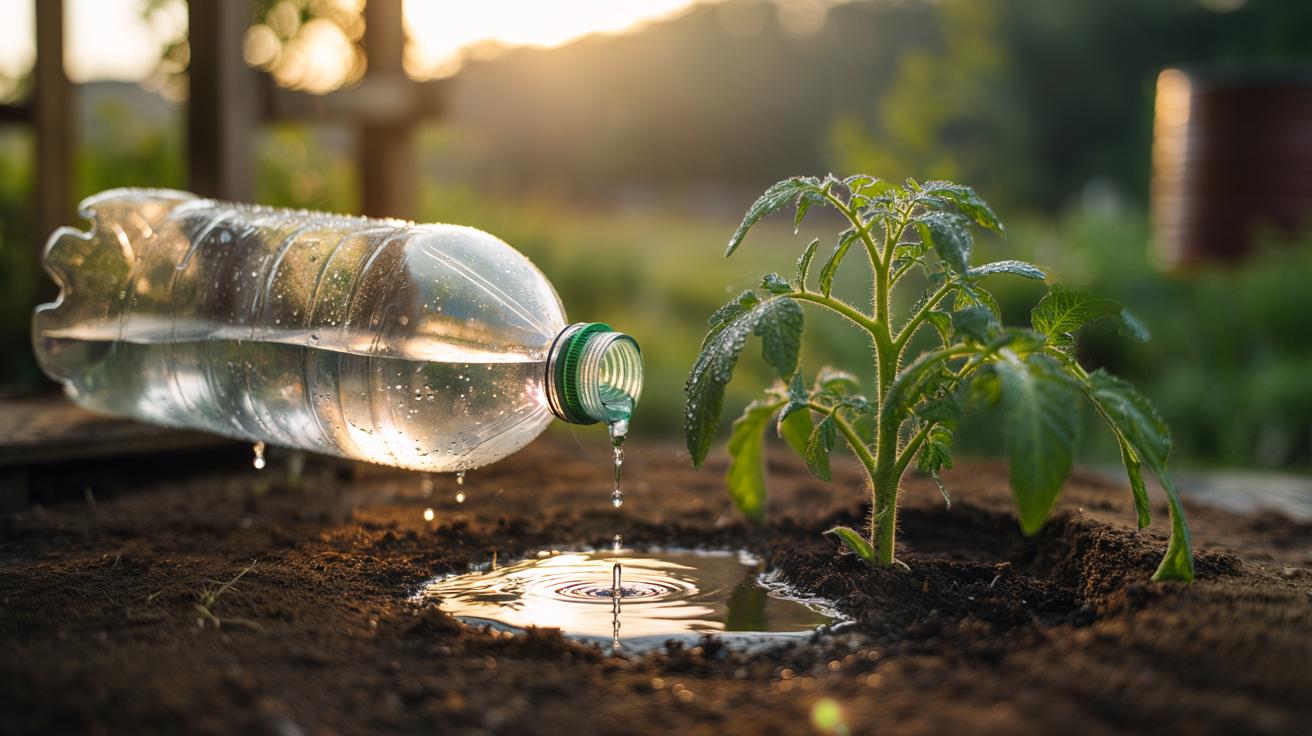
Select a clean, food-grade PET bottle (0.5–2 litres). Rinse thoroughly, then pierce one to four pinholes near the cap or in the lower sidewall using a heated needle or fine drill bit. Fewer, smaller holes mean slower, steadier release. To prevent clogging, tuck a square of muslin, coffee filter, or a scrap of tights inside the cap as a filter. Fill the bottle, screw the filtered cap on, and either invert it and push the neck into the soil, or bury the bottle upright with holes facing the roots. For containers, angle the bottle so drips land 5–8 cm from the stem.
In open beds, bury two thirds of a 1–2 litre bottle between plants, keeping holes at 5–10 cm depth. Add a shallow saucer-shaped depression around the site and cover with 3–5 cm of mulch to stabilise temperature and slow evaporation. Where fine control is needed, fit a cheap in-line drip valve to the cap or use a blunt syringe tip as a micro-nozzle. Never repurpose bottles that stored chemicals, oils, or solvents. Label each dripper with its plant to track adjustments over the season.
Calibrating Flow for Different Plants and Soils
Test each bottle by filling it, timing how long it takes to release 250 ml, and checking the soil radius that becomes moist after an hour. Sandy mixes need a marginally faster drip to compensate for rapid drainage, while clay prefers a slower trickle to avoid pooling. Adjust for soil, not just plant: a thirsty courgette in clay still benefits from patience. For seedlings, target a palm-sized moist patch; for tomatoes or roses, aim for a dinner-plate diameter over several hours. In heatwaves, increase volume rather than hole size to maintain stability.
| Bottle Size | Pinholes | Expected Drip Rate | Good For | Soil Tip |
|---|---|---|---|---|
| 500 ml | 1 fine | 40–80 ml/hr | Herbs, seedlings | Keep shallow in sand; add mulch |
| 1 litre | 2 fine | 80–150 ml/hr | Leafy greens | Set holes at 5–7 cm depth |
| 2 litres | 2–3 fine | 150–300 ml/hr | Tomatoes, courgettes, roses | Slow the flow on clay soils |
Check moisture at knuckle depth near, not on, the drip line. If soil feels tacky and cool, you’re on target; if sticky, reduce holes or elevate the bottle slightly; if dusty, add a hole or place two bottles per plant. Rainwater from a butt reduces limescale and clogging, while an occasional flush with dilute vinegar keeps pinholes clear. Consistency beats volume for plant health.
Maintenance, Safety, and Sustainability
Every fortnight, remove the cap filter, rinse, and scrub out biofilm with a bottle brush. If algae forms where light penetrates, wrap the bottle in brown paper or cloth. In winter, empty and store bottles to avoid splitting during frost. Discard any bottle that turns brittle or develops cracks to prevent microplastic fragments in soil. If you worry about plastic longevity, try ceramic ollas for a permanent option and keep bottles for annuals or short-term holiday watering.
Position drippers away from mulch that sheds fines into holes, and avoid fertiliser crystals in the bottle which can precipitate and block the pinholes. Opt for sturdy, undented bottles and rotate them to spread wear. Safety first: smooth sharp edges and keep hot tools away from children. Consider pairing drippers with a rain barrel and gravity feed to refill them with minimal tap water. As bottles are reused rather than discarded, the system trims waste and cuts bills while supporting resilient, low-input gardening. Small, regular sips keep plants calmer than occasional gulps.
Recycled bottle drippers turn a common waste item into a quiet, consistent water steward, delivering moisture precisely where roots need it and when they need it. By respecting the pace at which soil drinks, you stabilise growth, save water, and reduce labour across the season. With a few trials, a filter, and smart placement under mulch, the setup becomes almost invisible yet reliably effective. Ready to trade splash-and-dash watering for a calmer rhythm—what bottle size, hole pattern, and placement will you test first in your beds or containers?
Did you like it?4.5/5 (28)