In a nutshell
- 🌱 The rotating-plant routine distributes light evenly, curbs phototropic lean, and builds a fuller, symmetrical canopy.
- ☀️ Consistent light exposure boosts chlorophyll, stabilises stomata function, and aligns the plant’s circadian rhythm.
- 💡 Practical setup: manage intensity and duration via PPFD and DLI, use diffused windows or LEDs, and rotate a quarter-turn weekly.
- 📊 Evidence and outcomes: uniform PAR raises whole-plant carbon gain, thickens leaves, shortens internodes, and increases resilience.
- 📝 Weekly checklist: mark the pot, rotate 90° on watering day, clean leaves, verify light at leaf height, and log changes for continuous tuning.
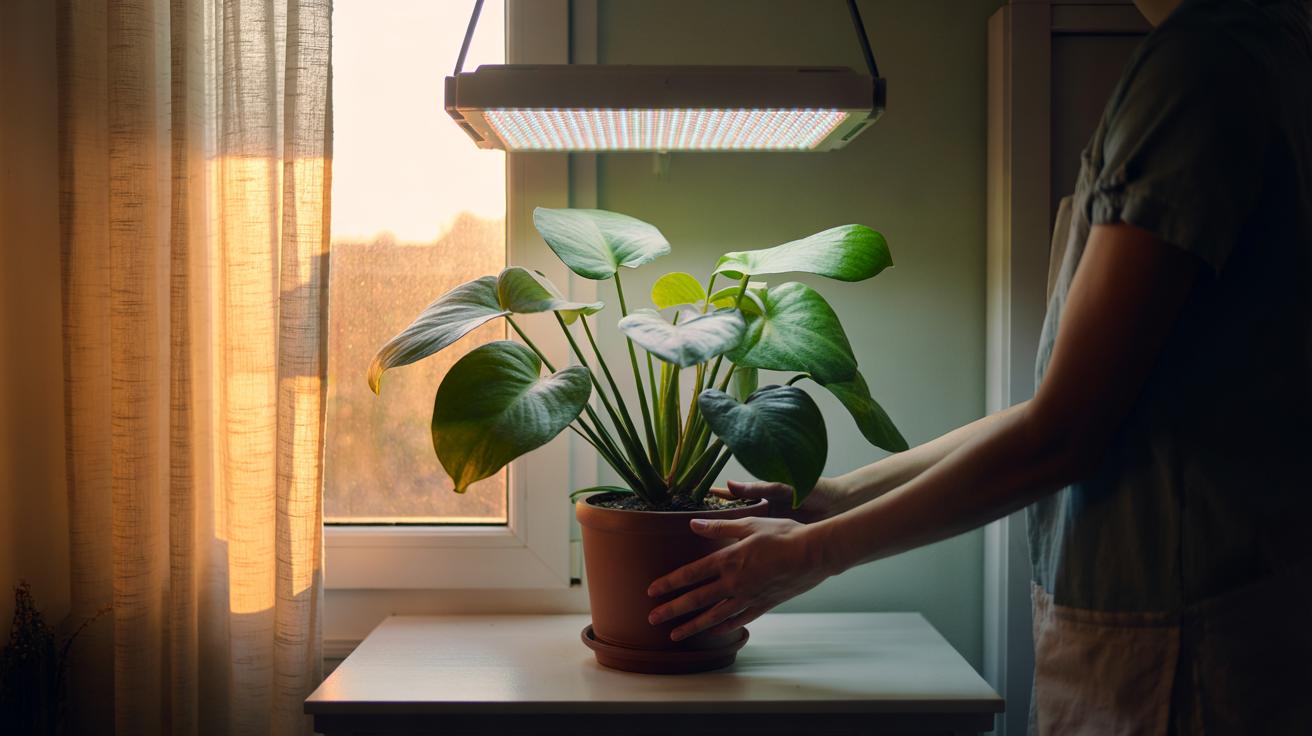
Houseplants rarely enjoy the even, day‑long sunshine that outdoor vegetation receives. Windows cast sharp beams, shadows shift, and growth leans towards the brightest pane. A simple, overlooked fix is the rotating‑plant routine—a regular quarter‑turn that shares light across every leaf. When paired with consistent exposure, this habit stimulates more balanced photosynthesis, better colour, and sturdier architecture. Small changes in how a plant meets light can reshape the entire canopy. From phototropism to chlorophyll distribution, the science is compelling, and the method is easy. Below, we explore how steady illumination, delivered fairly through rotation, produces healthier leaves and a more harmonious plant silhouette.
Why Rotation Changes Leaf Physiology
Plants sense direction through phototropism: light pulls growth as the hormone auxin redistributes to the shaded side, elongating cells and tilting stems. Unrotated specimens become lopsided, with sparse interiors and oversized, light‑facing leaves. Turning a pot a quarter turn every week interrupts that bias. Regular rotation evens out light capture across the canopy, prompting leaves on all sides to contribute. The result is tighter internodes, fuller crowns, and more uniform shading that protects delicate tissues from glare.
Balanced light also influences internal chemistry. Leaves in moderate, steady brightness increase chlorophyll content and maintain efficient stomata, the pores that manage gas exchange. When one side is perpetually dark and the other harshly lit, plants run two conflicting programs—shade acclimation and sun defense—on the same stem. Rotation reduces that disparity. The plant invests in a consistent leaf design, with similar thickness and pigment density, which supports stable photosynthetic rate and better water use.
There is a circadian element, too. Plants operate on a daily clock tuned to dawn‑to‑dusk patterns. Predictable direction and duration of light help the circadian rhythm align with energy demand. Rotation complements this by preventing a single sector from carrying the load every day, spreading metabolic work and stress across the canopy.
Designing a Consistent Light Routine Indoors
Indoors, aim to stabilise three variables: intensity, duration, and distribution. Intensity is the brightness at leaf level, often expressed as PPFD (photosynthetic photon flux density). Duration adds up to the DLI (daily light integral), the total photons received. Distribution is where rotation shines. A weekly quarter‑turn—more frequently for fast growers—equalises distribution without altering your room layout. Pair that habit with a timer that delivers 12–14 hours for most foliage plants, trimming if leaves bleach or curl.
Window aspect matters. South‑facing sills can scorch thin leaves; north‑facing windows may be too dim for tropicals. Sheer curtains soften peaks, while white walls bounce light into the plant’s rear canopy. Where daylight is weak, supplement with full‑spectrum LEDs positioned 20–40 cm above the top leaves. Keep fixtures centred rather than off to one side, so rotation truly changes which surfaces are favoured across the week.
Use the table below as a quick reference when setting your routine for common indoor conditions.
| Rotation Frequency | Light Intensity (PPFD) | DLI (mol m⁻² d⁻¹) | Expected Leaf Response |
|---|---|---|---|
| Quarter‑turn weekly | 100–200 μmol m⁻² s⁻¹ | 4–8 | Greener foliage, reduced leaning, steady growth |
| Quarter‑turn every 3–4 days | 200–350 μmol m⁻² s⁻¹ | 8–15 | Thicker leaves, tighter nodes, balanced canopy |
| Half‑turn weekly | 80–120 μmol m⁻² s⁻¹ | 3–5 | Prevents one‑sided stretch in low light |
Evidence From Horticulture and Home Trials
Commercial growers rarely leave light uniformity to chance. In greenhouses, rotating benches and moving lamps distribute PAR evenly, which boosts consistency at harvest. Studies on ornamentals show that plants receiving uniform light develop higher chlorophyll a+b content, improved leaf mass per area, and fewer stress pigments. When light is even, plants waste less energy on defence and invest more in productive tissues. Home trials mirror this: hobbyists report symmetrical crowns within a month and fewer yellowing leaves on the shaded side.
Quantitative gains are modest but meaningful. A balanced canopy can raise whole‑plant carbon assimilation by a small percentage, yet that change compounds over weeks into denser foliage. Rotated plants also handle environmental swings better. If a cold draft or hot patch hits, no single side bears repeated stress; resilience spreads across the plant body. These benefits explain why rotation appears in care guides for everything from Ficus to Monstera and compact herbs.
The most persuasive proof is visual: rotated plants keep their centre of gravity over the pot and hold leaves at matched angles. That symmetry is not cosmetic; it indicates balanced resources and reduced risk of toppling or broken stems.
Weekly Checklist for Rotating Houseplants
Start by marking the pot rim with a discreet dot. Each week, turn the pot so the dot moves 90 degrees clockwise. For rapid growers in spring, shorten the interval to three or four days. Consistency beats intensity: small, regular turns are better than occasional half‑spins. Always rotate on watering day so you build a reliable habit, and assess the plant’s posture—if it still leans, add an extra mid‑week nudge.
Check light at leaf height with a phone app or meter. If PPFD is under 100 μmol m⁻² s⁻¹, brighten the site or extend hours; if leaves pale, reduce duration or add a diffuser. Clean dust from foliage so stomata can function well, and prune crowded interior shoots to let light penetrate. Keep the plant at a fixed distance from lamps; moving lights undermines the evenness you are trying to create.
Finally, track outcomes. Note changes in colour, leaf size, and internode spacing in a simple log. Within one to three rotations, you should see straighter stems and healthier, more uniformly green leaves. If results stall, review watering and nutrition—light can only do so much without adequate moisture and minerals.
Turning a pot is hardly high tech, yet it orchestrates a quiet revolution across the canopy. By pairing rotation with steady, right‑sized light, you coax plants to share the work of photosynthesis, grow sturdier leaves, and hold themselves with poise. The method scales from a single succulent to a shelf of herbs under LEDs, costs nothing, and repays attention with more reliable growth. Healthy foliage is less about dazzling brightness and more about fairness in exposure. How might a simple rotation ritual change the look and vitality of the plants in your home or studio?
Did you like it?4.7/5 (21)