In a nutshell
- 🧂 Salt scrub lifts light rust fast by gentle abrasion aided by lemon juice or vinegar; technique is key and instant results apply to surface stains.
- 🧪 Choose smart: fine table salt for control, coarse salt for flakes, bicarbonate of soda for delicate finishes, and 0000 steel wool only on bare steel—match abrasive to metal.
- 🧰 Step-by-step: make a paste, rub lightly along the grain for 20–30 seconds, allow brief dwell for chemistry, then resume—avoid circular grinding on polished surfaces.
- 🛡️ Aftercare matters: rinse thoroughly to remove chloride, dry immediately, and seal with oil or inhibitor to prevent renewed corrosion, especially on stainless steel.
- ⚙️ Know the limits: effective on light surface rust; deeper corrosion may need a rust converter or mechanical prep before a final gentle salt polish.
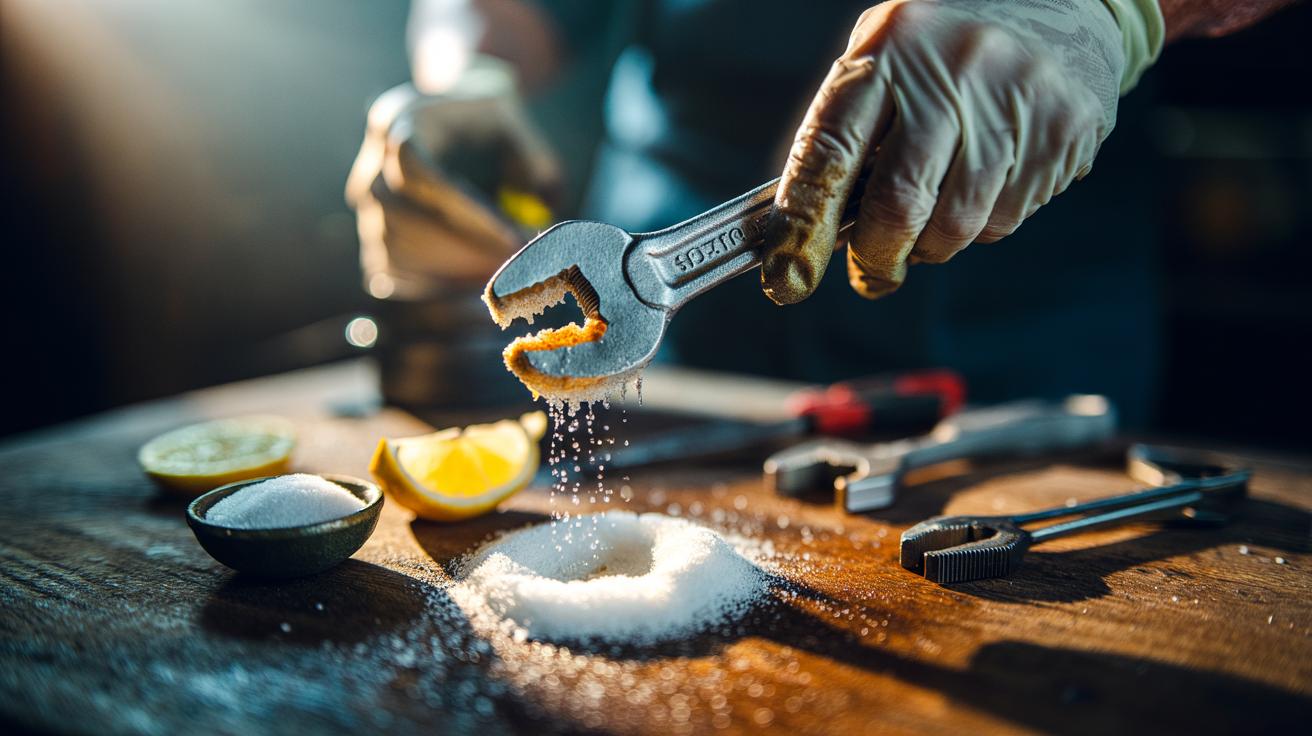
Reach for humble table salt and the rust blush on a neglected spanner or garden trowel can seem to vanish before your eyes. The trick lies in a controlled abrasion that lifts oxidised iron without gouging the base metal. Pairing salt with a splash of lemon juice or vinegar adds gentle chemistry to the mechanical action, giving householders a quick, low-cost fix. Yet the method demands judgement: grain size, pressure and dwell time all affect the finish and longevity. Instant results are realistic only on light surface staining, while heavier corrosion needs patience. Used wisely, a salt scrub offers a safe bridge between babying your kit and breaking out power tools.
How Salt Abrasion Works on Rust
Rust is flaky iron oxide with a hardness lower than many mineral particles. Fine crystals of table salt provide a controllable micro-grit that shears those brittle oxides without biting deeply into sound steel. Add water or a weak acid and you create a thin film that helps the crystals slide, distributing pressure and preventing harsh scoring. Lemon juice or vinegar contributes mild acidity to dissolve carbonate contamination and loosen oxide bonds, while the rubbing action dislodges the weakened layer. Salt is not magic; technique matters. Work with light, even strokes, refolding your cloth so loosened rust does not re-deposit.
There is also a subtle chemical assist. In a dilute, short-contact scrub, chloride ions promote the breakdown of surface oxides, letting abrasion finish the job. The key is brevity. Prolonged exposure to chlorides risks pitting, especially on stainless steel. That is why any salt-based clean must end with a thorough rinse and a rapid dry. On carbon steel or cast iron, the same approach works well, provided you re-oil promptly to block fresh oxygen and moisture.
Choosing the Right Abrasive and Pressure
Not all “scrubs” are equal. Fine salt behaves like a very low-grit powder; coarse sea salt acts like scattered ball bearings that can gouge if you lean in. For chrome-plated parts, copper and brass, a paste of bicarbonate of soda in water is even milder, reducing the risk of swirl marks. On cookware, non-scratch pads keep contact uniform, while 0000 steel wool should be reserved for stubborn spots on bare carbon steel. Always match abrasive hardness to the substrate: aluminium scratches easily, polished stainless shows swirls, and enamel chips under point pressure. Test on a discreet area before committing.
| Abrasive | Typical Use | Relative Hardness | Scratch Risk | Best For |
|---|---|---|---|---|
| Fine table salt | Brine paste with lemon/vinegar | Low | Low–Moderate | Light rust on carbon steel |
| Coarse sea salt | Quick lift of heavier flakes | Medium | Moderate–High | Unpolished tools, garden metal |
| Bicarbonate of soda | Mild slurry with water | Very low | Very Low | Chrome, brass, stainless sinks |
| Non-scratch pad | Even pressure scrubbing | Varies | Low | Cookware, appliances |
| Steel wool (0000) | Spot treatment | High | High | Bare steel, pre-finishing |
Metal type dictates the margin for error. Stainless benefits from salt’s gentleness, but rinse immediately to avoid chloride-induced pitting. On aluminium, avoid strong acids; use a neutral slurry and rinse to prevent grey smut. Cast iron should be dried on a hob and wiped with oil to rebuild its seasoning. Brass and copper may tarnish after cleaning; a quick polish restores colour without heavy abrasion.
Step-by-Step: A Safe Salt Scrub Method
First, wipe away loose debris. Make a paste: 1 tablespoon fine salt with enough lemon juice or white vinegar to wet it; for sensitive finishes, use water or a drop of washing-up liquid instead. Apply with a soft cloth or non-scratch pad. Work along the grain where visible, using fingertip pressure. Spend 20–30 seconds per area, refreshing the paste as it darkens. For stubborn spots, park the paste for two minutes to let mild chemistry work, then resume light rubbing. Avoid circular grinding on polished surfaces; it shows up under light. Keep the workspace ventilated and protect nearby wood or stone from acidic drips.
When the stain lifts, rinse thoroughly with warm water to flush every trace of chloride. Dry at once: towel first, then a hairdryer or gentle heat to chase moisture from seams and screw heads. On bare carbon steel or cast iron, wipe a thin film of food-safe mineral oil or canola; on tools, a light machine oil and a touch of corrosion inhibitor does the job. Always finish by sealing the clean metal from air and humidity. If the rust returns quickly, step up to a phosphate-based rust converter for underlying corrosion before repeating a kinder salt polish.
Salt, used with care, turns household science into practical maintenance: a quick, controlled abrasion that restores metal without the drama of power tools or harsh chemicals. The method’s success hinges on choosing gentle media, respecting the metal beneath, and moving swiftly from clean to dry to protected. That rhythm—lift, rinse, seal—keeps tools, fittings and cookware looking honest and working hard, from the shed to the kitchen. The right technique protects as it perfects. Where could a measured, minimal approach to cleaning save you time and preserve the character of your metalwork next?
Did you like it?4.3/5 (22)