In a nutshell
- 🌿 Creates a scent barrier with perfumed soap volatiles while reflective foil adds visual disruption, steering aphids, whiteflies, and thrips away.
- 🧰 Simple kit: aluminium foil, strongly scented bar soap (citrus, peppermint, eucalyptus), scissors, ties, stakes; cut strips, rub soap thinly, hang at 20–30 cm intervals, and refresh every 7–10 days or after rain.
- 🔬 Backed by practice: silver-like reflections reduce virus-spreading aphid landings; compounds such as linalool and limonene act as repellents; best used preventively on seedlings and tender crops (not as insecticidal soap).
- 🧩 Fits integrated pest management (IPM): combine with clean culture, resistant varieties, sticky cards or nets, and regular scouting; place strips on the perimeter to protect pollinators.
- ⚠️ Caveats: scent fades in heat and rain, strong odours can deter beneficials if too close to flowers, foil offers little against slugs, and never apply perfumed soap to foliage in bright sun.
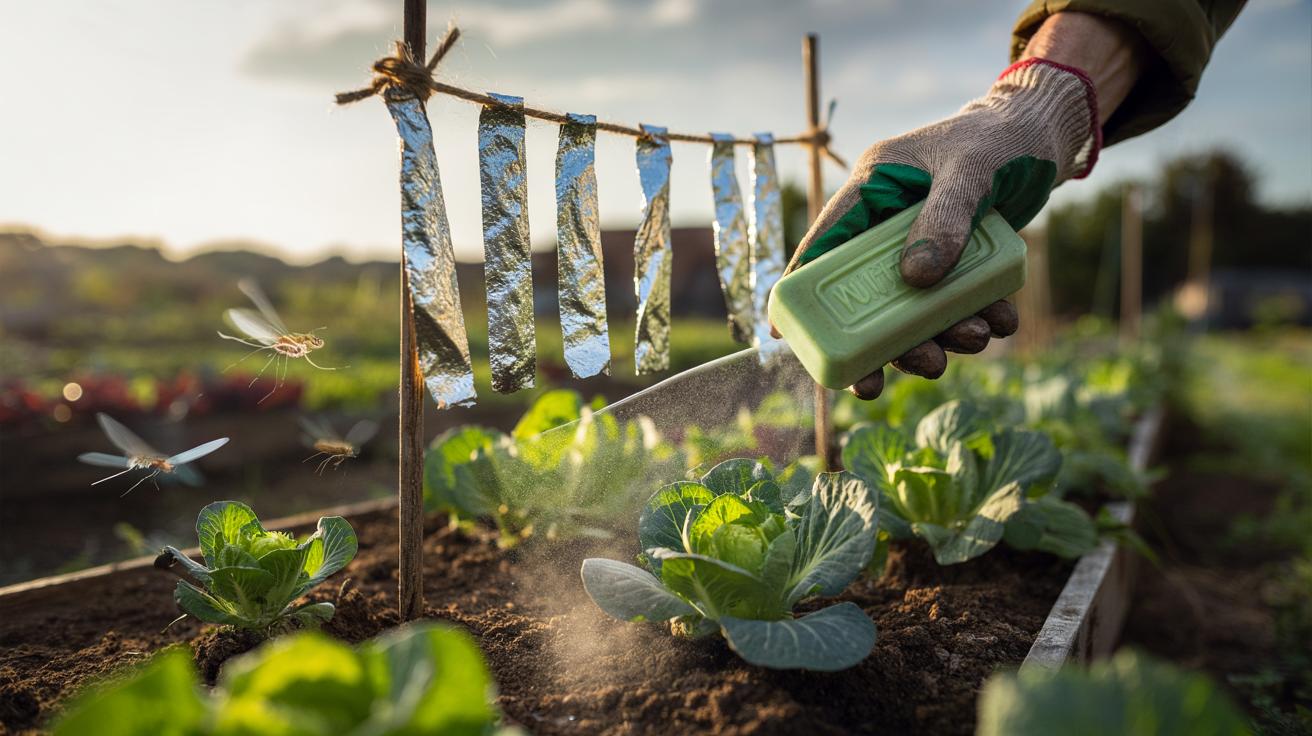
As the growing season unfolds, a low-tech hack is gaining favour on British allotments: rubbing a bar of strongly scented soap on strips of aluminium foil and hanging them around beds to repel aphids, whiteflies, and other soft-bodied pests. The approach rests on a simple idea—a scent barrier that overwhelms or masks the chemical cues insects use to locate tender growth. When the breeze stirs the foil, both fragrance and glints of light discourage settling. For pennies and minutes, the method offers a chemical-light deterrent that leaves soil life undisturbed and lends a tidy perimeter defence. Used thoughtfully, it can buy your seedlings crucial time before pest numbers surge.
How the Soap-on-Foil Trick Works
Garden insects navigate using odour plumes and reflected light. Strongly perfumed bar soaps release volatile compounds—often limonene, linalool, eucalyptol, or menthol—that muddle these signals, creating a scent barrier around vulnerable crops. The aluminium acts as a carrier: soap rubbed onto foil maintains a thin, durable layer that evaporates slowly, pushing fragrance into the air column where pests make “land or leave” decisions. The goal is to saturate the air just above the canopy, not coat the plants themselves. That airborne haze can make a bed less attractive than a neighbour’s, nudging insects to move on.
The foil also adds a visual twist. Reflective foil sends chaotic flashes that interfere with orientation, an effect field growers exploit with silver mulches to reduce virus‑spreading aphids. Hung as fluttering tags or wrapped round stakes, foil strips micro-move in the wind, periodically renewing scent release and visual disturbance without touching foliage. Positioning these “scent sails” at the bed edge pushes odours outward, forming a soft perimeter. Place scent where pests decide to land, not on the leaves you hope to harvest.
Materials and Step-by-Step Method
You will need aluminium foil (standard kitchen weight), a strongly scented bar soap (citrus, peppermint, eucalyptus, or pine notes work well), scissors, a hole punch or skewer, soft garden ties or string, and a few short stakes. For heavier pressure, keep a jar of soap shavings to refresh the foil quickly. Choose soaps with clear fragrance and minimal moisturising additives, as extra oils can smear. A pair of gloves helps avoid over-scented hands, and a small box keeps prepared strips tidy until use. Stronger odour equals a firmer barrier, but you do not need much.
Cut foil into 2–3 cm by 20–25 cm strips. Rub soap along both faces until lightly coated; you’re aiming for a thin, even film. Punch a hole at one end, thread with string, and hang strips around the bed at 20–30 cm intervals, slightly above crop height. Alternatively, wrap short bands around stakes and space these like mini beacons. Refresh after heavy rain or every 7–10 days as scent fades; note this refresh interval on a calendar. Avoid brushing soap onto foliage, especially in strong sun. Keep barriers at the perimeter so pollinators can work flowers undisturbed.
What the Science Says and Where It Works Best
Reflective surfaces are a proven tactic: silver mulches have repeatedly cut aphid landings and virus incidence in field trials with cucurbits and brassicas. Fragrance chemistry adds another layer; compounds such as linalool, limonene, and menthol are documented repellents to several sap‑suckers. This hack is not insecticidal soap sprayed on leaves; it’s a passive odour shield. Expect best results as a preventive for seedlings, salads, beans, and herbs during the first wave of pests. Combine with tidy cultivation, resistant varieties, and timely watering so plants outgrow minor nibbles. When infestations are established, step up to targeted controls within an integrated pest management plan.
| Pest | What Deters It | Suggested Soap Notes | Placement Tip |
|---|---|---|---|
| Aphids | Scent masking + reflective glare | Citrus or pine | Hang strips around bed edges, 15–30 cm above tops |
| Whiteflies | Bright flicker disrupts settling | Eucalyptus or peppermint | Combine with yellow sticky cards inside perimeter |
| Thrips | Volatile repellents | Lavender-type or menthol | Use finer, more numerous strips near seedlings |
| Flea beetles | Visual chaos at landing | Peppermint | Ring young brassicas; net if pressure is high |
| Slugs/snails | Edge barriers; scent is limited | N/A | Use copper tape or traps; foil is a minor deterrent |
There are caveats. Heavy rain strips fragrance; heat accelerates evaporation. Strong odours may momentarily discourage beneficial insects, so keep strips on supports and away from flowers. If you need contact control, use true insecticidal soap per label, not perfumed bars. Pair scent barriers with regular scouting; knock back hotspots quickly and let the foil‑and‑soap deter re‑settling. Never apply perfumed soap directly to leaves in bright sun, which risks scorch and residue. Treated as a light, steady pressure rather than a quick fix, this tactic can tip the balance in your favour.
Repelling pests rarely hinges on one tool; it’s about stacking small, smart advantages. Soap on foil is quick, cheap, and adaptable, making it a sensible first line of defence for tender crops while you monitor and respond. Its strength lies in prevention, nudging insects to feed elsewhere without drenching beds in chemistry. Used with clean culture, nets, and healthy soil, it helps young plants surge ahead. Will you test a peppermint or citrus barrier on your most vulnerable row this week—and how will you tweak placement to match the microclimate of your own patch?
Did you like it?4.7/5 (23)