In a nutshell
- 🌿 Wood ash supplies readily soluble potassium (as potash) plus calcium compounds that raise soil pH; it’s a supplement, not a complete fertiliser with nitrogen.
- 🛠️ Apply only clean, cold ash from untreated wood; scatter 50–150 g/m² by soil type, incorporate lightly, avoid mixing with ammonium/urea, and use protective gear.
- 🌱 Best on acidic plots and K-hungry crops (brassicas, tomatoes, courgettes, fruit trees); keep away from ericaceous plants and potato beds to reduce scab risk; limited use on chalky soils.
- 📆 Time applications for late winter–early spring; apply before steady rain, integrate promptly; in compost, sprinkle thinly; for containers, a pinch per 5 L and check pH.
- ⚠️ Avoid overuse that lifts pH above neutral and locks micronutrients; never use coal/briquette ash; store ash dry and separate from nitrogen feeds by at least two weeks.
For frugal gardeners, the pale dust left after a winter’s fire is more than nostalgia: it is a ready-made tonic for hungry soil. Wood ash is naturally rich in potassium, the nutrient that drives sturdy stems, resilient foliage and abundant fruiting. Spread lightly, it offers a quick, soluble dose of potash while also delivering a gentle liming effect. Yet this is a tool to wield with care. Its alkalinity can nudge soil pH upward and it must never be confused with coal waste. Used judiciously and at the right moment, clean wood ash can convert ordinary beds into productive plots without a trip to the garden centre. Here is why it works, how to apply it, and when to leave the bucket closed.
What Is in Wood Ash and Why It Raises Potassium
When wood burns, carbon and volatile compounds oxidise away, leaving mineral residues concentrated as ash. The star of this residue is potassium (K), typically present as potassium carbonate, which dissolves readily in water. Plants draw on this soluble potash to regulate water movement, build sturdy cell walls and enhance disease resistance. Fruit and flower quality often improve because potassium supports sugar transport and enzyme activity. Wood ash also contains calcium compounds, which act like lime, nudging acidic soils toward neutrality. That alkalinity is helpful in moderation, but it is precisely why over-application can create problems for acid-loving plants.
Despite its merits, ash is not a complete fertiliser. It contains little to no nitrogen and only modest phosphorus, so it works best as a supplement, not a single feed. The liming effect reflects a substantial calcium carbonate equivalent that can alter soil structure and nutrient availability, often improving clay tilth. Trace elements such as magnesium and boron appear in small amounts, though these vary by timber species and burning conditions. Always assume variability and start with conservative rates—your plants will benefit without risking a pH swing.
| Component | Typical Content | Notes |
|---|---|---|
| Potassium (as K2O) | 5–7% | Highly soluble; rapid plant uptake |
| Calcium carbonate equivalent | 25–45% | Raises soil pH; liming action |
| Phosphorus (as P2O5) | 1–2% | Modest contribution to rooting |
| Magnesium | 1–2% | Supports chlorophyll and enzyme function |
| pH of ash | 10–12 | Strongly alkaline; handle with care |
How to Apply Wood Ash Safely and Effectively
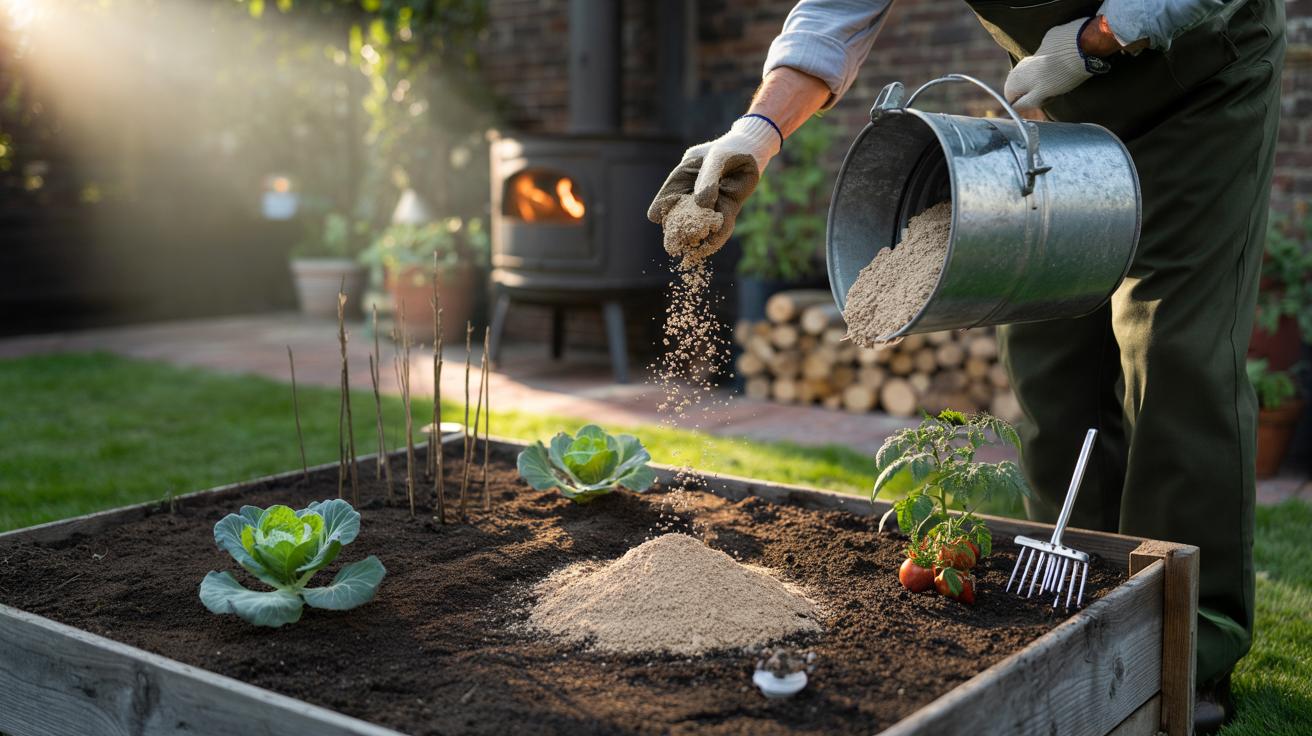
Only apply clean, completely cold ash from untreated wood. Sieve out nails and charcoal, then scatter on damp soil to limit dust drift. A light broadcast followed by a hoe or rake helps prevent clumping and reduces nutrient loss. Avoid mixing with fresh ammonium or urea fertilisers, which can drive off ammonia; keep applications at least a fortnight apart. As a rule, think of ash as a potash top-up for beds that are already manured or composted. Do not use ash from coal, briquettes, or painted/treated timber—these can contaminate soil.
Application rates depend on soil and crop demand. On fertile loams, a modest dose refreshes potassium without excessive liming; sandy soils can accept slightly more because nutrients leach faster. Incorporate the material rather than leaving it in piles where it can scorch seedlings. If adding to compost, sprinkle thinly through layers to buffer acidity and keep the heap sweet. Wear gloves and a mask when handling ash dust, and keep pets away while spreading.
| Soil/Crop Situation | Recommended Rate | Timing |
|---|---|---|
| Light sandy soils | 50–100 g per m² | Late winter to early spring |
| Loams and raised beds | 70–150 g per m² | Autumn or spring, incorporate |
| Heavy clay | 30–80 g per m² | Autumn; aids structure |
| Containers | Pinch per 5 L mix | Blend well, test pH |
Soil Types, Crops, and Seasonal Timing
Acidic plots on high rainfall sites frequently lose potassium to leaching, so a winter sprinkle of ash can be timely. Brassicas, fruiting vegetables like tomatoes and courgettes, and stone fruit trees often respond with firmer growth and improved flavour. Keep ash well away from ericaceous plants—blueberries, rhododendrons, azaleas—which demand low pH to thrive. Annual beds benefit most when ash is spread several weeks before sowing, then worked into the topsoil. In perennial borders, target the root zone and water in softly to avoid leaf scorch.
Season matters. Late winter is ideal: soils are moist, microbial life is stirring, and spring growth will soon draw in that potash. Apply before heavy rain to wash nutrients into the profile but after the risk of storm run-off. On allotments, alternating ash with well-rotted compost or farmyard manure balances nutrient supply and maintains structure. Note the potato exception: alkaline conditions can increase scab risk, so avoid ash on seed beds earmarked for spuds. On chalky soils already rich in calcium, ash offers little benefit and may tip pH too high.
Common Mistakes and Realistic Limits
Enthusiasm can lead to white-crusted beds and locked-up nutrients. Overdoing ash raises pH above 7.5, reducing availability of iron, manganese and phosphorus, and potentially stressing lime-sensitive plants. Test soil annually and stop ash applications if pH is above neutral. Another pitfall is treating barbecue residue as equivalent: food fats and briquette binders are not for soil. Store ash dry in a lidded metal bin and use within a few months; the potassium carbonate gradually reacts with moisture and carbon dioxide, dulling its effect.
Think of ash as a quick-release potash booster, not a cure-all. Spread thinly, integrate promptly, and complement with organic matter to retain nutrients. Keep it off paving and ponds; the alkalinity can damage surfaces and aquatic life. If you use nitrogen fertilisers, separate them by time and placement to prevent losses. Finally, be mindful of wind: airborne ash is a respiratory irritant and can scorch tender growth. Less and often beats a single, heavy-handed dump.
Used thoughtfully, wood ash turns last night’s warmth into this season’s vigour, enriching garden beds with immediately available potassium while subtly sweetening acidic soils. The trick is precision: know your soil, respect pH, and treat ash as a supplement alongside compost and mulches. With that discipline, fruit sets are steadier, flowers brighter, and leafy crops sturdier under stress. Will you test your soil, trial a light ash dressing on one bed, and compare harvest quality before rolling the practice across your plot?
Did you like it?4.5/5 (24)