In a nutshell
- 🌶️ A thin ring of used coffee grounds around peppers supplies slow-release nitrogen, smoothing nutrient peaks and boosting flowering, fruit set, and overall plant resilience in variable UK weather.
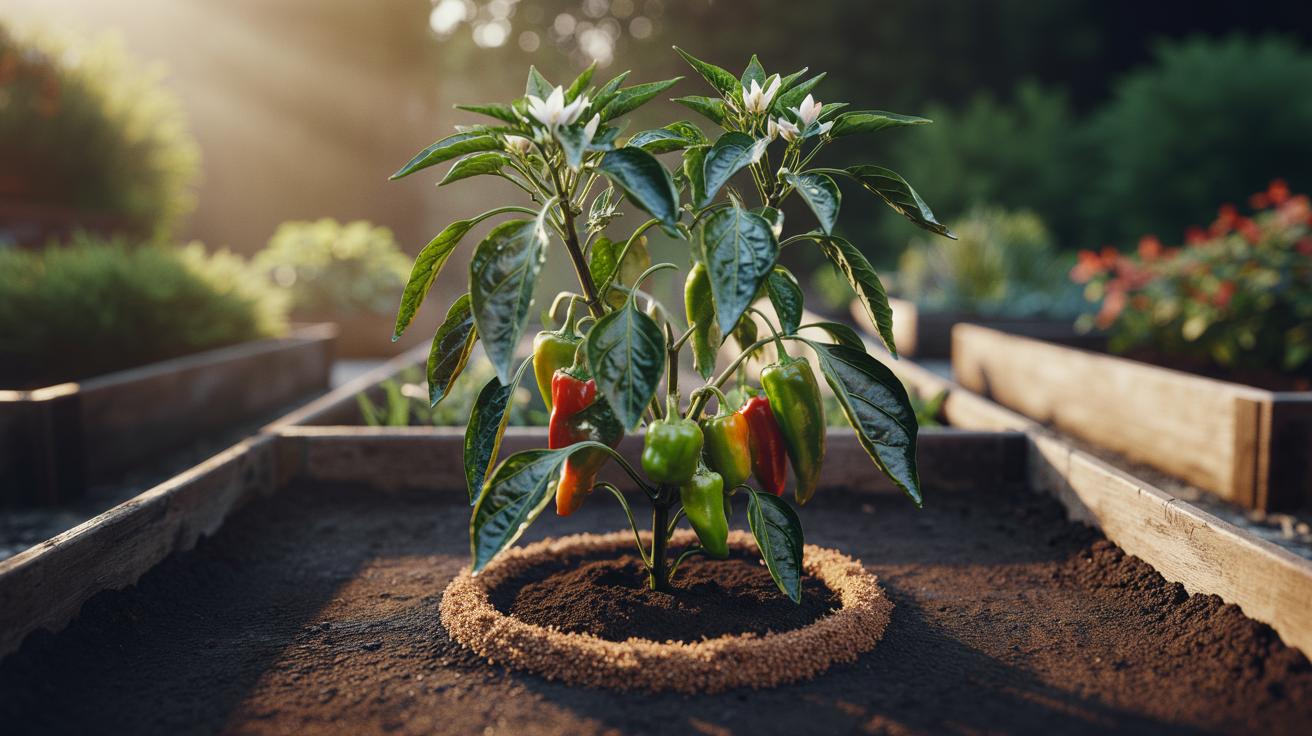
- 🛠️ Build a neat doughnut 8–12 cm from the stem, 3–5 cm wide and ≤1 cm deep; keep it off the stem, scratch in lightly, cap with compost, and water—repeat every 3–4 weeks, pairing with a half-strength tomato feed for potassium during bloom.
- ⚖️ Balance nutrition: let the grounds buffer N while adding phosphorus and potassium for root strength and fruit quality; stop heavy nitrogen by mid-August to prioritise ripening, especially in cooler summers.
- 🧪 Myths vs risks: spent grounds are near-neutral pH with minimal caffeine; the main hazard is thick mats that repel water—apply thinly to avoid oxygen deprivation and temporary nitrogen tie-up in cold soils.
- 📊 Quick takeaways: grounds ≈ 2% N released by microbes; tomato feed supplies high K for bloom and fruit fill; a compost cap prevents caking, retains moisture, and adds beneficial biology.
Gardeners love a tip that feels ingenious yet costs nothing. One such trick is the humble ring of used coffee grounds set around pepper plants. Rather than dumping grounds in a heap, this small doughnut of organic matter becomes a slow-release nitrogen source that keeps plants steadily fed. Nitrogen is vital for foliage and root growth early on, but the crucial gain is consistency: a steady trickle reduces stress, supports flowering, and sets up bigger, cleaner harvests. In a UK growing season prone to cool nights and stop-start growth, the coffee ring acts like a thermostat for nutrition, smoothing peaks and troughs that can otherwise stunt fruit set.
Why a Coffee Grounds Ring Works
Used coffee grounds contain roughly 2% nitrogen by dry weight, locked within fibres that break down gradually. Soil microbes metabolise this material, releasing plant-available forms in step with warmth and moisture. Steady, low-dose nitrogen supports blossoms rather than forcing leafy sprawl. For peppers, that balance matters: a surge of soluble fertiliser can produce lush growth and delayed fruiting, whereas slow-release nutrition drives sturdy stems, consistent bud formation, and fewer aborted flowers. The grounds also improve tilth, helping roots breathe and anchor, while conserving moisture through a light mulch effect—useful during hot spells in containers or raised beds.
Another common worry is acidity. After brewing, grounds are close to neutral in pH, so they will not acidify soil in any dramatic way. What they do deliver is organic matter and a microbe-friendly food source, which boosts the soil food web that peppers rely on for nutrient exchange. Think of the ring as a compost starter placed exactly where roots forage. When conditions are cool, release is slower; as summer warms the bed, microbial activity rises, aligning availability with peak fruiting demand.
Building the Perfect Ring Around Pepper Plants
Form a neat doughnut 8–12 cm from the stem, 3–5 cm wide, and no more than 1 cm deep. For a young transplant, use 30–40 g (about two heaped tablespoons) per plant; mature plants can take 60–80 g. Keep grounds off the stem to prevent rot and pest bridges. Lightly scratch the ring into the top 1–2 cm of soil, then cap it with a thin layer of compost or leaf mould to prevent caking. Water gently to settle it. This layout targets the active feeder roots while avoiding clumps that can turn hydrophobic.
Repeat little and often. In the UK, apply at transplanting after the last frost, again during early flowering, and once as fruits begin to set—roughly every 3–4 weeks in warm weather. Pair the ring with a general tomato feed (high in potassium) at half strength during bloom to balance nutrients. Thin layers breathe; thick mats smother. If your soil is already rich, halve the rates. Container peppers benefit most, as limited volume means nutrients leach quickly and organic structure breaks down faster.
Managing Nitrogen for Flowers and Fruit
Peppers need enough nitrogen for canopy building, but too much can delay fruiting. The coffee ring’s slow trickle suits the crop’s rhythm: vegetative growth early on, then a gentle nudge during flowering. Complement with phosphorus for root strength and potassium for fruit quality. A weekly tomato fertiliser at label rates during bloom keeps K levels up, while the grounds buffer N. Stop heavy nitrogen by mid-August to focus the plant’s energy on ripening. In cooler summers, consider black mulch or a warm wall to keep microbes active and the nutrient trickle steady.
Not all organic inputs are equal. Fresh manures can spike nitrogen and salt; composted materials are steadier. Used grounds sit in the middle: moderate N, released at microbial speed. Blend small amounts into mulch to avoid sealing the soil surface. If leaves pale despite the ring, foliar-feed with seaweed or a balanced fertiliser, then resume the low-and-slow approach.
| Input | NPK/Effect | Notes for Peppers |
|---|---|---|
| Used coffee grounds | N ≈ 2%, slow release | Apply thin ring; improves structure; feeds microbes |
| Tomato feed | High K, moderate P | Supports flowering and fruit fill; use during bloom |
| Compost cap | Trace nutrients, humus | Prevents caking, keeps moisture, adds biology |
Risks, Myths, and Evidence
The internet myth that coffee grounds strongly acidify soil lingers, but spent grounds are near neutral. Another concern is caffeine toxicity to plants; used grounds contain little caffeine, and at the thin rates described, field issues are rare. The real risk is physical: thick layers can repel water, foster mould, and starve roots of air. Keep applications light and blended. Grounds have a carbon-to-nitrogen ratio around 20:1, so they decompose briskly; if soil life is sluggish in cold springs, a minor, temporary nitrogen tie-up may occur. A compost cap and steady watering mitigate this.
Evidence from extension trials and grower logs points to modest but meaningful gains: stronger early growth, fewer blossom drops, and slightly larger fruit set where soils are lean. Used correctly, grounds slot into a balanced regime rather than replacing fertiliser entirely. Pets may be tempted by the aroma; fence off beds and store grounds securely. For heavy-feeding varieties like ‘Padron’ or ‘California Wonder’, the ring helps maintain momentum between liquid feeds, keeping plants on an even keel through Britain’s variable summer.
Done with a light hand, the used coffee grounds ring is a cost-free way to stabilise nutrition for peppers, aligning nitrogen release with the plant’s calendar. It nurtures soil life, holds moisture around feeder roots, and teams neatly with a potassium-rich feed to deliver bountiful, well-shaped fruit. Keep the ring thin, off the stem, and topped with compost; then let microbes do the heavy lifting. In your garden or allotment, where could a small dose of slow-release nitrogen unlock steadier growth—peppers in containers, or a sun-warmed bed that ripens late varieties to perfection?
Did you like it?4.5/5 (26)