In a nutshell
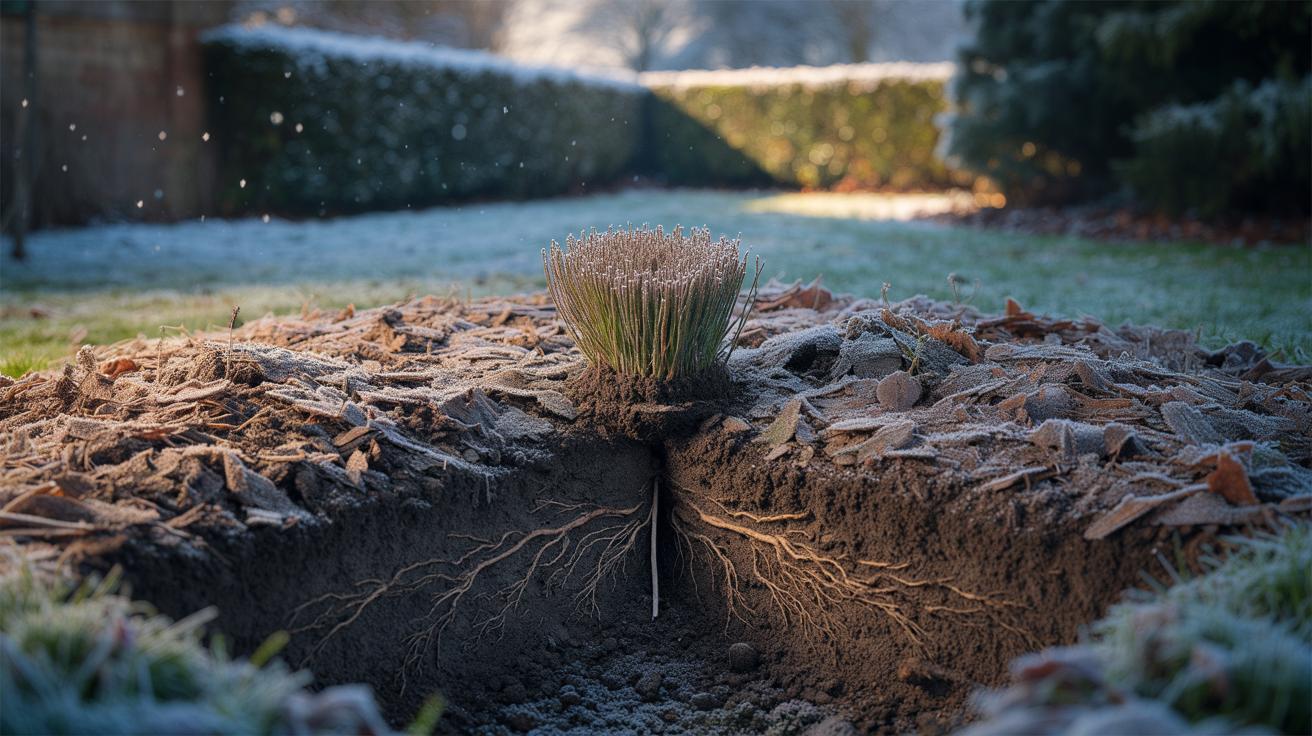
- 🌡️ Insulation, not heat: Air-filled mulch slows heat loss, stabilises soil temperature, cuts freeze–thaw cycles and frost heave, and safeguards the root zone.
- 🧱 Materials and depth: Choose coarse wood chips, leaf mold, straw, and compost; aim for 5–8 cm on beds and 8–10 cm under hedges; avoid fine, wet layers; keep mulch off stems and crowns.
- 🗓️ Timing and method: Apply in late autumn before a hard freeze on moist—not waterlogged—soil; spread evenly to the dripline; containers benefit from a 3–5 cm cap; in spring, pull back to warm and dry, then re-spread lightly.
- 💧 Moisture and biology: Mulch retains humidity, slows frost penetration, and supports microbes and mycorrhizal fungi; mitigate temporary nitrogen immobilisation by using a thin compost underlayer beneath fresh chips on annual beds.
- 🧪 Science and UK context: The mulch blanket damps temperature swings in snow-light UK winters, aiding raised beds and windy plots while delivering root protection, weed suppression, and moisture control.
The UK’s damp, stop-start winters can be cruel to shallow root systems. Shivering soils expand and contract, waterlogged beds teeter on saturation, and a cold snap can spike frost heave overnight. A well-chosen winter-mulch blanket turns this roulette into a steady game of odds. By trapping air and managing moisture at the surface, mulch regulates soil temperature and shields roots from damaging swings. Mulch will not create warmth; it preserves the heat the soil already holds and slows its loss. For gardeners juggling perennials, fruit bushes, and young trees, understanding the physics and practice of insulation is the difference between winter survival and spring disappointment.
Why a Winter Mulch Works as Thermal Insulation
Mulch acts like a quilt: low-density material riddled with air-filled pores that resist heat transfer. This reduces conductive heat loss from soil to frigid air and damps daily temperature swings that stress roots. The key function is buffering, not heating—mulch slows both cooling and rapid warming. That matters because repeated freeze–thaw cycles can jack plants out of the ground and shear tender feeder roots. By softening peaks and troughs, a mulch layer keeps the root zone closer to the steady conditions plants evolved to tolerate.
Insulation also intersects with moisture. Bare soils radiate heat, lose water, and form crusts; mulched soils retain humidity, preserving the latent heat stored in water. This slows the downward creep of freezing fronts and supports winter-active microbes that release small pulses of nutrients. Organic mulches—leaf mold, wood chips, straw—excel because their structure traps air while breaking down slowly. A stable, airy blanket prevents compaction, which otherwise increases thermal conductivity and invites cold deeper into the profile.
Choosing the Right Materials for UK Gardens
In a maritime climate, pick mulches that stay aerated in persistent rain yet don’t mat into a cold, slimy lid. Shredded bark and coarse wood chips are reliable around shrubs and trees; leaf mold suits perennials and woodland borders; clean straw insulates vegetables but can harbour slugs if overused. Compost offers modest insulation but shines as a top-dressing under a coarser cap. Avoid piling fresh grass clippings or fine, wet leaves alone—they collapse, exclude air, and conduct cold. Whatever the material, keep it clean, weed-free, and free of diseased plant debris.
Depth matters. Aim for 5–8 cm on beds and 8–10 cm under hedges and fruit canes, adjusting for exposure and soil texture. Leave a breathing moat of 5–8 cm around crowns and trunks to avoid rot and gnawing pests. Never mound mulch against stems or bark. For containers, a 3–5 cm cap of bark or wool pellets lowers heat loss and reduces freeze–thaw stress on confined roots.
| Material | Insulation Trait | Water Behaviour | Recommended Depth | Best For |
|---|---|---|---|---|
| Coarse wood chips | Airy, slow to compact | Sheds surface water | 5–8 cm | Trees, shrubs, paths |
| Leaf mold | Light, porous | Holds moisture without sealing | 4–6 cm | Perennials, woodland beds |
| Straw | High trapped air | Drains fast, can blow | 6–10 cm | Vegetables, soft fruit |
| Compost | Moderate insulation | Moisture-retentive | 2–3 cm (under chip cap) | Soil feeding plus insulation |
How to Apply and Time a Mulch Blanket
Timing is tactical. Wait until late autumn when soil has cooled and autumn growth has stopped, but before the first hard freeze—often late November in much of the UK. This prevents trapping warmth that would spur soft growth. Work on a day when the ground is moist but not waterlogged to avoid compaction. Mulch doesn’t fix poor drainage; address standing water first. Spread evenly with a fork or gloved hands, feathering out to the dripline for shrubs and trees and keeping mulch away from crowns of herbaceous plants.
Wind-exposed plots benefit from a coarser top layer that resists lift, while raised beds may need slightly more depth due to faster heat loss. In very cold spells, top up thin spots, particularly over shallow-rooted perennials. Come spring, as temperatures rise and growth stirs, pull mulch back slightly to let the soil warm and dry, then re-spread lightly to suppress weeds and conserve moisture through summer.
Science Check: Temperature Damping and Root Health
Think of soil as a thermal battery. As autumn progresses, it stores residual summer heat. A mulch layer reduces the rate at which that energy radiates into winter air, flattening the daily temperature wave that moves from the surface downward. Studies show that a few centimetres of low-density organic material can significantly reduce frost penetration in loams and sands, especially under snow-free conditions typical of many UK winters. The result is fewer freeze–thaw cycles and a steadier minimum temperature at root depth. That steadiness protects cambial tissues in young shrubs and reduces heave in newly planted beds.
Stable temperatures also nurture microbial communities that underpin winter resilience. Mycorrhizal fungi maintain hyphal networks, aiding nutrient scavenging when roots are sluggish. Soil respiration doesn’t stop in cold months; it merely slows, and mulch tempers the slowdown. Avoid nitrogen-hungry fresh wood directly on annual beds—use a thin compost underlayer or chip cap—to prevent temporary N immobilisation. Insulation is valuable only if it stays breathable; compaction defeats the physics by boosting heat conduction and trapping cold moisture.
Winter mulching is less about pampering and more about risk management: stabilising soil temperature, reducing heave, and keeping biology ticking so roots meet spring primed rather than bruised. Choose a material that stays airy in rain, lay it at the right depth, and keep contact off stems. Then adjust in spring to speed warming without losing moisture control. Think of the mulch blanket as a seasonal tool you tune to your site, not a one-time fix. Which materials and depths will you trial this winter to balance insulation, drainage, and the specific needs of your plants?
Did you like it?4.5/5 (21)