In a nutshell
- 🌞 Filtered light from shade cloth lowers PAR and leaf temperature, preventing leaf scorch and photoinhibition during heatwaves.
- 🧵 Choosing the right density (30–70%) and fabric type—black, green, or aluminised—balances protection with growth for seedlings and crops.
- 🛠️ Proper installation—elevated spans, good ventilation, and tensioned mounts—creates a cooler microclimate without trapping heat.
- 💧 Under shade, adjust irrigation and nutrition: use drip lines, water in the morning, and prioritise calcium/potassium to support stomatal function.
- 📊 Practical testing with a light meter and IR thermometer validates choices; a small trial bed prevents season-wide mistakes.
In a summer that veers from drizzle to furnace, growers across the UK are turning to the humble shade-cloth cover as an insurance policy for tender seedlings and transplants. By filtering the sun’s intensity, these woven or knitted canopies tame the extremes that lead to leaf scorch, stalled growth, and costly losses. Filtered light keeps leaf temperature closer to ambient air, cutting dangerous heat spikes at the canopy surface. This soft-edged light also reduces stress hormones, stabilises transpiration, and helps roots keep pace with rapid top growth. Whether you’re guarding lettuce starts or hardening off ornamentals, the right fabric above young plants can mean the difference between resilience and retreat during a heatwave.
The Science of Filtered Light During Heatwaves
Sunlight delivers the energy plants need, but during heatwaves the combination of high PAR (photosynthetically active radiation) and intense infrared can overwhelm tissue. Photoinhibition sets in when chloroplasts absorb more light than they can process, damaging photosystem II. Shade cloth reduces photon load while allowing enough light for steady photosynthesis, lowering the risk of bleaching and burn. It also moderates leaf boundary-layer temperatures and helps maintain stomatal conductance, preserving transpirational cooling without exhausting water reserves.
Young plants are especially vulnerable: thin cuticles and limited root systems make them poor regulators of vapour pressure deficit (VPD). By filtering and diffusing light, shade cloth evens out hotspots and lessens direct-beam intensity that drives rapid water loss. Select fabrics also reflect some near-infrared, trimming heat load while preserving useful wavelengths. The result is a more stable microclimate: lower leaf temperatures, steadier water status, and fewer stress-induced growth checks.
Choosing the Right Shade-Cloth Density
Picking a cover is a balancing act between protection and productivity. For seedlings, a 40–50% shade often cuts enough glare without starving growth; fruiting crops with robust leaves may cope under 30–40% except in extreme heat. Colour and weave matter: black absorbs and calms glare, green blends into gardens, while aluminised fabrics reflect heat for cooler canopies. Knitted cloth resists tearing and is easier to tension; woven types offer crisp shade patterns but can fray. Match shade percentage to crop, stage, and site exposure for consistent results.
Use the guide below to align density with goals. Consider your latitude, wind, and whether plants are in containers that heat quickly. Test locally: place a light meter beneath candidate cloths at midday and observe leaf temperature with an infrared thermometer. A small trial bed can save a season’s worth of seedlings.
| Shade Rating | Approx. PAR Reduction | Best For | Notes |
|---|---|---|---|
| 30% | Light | Tomatoes, peppers post-establishment | Good in bright but breezy plots |
| 40% | Moderate | Brassicas, young cucurbits | Useful default for UK heat spikes |
| 50% | Moderate–High | Seedlings, lettuces, herbs | Reduces scorch during sudden hot spells |
| 70% | High | Shade-loving ornamentals | Risk of leggy growth if used too long |
| 90% | Very High | Temporary triage in extreme heat | Short-term emergency cover only |
Installation and Ventilation Best Practices
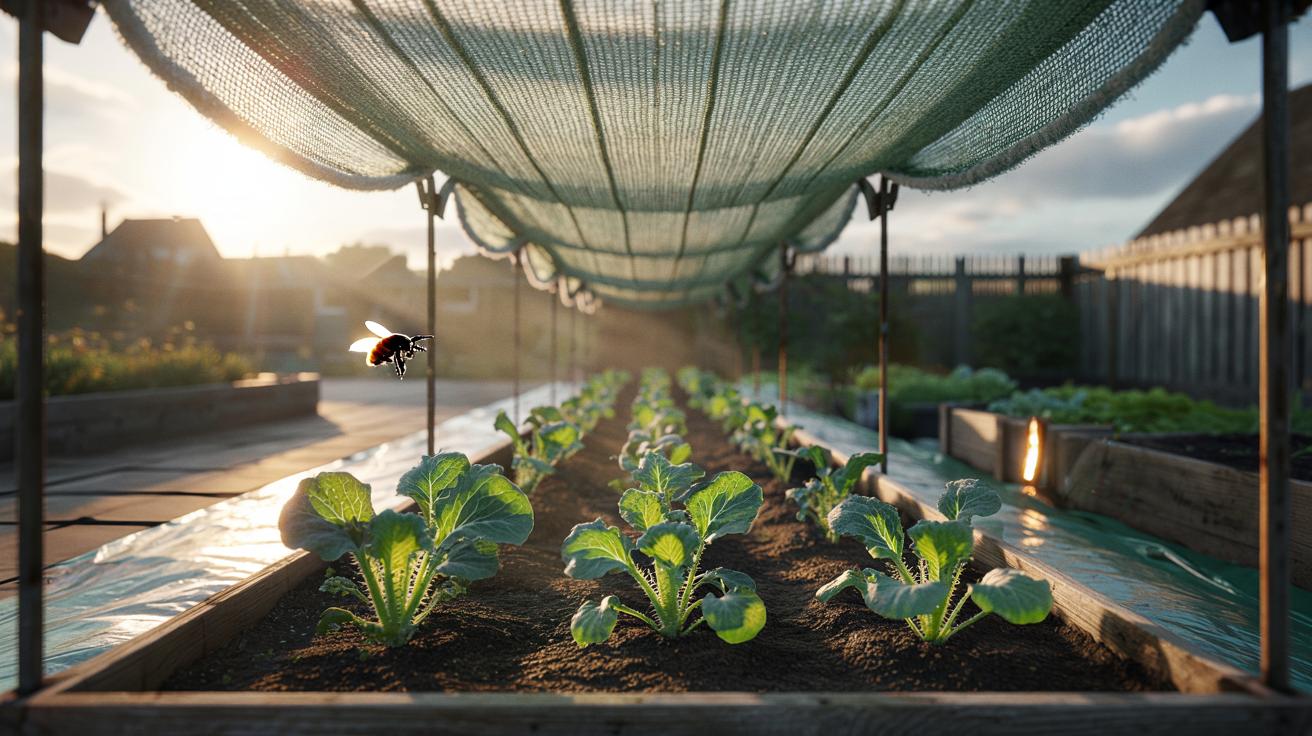
Height, angle, and airflow turn cloth into a climate tool. Suspend covers 30–60 cm above foliage to create a breathable buffer; this prevents heat building at leaf level and allows bees to navigate. Tension the fabric so it doesn’t slap leaves in wind, and leave open sides or windward gaps to promote crossflow. Good ventilation is the difference between cool shade and a stagnant heat trap. For raised beds or benches, a simple A-frame with clips makes adjustments easy as conditions change.
Orient spans east–west to temper midday beams, or add a removable second layer for short, severe heatwaves. Avoid sealing cloth to the ground; instead, maintain edge gaps to vent hot air. In storm-prone areas, use knitted cloth with bungee fixings to spill gusts without tearing. Where glare bounces from paving or glass, consider aluminised shade to reflect heat rather than absorbing it. Stable structure and active airflow reduce disease risk while protecting tender tissue.
Watering, Nutrition, and Microclimate Under Shade
Shade reduces evapotranspiration, so irrigation can be deeper but less frequent. Drip lines or micro-sprays limit leaf wetness and keep water where roots can use it. Morning watering charges the soil profile before heat peaks, supporting transpirational cooling without encouraging night-time humidity spikes. Because growth continues under softer light, ensure balanced nutrition: steady calcium and potassium support cell walls and stomatal function, lowering susceptibility to leaf scorch. Do not overfeed nitrogen in heat; it fuels lush, vulnerable tissue.
With air flow moderated, humidity rises slightly beneath cloth, which can favour mildew if crowded. Space plants generously and prune to maintain light dapple. A pale mulch reflects heat and stabilises moisture, while inexpensive sensors track soil temperature and VWC to guide scheduling. Foliar feeds are best in early morning under shade, avoiding midday sprays that can still burn. Think of shade cloth as a microclimate manager—cooler, calmer, yet still productive.
Shade cloth is not a surrender to dullness; it’s a precise tool for keeping youthful canopies photosynthesising when the mercury surges. By tuning density, mount, and airflow, you convert brutal midday glare into useful light and head off the cascade of stress that ends in scorch and stall. For smallholders and balcony growers alike, that means harvests that ride out the heat with grace. What combination of cloth, spacing, and irrigation could turn your hottest corner into a sanctuary for young plants this summer?
Did you like it?4.5/5 (20)