In a nutshell
- 🌞 Moisture retention science: Mulch breaks capillary rise, shades soil, and calms airflow, reducing evaporation and creating a cooler, stable microclimate that encourages deeper roots.
- 🌿 Choose the right material: Opt for organic mulch (bark, compost, straw) for moisture and soil gains, or gravel/slate for dry designs; aim for a 5–8 cm layer matched to your soil and plants.
- 🪱 Healthier soil, fewer weeds: Organic mulches feed soil organisms, improve soil structure and water-holding capacity, while suppressing weeds that steal moisture.
- 🛠️ Practical application: Water first, then mulch; avoid stem contact; time it for late spring; adjust texture to soil (compost under bark on sand, roughen clays) for best uptake.
- 💧 Efficiency and resilience: Expect less frequent watering, savings during hosepipe bans, and better results when paired with drip irrigation, windbreaks, and groundcovers.
Summer heat in the UK can turn flowerbeds and vegetable plots into thirsty ground almost overnight. Adding mulch—a layer of organic or inorganic material laid over the soil—keeps precious moisture in place, protects roots from temperature swings, and reduces the time and money spent on watering. Think of mulch as a breathable, insulating blanket that shields soil from sun and wind. By buffering evaporation and supporting soil life, it helps plants stay hydrated between showers and hose sessions, even under hosepipe ban conditions. Here’s how and why that protective layer works, which materials perform best, and the practical steps to make mulching a summer-long success.
The Science Behind Moisture Retention with Mulch
At the soil surface, heat and moving air accelerate evaporation, dragging water up from below through capillary action. A mulch layer interrupts that pipeline. By breaking the direct connection between sun, wind, and soil particles, mulch slows the escape of water vapour. The result is a cooler, more humid boundary layer right where roots feed. Even a modest 5–8 cm covering can lower surface temperatures significantly, easing stress on shallow feeders like salad crops and bedding annuals.
Mulch also supports a thriving community of soil organisms. As organic mulches slowly break down, they improve soil structure, increasing pore spaces for water storage and reducing compaction caused by summer footfall and showers. Better structure means rain and watering sink in rather than run off compacted surfaces. In turn, plants maintain steadier uptake, avoiding the feast-or-famine cycle that leads to leaf scorch and blossom drop.
Finally, mulched soils maintain a more consistent microclimate. Reduced temperature swings keep roots active, while shaded surfaces lose less moisture to direct radiation. Stable conditions encourage deeper rooting, which makes plants more resilient when rainfall is scarce. Over the season, that translates to stronger growth and fewer wilting afternoons.
How Mulch Slows Evaporation
Evaporation happens fastest when three drivers align: heat, wind, and exposed wet surfaces. Mulch counters each. A coarse layer of bark or straw creates shading, cutting solar energy that would otherwise heat the topsoil. It also dampens airflow at the ground, so water molecules diffuse away more slowly. By reducing both temperature and air movement at the surface, the mulch buys precious hours of moisture retention after every watering.
Particle size matters. Coarser mulches trap more air, acting as insulation, while finer mulches settle and seal the surface, limiting splash and crusting. Either way, the soil-to-atmosphere pathway is disrupted. Where beds are prone to crusting clays, a friable mulch prevents the formation of a hard pan that repels showers. On sandy soils, mulch helps slow rapid drainage, giving roots time to absorb water before it slips past.
Mulch also curbs weed growth, which quietly siphons water. Fewer weeds mean less competition for scarce moisture and less disturbance from weeding. The combined effect—lower heat, calmer air, and fewer thirsty interlopers—translates into less frequent watering and healthier plants.
Choosing the Right Mulch for Summer
Match material to your soil, plants, and climate. Organic mulches such as bark, compost, and straw excel at moisture retention and improve soil over time. Inorganic options like gravel and slate warm quickly and suit drought-tolerant plantings but may reflect heat. For edibles and mixed borders, a biodegradable mulch often delivers the best balance of water savings and soil health. Aim for 5–8 cm depth; too thin offers little benefit, too thick can trap excess moisture against stems.
Consider how long you need the mulch to perform. Compost releases nutrients quickly but breaks down within months. Bark and wood chips last one to three seasons. Straw is cheap and effective yet light, so it suits sheltered plots. Gravel is durable but should sit on permeable fabric in weedy areas. Choose a mulch that matches your maintenance appetite and the look of your garden.
| Mulch Type | Best For | Moisture Retention | Notes |
|---|---|---|---|
| Bark/wood chips | Borders, shrubs | High | Long-lasting; suppresses weeds well |
| Compost | Veg beds, perennials | Medium–High | Feeds soil; refresh annually |
| Straw | Soft fruit, veg | High | Lightweight; can harbour slugs |
| Gravel/slate | Dry gardens, alpines | Medium | Warms quickly; no soil improvement |
Practical Mulching Tips for UK Gardens
Water first, mulch second. Mulch locks in existing moisture; it doesn’t add any. Thoroughly soak beds—ideally with harvested rainwater—then spread mulch while the soil is damp. Keep a small gap around stems to prevent rot and discourage slugs. For thirsty crops like courgettes and hydrangeas, lay a slightly thicker ring at the root zone where evaporation is highest.
Timing matters. Late spring is ideal, once soil has warmed but before peak heat arrives. Top up after heavy weeding or when you notice the layer thinning. On clay, roughen the surface before mulching to open pores; on sand, add a compost layer beneath bark to increase water-holding capacity. If birds scatter straw, damp it lightly or secure with twiggy prunings.
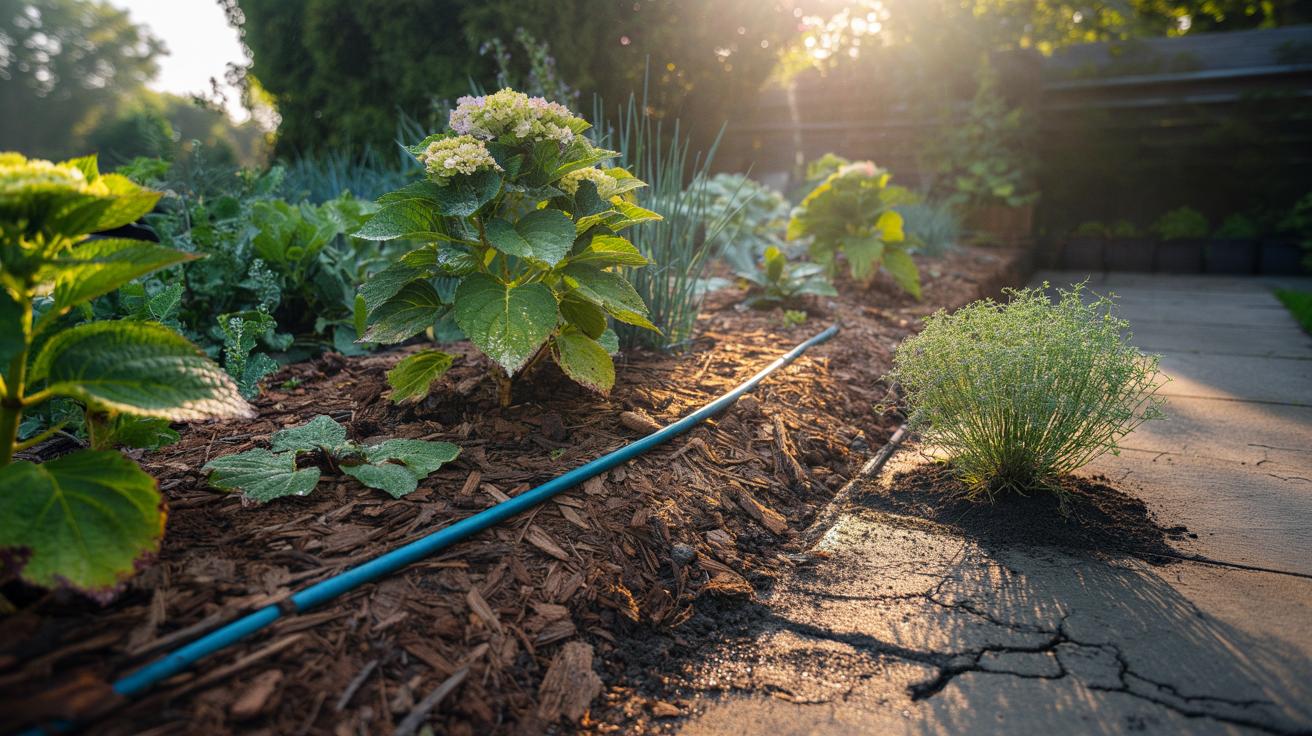
Think holistically. Combine mulching with drip irrigation or a simple leaky hose for targeted watering. Use windbreaks and dense groundcovers to shade soil edges. A consistent, layered approach reduces watering frequency, lowers bills, and keeps beds resilient through dry spells. Keep a note of what works and adjust materials and depths next year.
Mulch is not a summer luxury; it’s a water-saving strategy that pays back in sturdier plants, richer soil, and calmer maintenance. By reducing evaporation, improving structure, and curbing weeds, a well-chosen mulch keeps borders fresher between showers and helps gardens weather hosepipe bans without drama. Start with a damp bed, lay 5–8 cm of the right material, and let the layer work quietly for you. As temperatures climb, you will spend less time lugging watering cans and more time enjoying the garden. Which mulch will you trial first, and how will you measure its impact on your summer watering routine?
Did you like it?4.4/5 (27)