In a nutshell
- 🌱 Strategic root pruning triggers hormonal shifts (auxin–cytokinin), stimulating dense lateral roots and improved nutrient and water uptake for stronger, steadier top growth.
- 🕰️ Best timing in the UK: late winter/early spring or early autumn; never remove more than a third; some species are sensitive (e.g., magnolia, eucalyptus).
- 🛠️ Method matters: use sharp, disinfected tools, slice circling roots on pot-bound plants, and follow with aftercare—deep watering, mulch, shelter, optional mycorrhizae.
- 🏗️ Outcomes: better root-to-shoot balance, tighter internodes, richer foliage, and stronger anchorage—plants that resist windrock and thrive in containers and borders.
- ⚠️ Know the limits: avoid hot spells, prevent over-pruning and drought stress, and deploy targeted practices (light trim, spiral slicing, staged pruning, air-pruning) to fit the goal.
Snipping at the very organs plants use to drink and anchor themselves sounds reckless. Yet gardeners from bonsai artists to orchard keepers rely on strategic root pruning for vigour. Done with timing and care, it sparks new growth, steadies water use, and rescues pot-bound stock. In the UK’s compact gardens and blustery sites, stronger root systems mean sturdier borders, happier containers, and trees that stand their ground. The trick is understanding what happens underground when blades meet tissue. Small cuts can trigger big gains. Here’s why trimming roots can, paradoxically, help plants grow stronger—and how to do it without inviting trouble.
Root Pruning and the Science of Stress
Plants read a cut as a signal. The wound shifts hormonal balances, especially the dance between auxin and cytokinin, nudging dormant cells to form new lateral roots. Picture a tree swapping one thick, lazy root for a fan of fine feeders—more tips, more uptake. Pruning stimulates dense, fibrous roots that mine soil efficiently. That surge of branching expands the absorptive surface, boosting access to water and nutrients. It also refreshes tired, circling roots in containers, redirecting energy into a healthier architecture instead of a constricting spiral.
There’s a resilience story too. Wounding triggers a controlled defence response, depositing protective compounds and encouraging callus. Plants don’t panic; they reorganise. With fewer old roots to maintain, carbohydrates are reallocated to fresh, active growth. In air-pruning pots—where tips dry when they hit the edge—this effect is harnessed gently, repeatedly. Stress, delivered in small, planned doses, trains plants to perform. The result is a compact, efficient root system that supports steadier top growth when seasons swing wet to dry.
When, Where, and How to Trim Safely
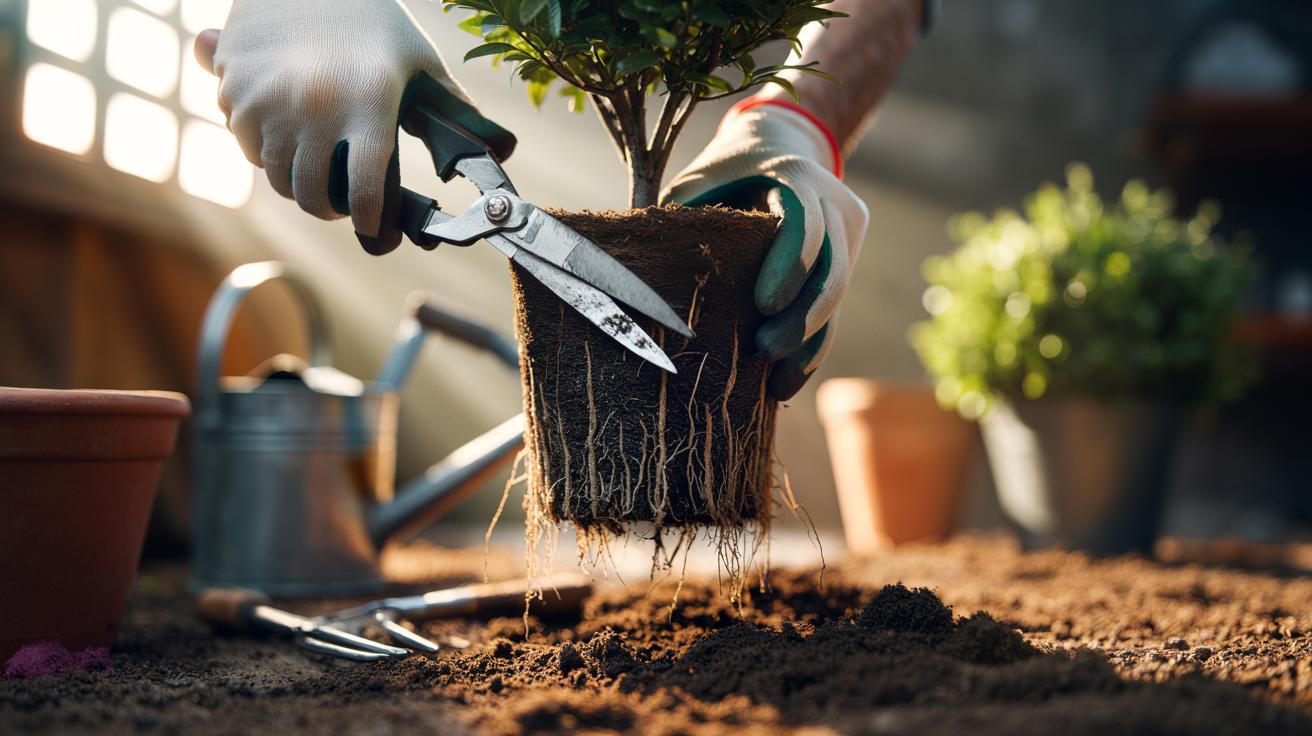
Timing matters. In the UK, late winter to early spring, just before bud-break, or early autumn while soil is warm, suits most hardy plants. Tackle container plants at repotting: tease away old compost, slice back long, woody roots, and remove circling strands. For young trees slated for transplant, a light root prune a season in advance encourages a dense root ball. Never remove more than a third of the root mass at one go. Some species—magnolia, eucalyptus—resent heavy disturbance; others—figs, willows—bounce back.
Method is your insurance. Use sharp, disinfected secateurs or a fine pruning saw; clean tools are non‑negotiable. Make decisive cuts, not ragged tears, and target dead, damaged, or overly long roots first. On pot-bound plants, slice vertical wedges to break the spiral and open space for new growth. Aftercare seals the deal: water deeply to settle soil, mulch to maintain moisture, and offer wind shelter for a fortnight. A dusting of mycorrhizal inoculant can help re-colonise roots, while high-nitrogen feed should wait until recovery is visible.
Stronger Shoots Start Below the Soil
Healthy roots power the canopy. A finer network of feeder roots captures nutrients with less waste, which steadies growth and improves leaf quality. Plants moderate water use better, easing pressure on stomata during hot spells. Balance the root-to-shoot ratio, and the shoot behaves. After a trim, many species show tighter internodes, richer colour, and sturdier new wood—traits prized in fruit trees, ornamentals, and herbs alike. In containers, a refreshed root system delays the slump that comes when old compost compacts and oxygen dwindles.
Anchorage improves too. Those sprawling, ropey roots that circle a pot or skitter along a planting pit can undermine stability and even girdle the trunk. Strategic pruning promotes structural roots that spread and dive, not strangle. On breezy plots and coastal allotments, that means fewer snapped stakes and less windrock. Strong roots translate to plants that stand their ground. Indoors, judicious trimming keeps houseplants compact without starving them, letting foliage flourish without an oversized pot trailing behind.
Common Myths, Risks, and Smart Limits
“Never cut roots” is a myth with a kernel of truth. Yes, careless pruning invites transplant shock and pathogens. But controlled trimming, at the right time, is a standard practice from bonsai benches to professional nurseries. The risks? Over-pruning, drought stress during recovery, and species sensitivity. Keep cuts modest, plan for aftercare, and avoid hot spells or peak flowering. Old, slow-growing specimens demand caution; young, vigorous plants are more forgiving. Respect the plant’s pace, and root work becomes a tool, not a gamble.
If you’re unsure, match the technique to the goal. The quick guide below distils common scenarios so you can choose with confidence and set limits before you start cutting.
| Practice | Effect on Roots | Best For | Timing (UK) |
|---|---|---|---|
| Light peripheral trim (10–20%) | Boosts new lateral roots | Repotting houseplants, perennials | Spring or early autumn |
| Slicing pot-bound spirals | Breaks girdling, improves architecture | Container shrubs, young trees | At repotting/planting |
| Staged root pruning | Builds dense root ball | Trees before transplant | Start 6–12 months prior |
| Air-pruning containers | Continuous tip-branching | Nursery stock, veg starts | All season with care |
Trimmed right, roots come back stronger—finer, busier, and better connected to soil life. That pays off in steadier growth, improved drought tolerance, and anchorage that takes weather in its stride. The practice isn’t a cure-all, and it isn’t compulsory; it’s a precise tool to reset tired stock and prepare plants for a move or a bigger performance. Plan the cut, back it with aftercare, and let biology do the rest. Looking at your own beds, borders, and pots, which plant would benefit most from a measured root trim this season, and how will you track whether it truly made a difference?
Did you like it?4.6/5 (30)